A pearl bracelet stack works best when it feels considered without restricting the wrist. The goal is not to fill every gap with another piece, but to choose bracelets whose lengths, pearl shapes, and chain details can sit together comfortably. Leave enough room for the wrist to bend and for sleeves to move, and think about where the bracelets will settle when your arm is at rest.
Pearls are relatively soft, so close layering calls for a little care. Metal parts and neighboring jewelry can rub against pearls, and a sudden impact may cause damage. No arrangement can promise that pearls will remain free of marks; thoughtful spacing and gentle handling simply reduce unnecessary contact. Start with one bracelet, check its fit through ordinary wrist movements, and add other pieces only if they still allow room to move.
Begin with fit, not the number of bracelets
Before choosing a stack, try each bracelet on its own and notice how it sits when your arm hangs naturally, when you bend your wrist, and when you reach forward. A bracelet that is comfortable while still may slide toward the hand or forearm during movement. That shift matters because pieces that repeatedly collide can rub against one another. Aim for a fit that lets the bracelet move without making it travel so freely that it bumps into a watch, desk, or neighboring jewelry.
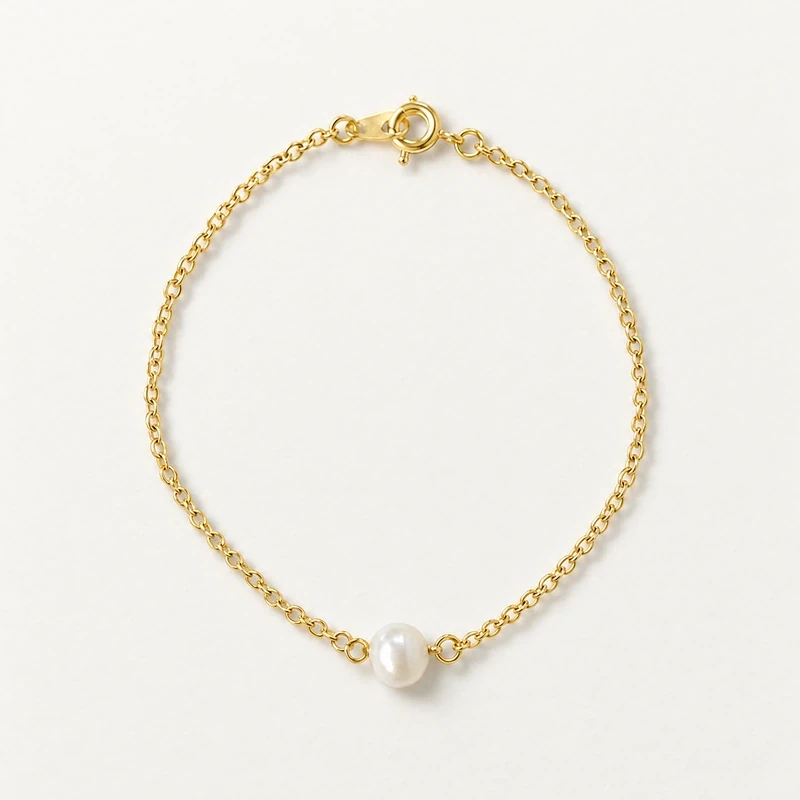
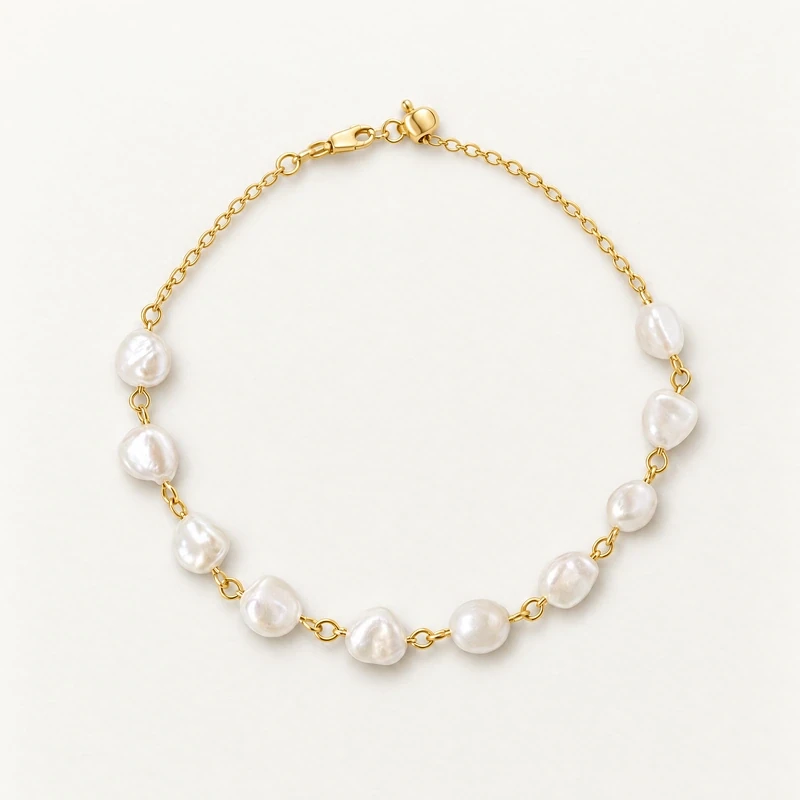
Compare the listed lengths and adjustment options rather than assuming that bracelets with a similar appearance will sit alike. The Gabriella Freshwater Pearl Bracelet is approximately 20 cm long and can be adjusted shorter. The Riley Keshi Pearl Bracelet is also approximately 20 cm and adjustable to a shorter length. Adjustability offers a way to refine the fit, but the product descriptions do not specify a single fit for every wrist. Check the result on your own wrist before adding another piece.
Use pearl count to set the visual rhythm
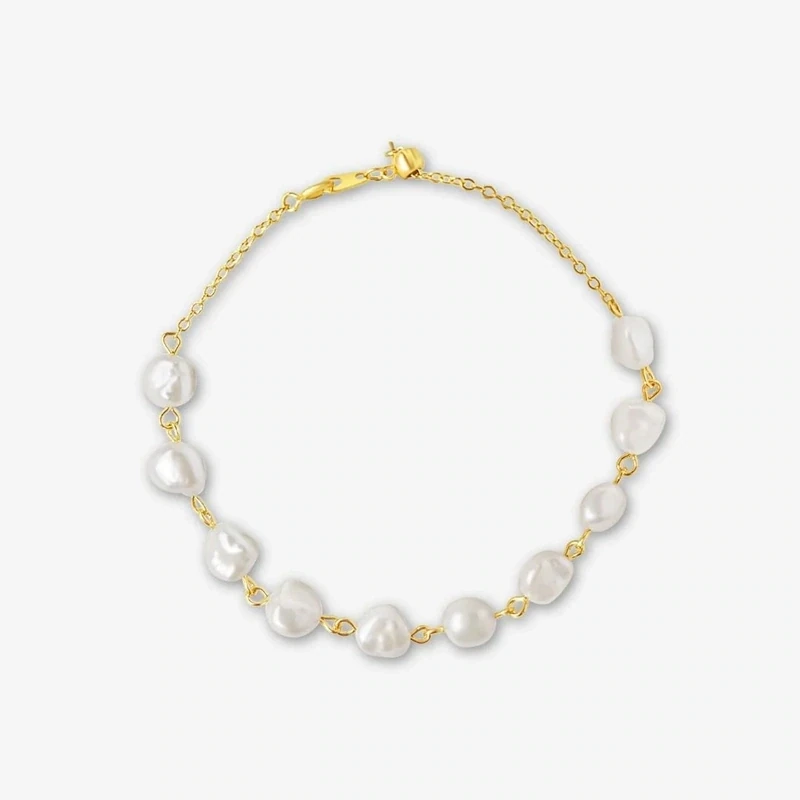
A pearl count changes the impression of a bracelet even when the listed pearl size is modest. Six approximately 5 mm freshwater pearls, as on the Gabriella, create a more spaced rhythm than the ten approximately 6–8 mm freshwater baroque Keshi pearls on the Riley. When stacking, let one bracelet provide the more noticeable pearl pattern and use a simpler chain or a more lightly spaced design alongside it. This keeps the details readable instead of making every part compete for attention.
Count is not the only factor: the distance between pearls and the shape of the pearls affect how a bracelet looks in motion. A row with irregular forms can feel visually busier than a smaller number of rounder forms. Try the combination in natural wrist positions rather than judging it only while your hand is flat. If the pearls overlap, bunch together, or repeatedly meet the metal on another bracelet as the wrist turns, edit the stack or wear the pieces separately.
Let baroque shapes have their own space
Baroque describes an irregular pearl shape, not a pearl species or a statement about whether a pearl formed with human intervention. The Riley is described as having freshwater baroque Keshi pearls, and its product description notes that the pearls naturally vary in shape and may have imperfections. That variation makes each bracelet differ in appearance. In a stack, these uneven outlines can stand out more than a uniform line of small pearls, so pairing the bracelet with a less visually intricate piece can preserve a sense of balance.
The Toothpick Baroque Pearl Bracelet offers another baroque option in a distinctive toothpick-inspired design. Its listed length is 17–19 cm, and its product description presents it as wearable alone or layered. Because the product has a different design and length from the two approximately 20 cm adjustable chain bracelets, do not assume that all three will fall into separate, tidy rows on every wrist. Try two pieces first, observe where they meet, and leave out a third if their shapes or positions create repeated contact.
Choose a metal combination with contact in mind
Metal color can help tie a stack together, but the material descriptions should remain distinct when choosing pieces. The Riley and Gabriella each offer a choice between a 14k gold-filled chain and a 925 sterling silver chain. Sterling silver 925 means 92.5 percent silver. The Toothpick bracelet is described as baroque pearls with copper plated with 18K gold. Gold-plated copper, gold-filled chain, and sterling silver are not interchangeable material descriptions, and the listed metal for one bracelet does not establish the metal of another component.
For a quieter combination, coordinate similar metal colors; for a more mixed look, use contrast deliberately and keep the stack simple. In either case, notice where chain or metal sections rest against pearl surfaces. Avoid forcing bracelets into a tight cluster or allowing a metal edge to sit under pressure against a pearl. Looking at the stack from above and from the side can reveal contact points that are easy to miss with the wrist held still. Adjust the order, increase spacing, or remove a piece if contact seems frequent.
Account for sleeves and everyday wrist movement
A stack that looks balanced with a bare wrist may behave differently beneath a cuff. Fabric can push bracelets toward the hand, catch between pieces, or make a loose bracelet shift as the sleeve moves. Try the stack with the sleeves you expect to wear, then bend and straighten your arm. A slim combination may work more smoothly under a close cuff, while a more prominent pearl shape may be easier to wear with an open sleeve that does not press against it.
Also consider the surfaces your wrist meets during the day. Typing, carrying a bag, and resting an arm on a table can bring bracelets into contact with hard surfaces or one another. This is a practical reason to keep a stack modest for activities involving frequent wrist movement or pressure. There is no need to treat a pearl bracelet as too delicate to wear; simply choose a combination that does not get in the way, and take it off when an activity makes repeated impact or snagging likely.
Build a stack gradually and test the arrangement
Start with the bracelet that will anchor the look, then add one piece at a time. Check the fit after each addition and move your wrist through a normal range of motion. Notice whether the pieces settle into separate positions or slide together. A short chain may sit differently from a longer one, but listed length alone does not establish exactly where it will rest on an individual wrist. The adjustable options on the Riley and Gabriella give you some room to change their length; the Toothpick bracelet is listed at 17–19 cm.
For example, try the six-pearl Gabriella with the Riley's ten irregular pearls, then decide whether their distinct counts and shapes feel balanced together. If they meet repeatedly, wear one alone or choose a simpler pairing. The bracelet collection can help you compare other bracelet styles, but use each product's own material and measurement details when assessing a combination. The strongest stack is not necessarily the one with the most pieces: it is the one that keeps its shape, sits comfortably, and does not need constant readjustment.
Care for the pieces after wearing
After wearing pearls, gently wipe them with a soft, clean cloth. GIA guidance advises avoiding ultrasonic and steam cleaners, acids, chemicals, perfume, and excessive heat around pearls. Occasional cleaning with warm soapy water may be possible, but mixed-material jewelry calls for conservative care; if a bracelet includes chain or other components, consider how the whole piece will respond rather than treating the pearls in isolation. Strung jewelry should dry completely after cleaning.
Store the pieces so that they are not pressed together in a tangled pile, and put them away with care after use. When you next wear the stack, check whether a clasp or chain has become caught on another piece and whether the bracelets still sit as intended. For more detail on pearl cleaning, consult GIA's pearl care and cleaning guidance. A practical routine is simple: start with two bracelets, check fit and contact while moving, remove any piece that repeatedly rubs or knocks, and wipe the pearls gently afterward. That keeps the styling decision grounded in both appearance and care.