A beaded necklace can bring color and tactile detail to an outfit, but the most effective styling usually begins with a clear focal point. A shell pendant, green beads beside irregular pearls, and a strand of candy-color pearls each create a different impression. The aim is not to make every element match; it is to give the eye a useful place to land and let the other colors and textures support it.
Start with the garment you plan to wear, then consider the necklace’s actual materials, proportions, and stated length. A relaxed summer shirt may suit a lively mixed-material strand, while a long pearl necklace can become a prominent line over a simpler top. Physical scale matters, too: one listed design weighs 69.5 grams, which is a practical consideration when choosing how long to wear it. Styling is easier when decisions are based on those concrete details rather than assumptions about stones or features.
Choose one focal area first
Before adding earrings, a scarf, or a patterned layer, decide where you want attention to gather. With a pendant necklace, the pendant often supplies that focal point; keep nearby neckline details relatively quiet so its shape remains legible. If the beads themselves carry the visual interest, such as a mix of pearl forms and colored beads, let their sequence and texture lead instead of introducing another strong motif.
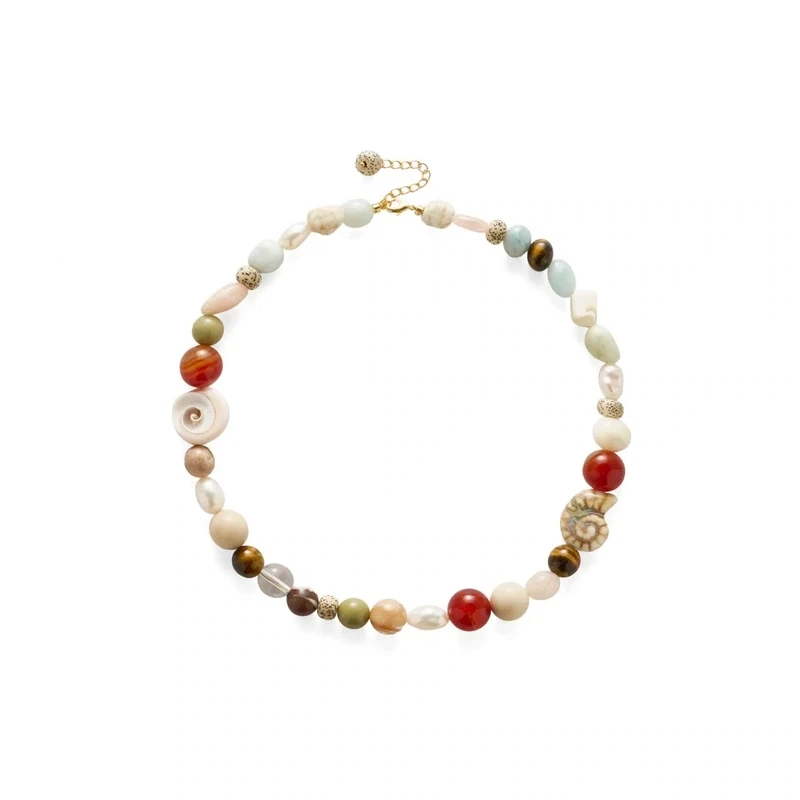
For example, the Conch Shell Beaded Necklace combines a conch shell pendant with natural stone, ceramic, crystal, shell, and freshwater pearl. That is already a varied set of materials. A plain tee, open-neck shirt, or uncomplicated dress gives the combination room to read as intentional. If you wear a print, look for a quieter area of the pattern around the necklace rather than competing with its pendant. One focal area does not mean the rest of the outfit must be blank; it means the details work together rather than asking for equal attention.
Use wardrobe color as a guide
Begin with the colors already present in your clothes. A neutral garment can make colorful beads stand out, while a garment that shares one color with the necklace can create a more connected effect. Neither approach requires an exact match. It is often enough to repeat a broad color family, such as green in a patterned top and green agate beads, or to let a mostly plain outfit provide contrast for brighter pearls.
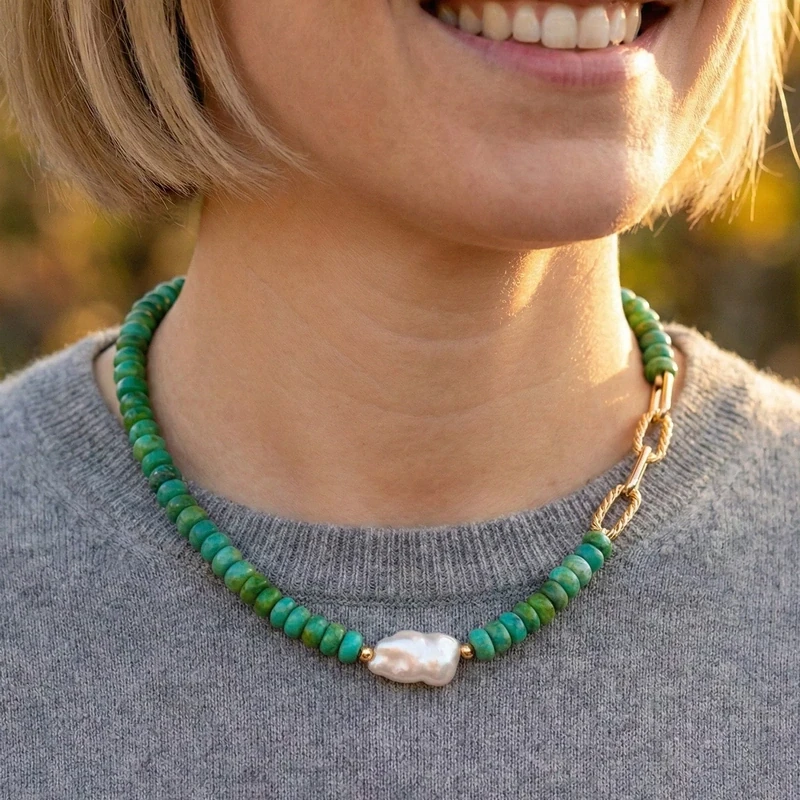
The Baroque Pearl & Agate Necklace pairs green agate beads with freshwater baroque pearls. A solid cream, charcoal, or denim shirt can give the green a clean backdrop; alternatively, pick up green from a small detail in a print and keep the rest of the palette restrained. Avoid assuming that every bead has the same hue or finish simply from the product name. When dressing, judge the necklace and clothing together in the light in which you expect to wear them. A simple color relationship is usually more coherent than adding several unrelated accent colors.

Balance mixed textures with quieter clothing
Beads can differ in surface, shape, and material, so texture is part of the necklace’s visual character. The Conch Shell Beaded Necklace lists natural stone, ceramic, crystal, shell, and freshwater pearl, alongside a conch shell pendant. That mix offers several points of contrast. A smooth knit, cotton shirt, or plain woven dress can keep those differences noticeable without adding more competing textures around the neckline.
Texture can also be balanced rather than removed. A softly textured top may work if its surface is subtle and the color stays calm. The question is whether the outfit gives the necklace definition or obscures its details. Try the necklace over the garment rather than deciding from the hanger, and check whether the pendant outline and bead colors remain easy to distinguish. If they disappear into a busy collar or heavily patterned fabric, change the layer or neckline. The necklace’s materials are not a reason to infer how each component feels against skin; focus on what is listed and how the combined look sits with the outfit.
Let irregular shapes add contrast
Baroque describes an irregular pearl shape, not a pearl species or proof of uncultured origin. That variation can give a beaded necklace a less uniform outline, especially beside rounder or more consistently shaped beads. Styling works best when the rest of the look does not insist on perfect symmetry. A relaxed shirt, an open collar, or a clean single-color dress can provide a composed background without competing with the pearls’ varied forms.
In the green agate and baroque pearl design, the contrast is both in shape and color: the description identifies freshwater baroque pearls and green agate beads. Treat those as complementary features rather than trying to make every detail echo them. A green garment may emphasize the beads; a neutral garment may make both materials stand apart. For the BETSY necklace, the product description notes hand-wrapped baroque pearls with varied shape and character. Avoid expecting irregular pearls to look identical from one piece to another, and let that natural variation be the detail rather than adding another highly irregular accessory at the same focal point.
Read length against the neckline
Necklace length changes how a strand relates to a neckline and where it falls over clothing. The Conch Shell Beaded Necklace is listed at 43–47 cm, while the green agate and baroque pearl necklace measures 97 cm. BETSY is approximately 100 cm (40 in) long. These stated measurements offer a useful starting point, but the precise position on a wearer depends on their proportions and the way the necklace is worn.
Use the garment as a practical guide: compare the listed length with the distance from the neckline to the point where you want the necklace to sit. A shorter listed measurement may work with an open collar or a simple crew neckline; a longer strand can create a longer visual line over a plain top. Do not assume that a long necklace has a particular modular or convertible function unless that feature is stated. The necklace collection can help you compare different overall styles, but use each product’s own listed measurement when deciding how it may relate to a specific outfit.
Consider weight as well as appearance
Weight can matter as much as color when choosing a necklace for a long day or a particular activity. The Conch Shell Beaded Necklace is listed as 69.5 g per piece. That is a concrete styling consideration: if you prefer to keep what you wear around your neck light, consider when and how long you plan to wear this design, rather than relying on its appearance alone. The other two product descriptions list necklace lengths but do not state their weights, so their weights should not be guessed from their materials or dimensions.
Think about the setting, too. A necklace selected for a short outing may feel different in a full day of movement, and a heavy-looking garment or layered collar can change how the whole outfit feels. Try the complete combination before leaving and notice whether the necklace sits where you expect and remains comfortable for you. This is a personal fit decision, not a promise about comfort for every wearer. Avoid adding another substantial necklace just to fill space: it can increase visual clutter, and its weight is another factor to consider. When product information does not give a measurement, use caution rather than treating appearance as a reliable proxy.
Style candy-color pearls with restraint
The BETSY Baroque Pearl Necklace offers a different color approach: its chain is described as 4–6 mm candy-color pearls, with a 25–35 mm white pearl pendant and 14K gold hooks. Its listed length is approximately 100 cm (40 in). Rather than treating every color as a separate accent to repeat elsewhere, choose one or two quiet clothing colors that let the strand show clearly. A solid top is especially useful when you want the necklace to provide the outfit’s main color variation.
The size difference between the colored pearls and white pendant also gives the design a defined focal area. Avoid piling another large pendant or a strongly patterned collar into the same space. Simple earrings or no competing necklace can preserve the visual hierarchy; this is a styling suggestion, not a claim about the product’s construction or how its parts function. When choosing among the three designs, ask whether you want a shell-led coastal look, green-and-pearl contrast, or a long strand with candy-color pearls. That choice helps keep the outfit deliberate without forcing all three ideas into one look.
Keep care in mind when planning a look
Mixed-material necklaces call for conservative care, particularly when pearls are part of the design. GIA notes that pearls are soft and advises avoiding ultrasonic and steam cleaners, acids, chemicals, perfume, and excessive heat. Its pearl care and cleaning guidance recommends wiping pearls with a soft, clean cloth after wearing. Occasional warm, soapy water may be used, but strung jewelry should dry completely. For a necklace that combines pearls with other materials, a gentle approach is the sensible choice.
As a practical styling habit, put on perfume and other products before the necklace, allow them to dry, then add the jewelry. After wearing it, wipe gently and store it away from unnecessary heat or chemical exposure. These steps help you plan around the materials actually named in the design; they do not imply that a necklace is waterproof or resistant to wear. For your next outfit, choose the focal area, compare its palette with the garment, check the stated length and any stated weight, and keep nearby details simple. That short process makes it easier to select a beaded necklace whose color and texture enhance the look without overwhelming it.