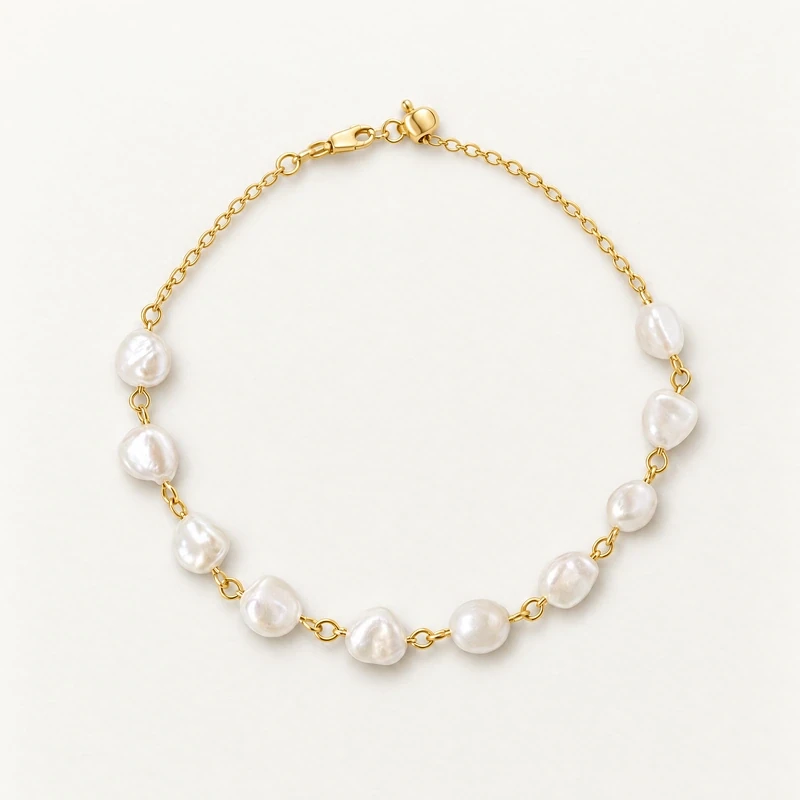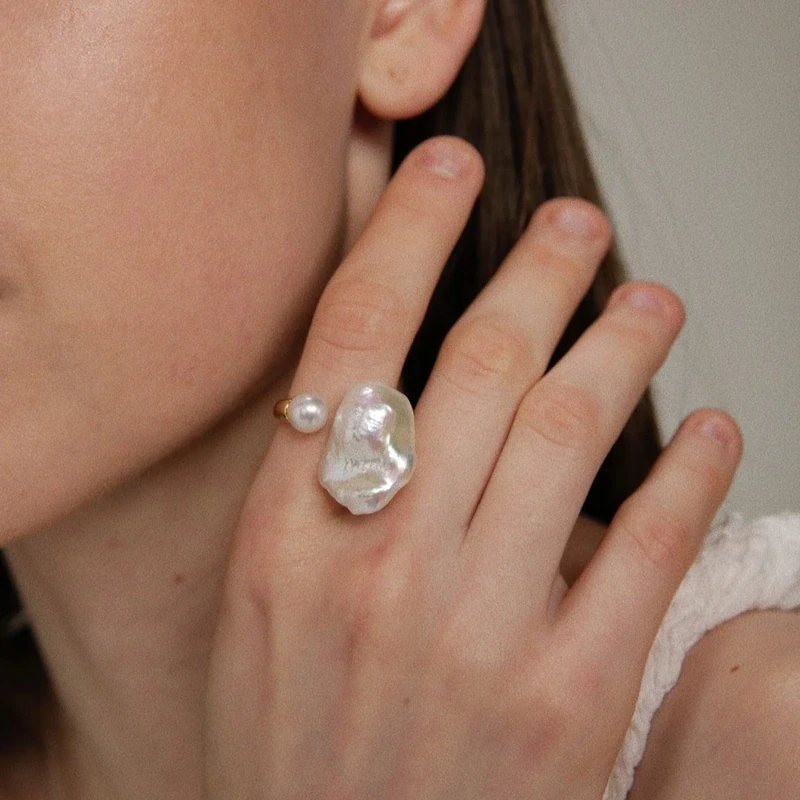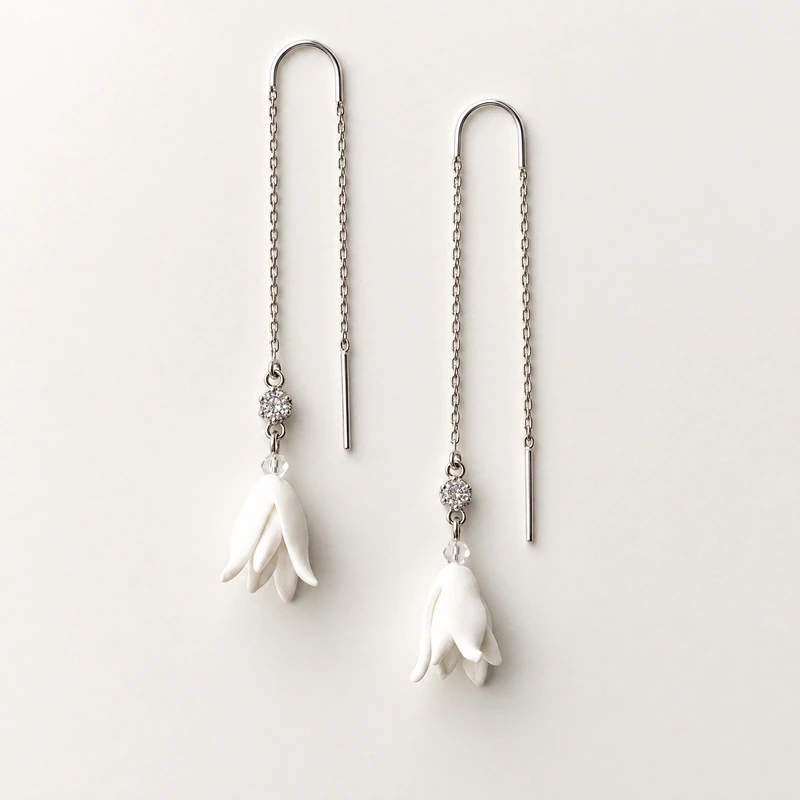
Colorful gemstones and pearls can share a piece of jewelry without competing for attention. A useful way to style them is to treat the gemstone as the color anchor and the pearl as a softer counterpoint. Malachite brings green, lapis lazuli offers deep blue, and garnet adds a red accent; each looks different against a pearl’s light surface and the colors already in an outfit.
Rather than matching every accessory to a garment, start with the amount of color you want to wear and the scale of the jewelry. A small garnet stud can provide a restrained detail, while larger beads or a more substantial pearl make a stronger focal point. Neutral clothing gives these pairings room to register, but the same approach works with color when you keep the rest of the palette deliberate.
Choose one gemstone color as your anchor
Begin by deciding which color should lead. Malachite’s green reads as a vivid focal color, lapis lazuli provides a deep blue note, and garnet contributes a compact red accent. These are distinct choices, not interchangeable versions of a general “colorful” look. Selecting one helps keep the outfit coherent: choose the stone that works with the clothing you reach for most often, or the one that offers the contrast you want on a particular day.
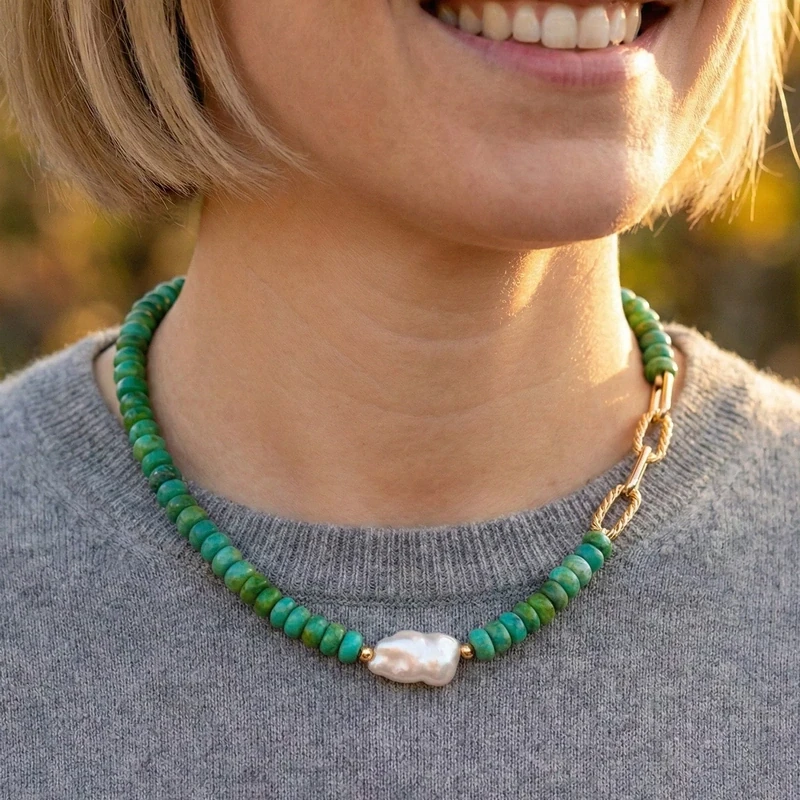
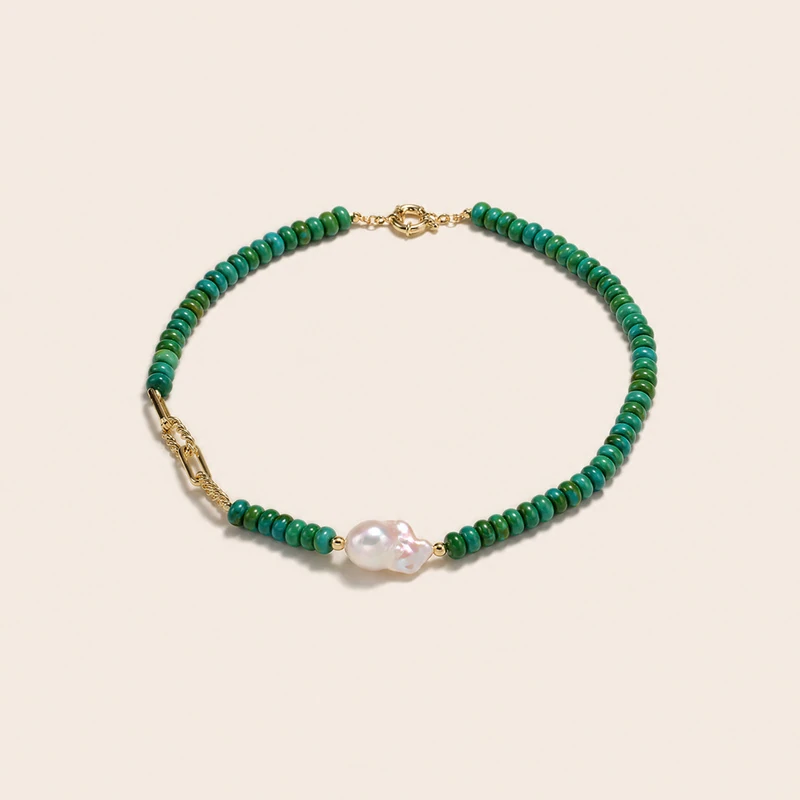
For a clear example, the JUDITH Malachite & Pearl Necklace combines bright malachite beads with a large baroque freshwater pearl. Its listed bead size is 6–8 mm, its pearl measures 15–20 mm, and the necklace length is 45 cm. That specific difference in scale makes the pearl a notable part of the composition as well as the green beads. Consider those proportions when deciding whether a necklace should be the outfit’s main point of color.
Use neutral clothing to give color room
Neutral clothing offers a straightforward background for gemstone and pearl combinations. A white, cream, gray, navy, brown, or black garment can let green or blue stand out without requiring another strong color nearby. This is not a rule that jewelry must be worn only with neutrals; it is a practical starting point when you want to see how a particular pairing works before adding more competing hues.
Try the same piece with two different basics rather than judging it against only one outfit. A lapis-and-pearl earring may feel crisp with a light shirt and more subdued with a dark knit. Malachite against a plain top can become the clearest color accent, while garnet studs can remain relatively small details. Look at the entire outfit from a little distance: if the jewelry and clothing both demand attention, simplify one side by choosing a quieter garment or fewer additional accessories.
Pair lapis blue with pearl luster
Deep blue and a light pearl create contrast through both color and surface. The lapis supplies a concentrated blue area, while the pearl has a softer luster. This makes the combination useful when you want color near the face without wearing a large block of bright clothing. The Vintage Lapis Pearl Drop Earrings pair lapis lazuli with freshwater pearls, and the listed earrings are 3 cm long.
Because a drop earring is already a visible line beside the face, keep the rest of the jewelry proportionate. A simple chain or a plain neckline can let the blue-and-pearl pairing remain the focus. If you wear a patterned top, look for a calm area of color near the earrings rather than trying to repeat every pattern color in your accessories. The goal is a considered relationship between the blue, the pearl, and the overall outfit—not a perfect color match.
Let malachite provide a stronger focal point
Malachite green can carry more visual weight than a small accent, particularly when it appears in a necklace. With the JUDITH necklace, the bright beads and the 15–20 mm baroque freshwater pearl make a mixed-scale arrangement. Baroque describes an irregular pearl shape; it does not identify a pearl species or establish whether it is cultured. Here, the product description specifies a freshwater pearl.
Give a prominent necklace some room by choosing a relatively simple neckline and limiting other large pieces nearby. If your clothing already has a strong print or a high-contrast trim, consider whether adding the necklace creates the balance you want or makes the upper half feel crowded. A single green accent can connect visually to a garment detail, but it need not match it exactly. The necklace also has a 45 cm listed length, a useful measurement to consider alongside neckline height before choosing an outfit.
Use garnet for a compact note of color
Garnet can be a useful choice when you want a color accent in a small format. The ZENOBIA Garnet & Pearl Studs pair a 6 mm natural garnet bead with a 10–12 mm freshwater white pearl. The listed measurements make this a pearl-and-gemstone pairing with visible difference in scale, rather than two equal-sized points of color. The product description also lists S925 silver.
Studs can suit outfits where you want earrings to complement, rather than define, the overall look. Consider them with a neutral top, or let the garnet pick up a subdued red detail elsewhere in the clothing. There is no need to repeat the stone color across several accessories. If you already wear a patterned scarf or a bold collar, the smaller earring format may be enough; if the outfit is plain, the pearl and garnet can offer a contained focal point.
Balance jewelry scale with clothing details
Scale is about more than the size of a stone. Consider how much of the piece is visible, where it sits, and how it relates to a neckline, collar, sleeve, or other jewelry. A larger pearl or a series of beads may be clearly visible over a plain shirt, while a smaller stud creates less visual emphasis. Product measurements provide a more reliable starting point than a vague label such as “delicate” or “bold.”
Try one focal area at a time. If you choose a noticeable necklace, keep earrings simple; if you choose the 3 cm lapis-and-pearl drops, a quieter neckline can prevent the outfit from feeling crowded. You can also compare the jewelry with the garment’s own scale: small prints and fine details often pair naturally with modest accessories, while a plain, open area can accommodate a more prominent piece. These are styling options, not strict rules; your comfort with visual contrast is the deciding factor.
Coordinate finishes without forcing a match
Gemstone and pearl color are only part of the composition. The metal finish and the rest of your accessories also influence the overall impression. For the JUDITH necklace, the product description lists a 14K gold-plated sterling silver clasp. The lapis drop earrings are listed as 18K gold vermeil, while the ZENOBIA studs are listed with S925 silver. These material descriptions are specific to those products and should not be treated as interchangeable metal categories.
You do not have to make every metal finish identical. Instead, notice whether the pieces feel balanced together and whether one finish is particularly prominent. When mixing jewelry, keep the number of competing details modest and let the gemstone colors do their intended work. For broader outfit planning, browsing the earrings collection can help you compare different earring formats, while keeping your choice grounded in the listed materials and measurements of each piece.
Care for mixed-material pieces with restraint
Pearls need thoughtful handling, and jewelry combining pearls with gemstones or metal calls for conservative care. GIA guidance advises avoiding ultrasonic and steam cleaners, acids, chemicals, perfume, and excessive heat around pearls. After wearing, wipe a pearl piece with a soft, clean cloth. For more detailed guidance, consult GIA’s pearl care and cleaning advice. Avoid assuming that a cleaning method suitable for one component is suitable for every part of a mixed-material piece.
If a more thorough cleaning is needed, GIA notes that occasional warm, soapy water may be used for pearls; strung jewelry should dry completely. Treat that as a cautious option rather than a reason to soak a piece without considering its construction. Review the product’s materials and choose gentle handling, especially where a pearl is combined with beads, metal, or a strung design. For everyday styling, select the color anchor first, check its scale against your neckline and clothing, and then wear the pairing with a simple background that lets its details show.