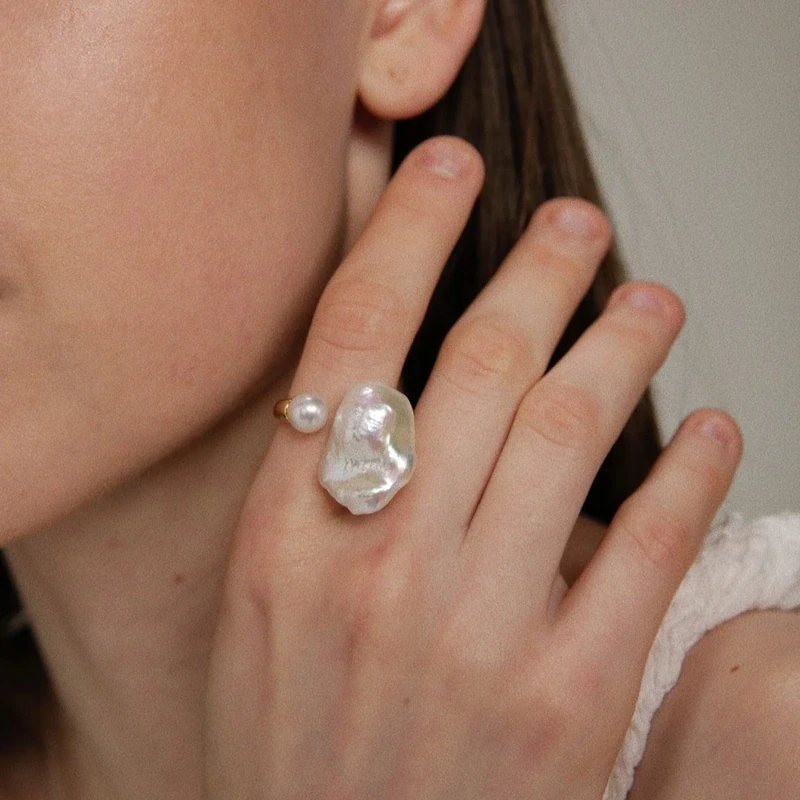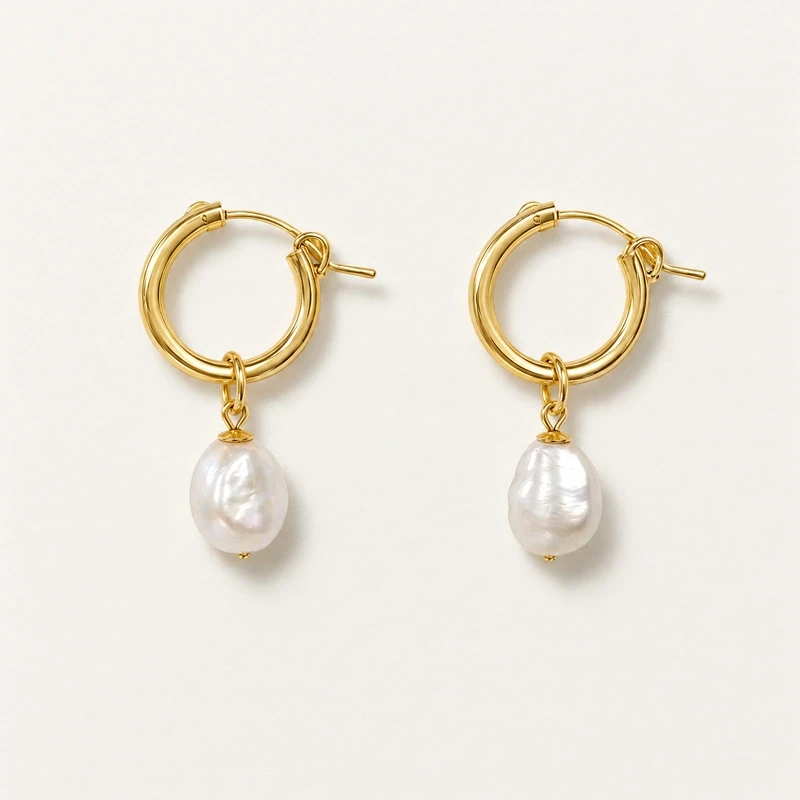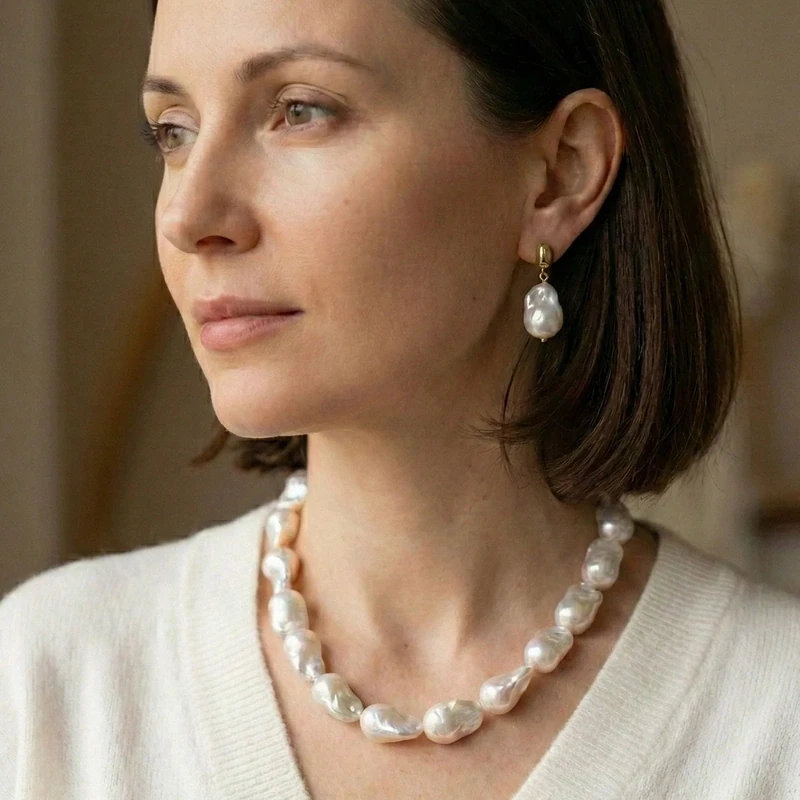
A coordinated pearl look does not have to be a perfectly identical set. Pearls vary naturally in size and shape, and that variation can sit comfortably beside a clear visual connection: a shared scale, a similar metal tone, or a repeated motif. The aim is not to make every piece look as if it came from one mold, but to give the combination enough common ground to feel intentional.
Start by deciding how you want to build the look. A set offers a ready-made relationship between its pieces, while separately selected jewelry gives you more control over proportion and detail. Either approach can work. Consider where each piece will sit, how noticeable you want the pearls to be, and whether you prefer a single point of focus or a quiet rhythm across the necklace, ears, and wrist.
Choose a coordinating principle before shopping
Pick one feature to connect the pieces, then let other details differ. Pearl scale is a useful starting point: small pearls can keep a necklace and bracelet visually light, while larger pearls create a more prominent accent. Metal tone is another simple link. Pieces with yellow-gold details can relate even when one has a charm and another has a plain pearl. A repeated motif, such as a heart or letter, creates a different kind of connection.
Trying to match every feature can make the choice unnecessarily restrictive. Instead, decide which element matters most for the outfit and occasion. If the outfit is already detailed, a shared metal tone may be enough. With simple clothing, a repeated pearl size or motif can provide a little more definition. For a practical comparison, browse pearl jewelry sets alongside individual styles in the necklace collection; consider the complete look rather than treating a set as the only route to coordination.
Understand what a set does—and does not—solve
A set makes coordination easier because its pieces are selected to belong together. That does not mean every pearl will be identical, especially when the design uses irregular pearls. A set can provide consistency in overall mood, metal finish, and scale while allowing differences between individual pearls. Before choosing one, check precisely what it includes and note the listed measurements for each piece. Those details determine whether the set suits your preferred proportions.
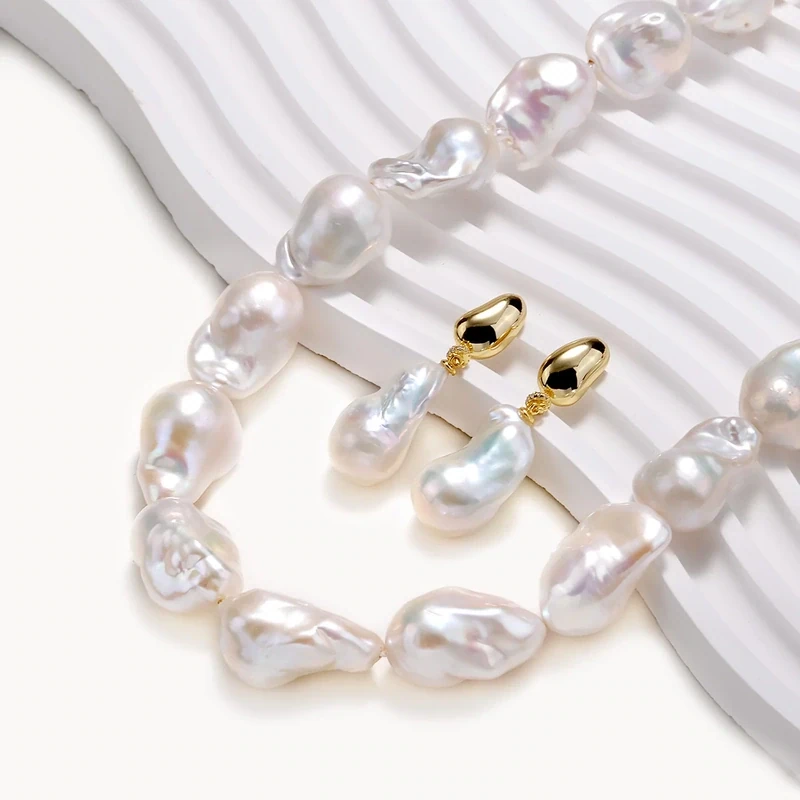
The Bella & Demelza Baroque Pearl Set is one specific example: it includes the Bella choker and Demelza drop earrings, not an unspecified group of matching accessories. The choker chain is approximately 45 cm, its pearls are listed as 20–28 mm, and the earrings have an approximately 3.5 cm drop. Its materials are baroque pearls and 14k gold vermeil. Those measurements point to a noticeable, coordinated look; they do not mean that each pearl has the same shape or size. Review the Bella & Demelza set details against how much presence you want near your face.
Coordinate separate pieces with scale
When selecting pieces separately, compare the visual size of the pearls before focusing on exact shape. A small pearl necklace paired with a similarly scaled bracelet tends to look understated. A larger focal pearl can also work with smaller accents, provided the difference feels deliberate: let the larger piece lead and keep the other jewelry simple. Think about spacing, too. A fine necklace and small bracelet may feel cohesive even if their pearls are not identical, because neither competes for attention.
The Anna Small Pearl Letter Coin Necklace lists a freshwater pearl approximately 5–6 mm and a letter coin approximately 6 mm. The Heart Initial Freshwater Pearl Bracelet also lists a freshwater pearl approximately 5–6 mm. Their similar pearl scale gives them a natural point of connection, while their distinct charm designs keep them from being exact duplicates. Both list 14k gold-filled metal, a detail that can help create a coherent look. See the Anna letter coin necklace and heart initial pearl bracelet measurements when deciding whether their proportions suit one another.
Use metal tone as a quiet visual link
Metal tone often connects jewelry without drawing attention away from the pearls. If a necklace and earrings both have yellow-gold details, the eye can read them as related even when one includes a charm and the other does not. Look at the pieces together in the light where you expect to wear them, and consider the other metal details in your outfit. A small repeated accent can be sufficient; matching every clasp or component is not a requirement for a coordinated appearance.
Read material wording carefully rather than treating similar color as proof of identical construction. Gold vermeil, gold-filled metal, and solid gold are distinct descriptions. The Bella & Demelza set lists 14k gold vermeil, while the Anna necklace and heart initial bracelet list 14k gold-filled metal. Those descriptions should remain separate even though all refer to gold-toned details. For care considerations, consult the jewelry care guidance and follow any product-specific instructions. Do not assume that a shared color alone tells you how a piece is made or how it should be maintained.
Repeat a motif without repeating a design
A motif can coordinate jewelry more flexibly than matching pearl shapes. Initials are a personal visual detail that can appear in different forms: a small letter coin on a necklace, for example, can relate to a heart-shaped initial charm on a bracelet. The shapes differ, but the letter creates a recognizable thread between them. This works best when the motif is visible enough to register without making every piece feel crowded.
Choose the motif first if it is central to the look, then keep other elements restrained. A letter necklace and initial bracelet can be worn together, or one can be paired with a simpler pearl piece to reduce visual repetition. Both the Anna necklace and the heart initial bracelet offer letters A–Z, according to their product descriptions. Their shared freshwater pearl scale and listed gold-filled metal offer additional links, but neither detail requires the charms to match. Keep the overall combination balanced by limiting other prominent symbols or layered accessories.
Let pearl variation contribute to the look
Pearls do not need identical outlines to coordinate. Freshwater pearls can have diverse sizes, shapes, and colors, and baroque describes an irregular shape rather than a pearl species or proof of uncultured origin. Natural pearls form without human intervention; cultured pearls grow with human intervention and care, and cultured pearls are real pearls. These distinctions are useful when reading product descriptions, but they do not mean that a styling combination needs matching origins or identical shapes.
With baroque pearls, look at the overall scale and silhouette instead of expecting repetition. The individual pearls in the Bella & Demelza set are described as one of a kind, with natural variations in size and shape. That variation is part of the listed design, not evidence that the pearls share one exact outline. For further terminology, consult GIA guidance on pearl description. When combining irregular pearls with a smaller, more regular piece, choose one as the focal point and avoid adding several competing statement shapes.
Build a balanced combination for the occasion
Before wearing a combination, consider how many areas of the look carry visual detail. A pearl choker and drop earrings already frame the face, so adding a statement necklace may make the arrangement feel busy. If you wear a set like Bella & Demelza, try it first with a simple neckline and minimal additional jewelry. With smaller separate pieces, such as a pearl necklace and bracelet, you can decide whether another accessory adds balance or simply repeats what is already clear.
For a relaxed outfit, one shared feature—a similar pearl scale, metal tone, or initial motif—usually gives enough cohesion. For a more dressed-up look, a set can supply a stronger relationship between necklace and earrings, while a separately chosen bracelet can remain understated. Check necklace length against the neckline, and consider whether an earring drop feels proportionate to the other details around your face. These are styling choices, not fixed rules; adjust one piece at a time until the combination feels comfortable and composed.
Make the final choice by comparing the whole look
Use a short decision process before you settle on a set or separate pieces. First, identify the role of the jewelry: a focal point, a subtle accent, or a coordinated group. Next, compare listed measurements so you have a realistic sense of pearl size, necklace length, and earring drop. Then choose one unifying feature, such as metal tone or motif. Finally, check that the pieces do not compete in scale and that the materials are described in terms you understand.
If convenience and an established relationship between pieces matter most, a set such as Bella & Demelza provides a defined necklace-and-earring pairing. If you want to build a more personal combination, the Anna letter coin necklace and heart initial bracelet offer shared pearl scale, metal description, and an initial theme without identical designs. Choose the option that fits how you plan to wear it, and let variation remain variation: coordination comes from considered relationships between pieces, not from making every pearl the same.