A long pearl necklace already brings visual length, texture and movement to an outfit. The easiest way to wear one without making a look feel crowded is to let that single line be the main detail around the neckline. A simple top, an open jacket or a smooth knit gives the pearls room to register, while competing necklaces and dense surface patterns can make the same strand harder to read.
Length is part of the styling decision, not just a measurement on a product page. A 97 cm necklace and a 118 cm necklace can fall differently on the body, and a pendant necklace creates a separate focal point. Consider where each piece will sit against your clothing, how much contrast it brings, and whether it can move freely. These checks help you choose a balanced outfit without assuming a necklace can be doubled, adjusted or worn in a way its construction does not support.
Let one long line lead
Start by deciding what should catch the eye first: the necklace, the clothing, or another accessory. With a long pearl necklace as the focal point, keep the area immediately around it relatively clear. A plain crew neck, open collar or uncomplicated V-neck can provide a quiet background. This does not mean every other part of the outfit has to be plain; it simply gives the necklace a defined visual space rather than asking several details to compete at once.
Think of the strand as a line running down the front of the body. A single line can create a calm vertical accent, especially when the top beneath it has a solid color or restrained texture. If the outfit already includes a patterned scarf, a prominent necklace or elaborate neckline, try the pearl piece with a simpler alternative before adding more. The useful test is whether you can still see the necklace’s shape and color clearly from a few steps away. If not, remove one competing element.
Use jackets to frame, not hide
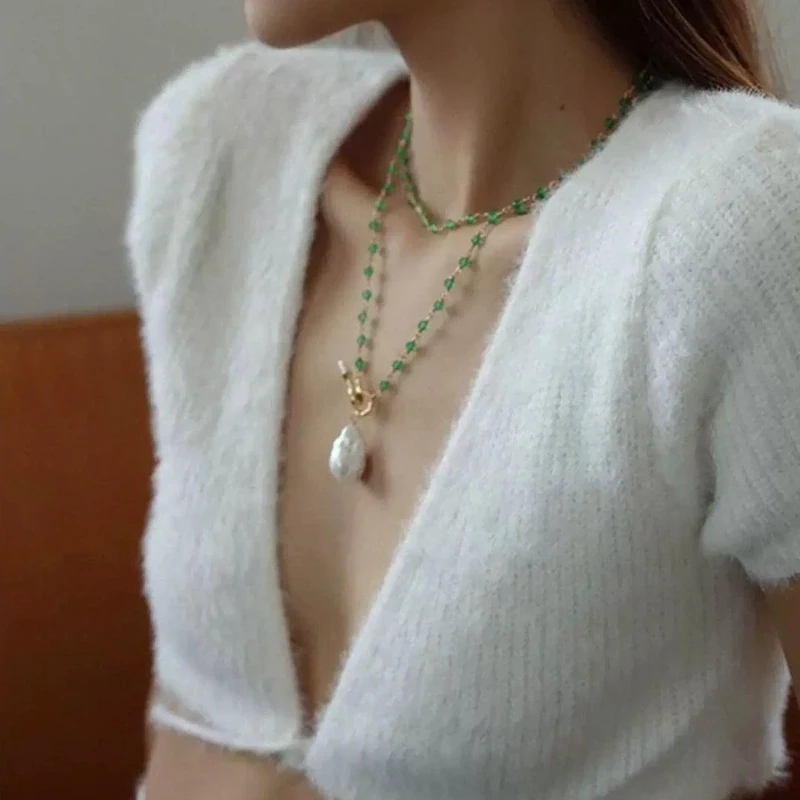
An open jacket can act like a frame for a long necklace. The two lapels create a visual boundary, while the necklace occupies the space between them. Try a clean, relatively open front so the strand can be seen against the shirt or knit beneath. The necklace does not need to match the jacket exactly; instead, look for a clear distinction between its color and the clothing underneath. A green-bead design, for example, may read differently against a neutral layer than against a busy print.
Check how the necklace behaves when the jacket is worn normally. Lapels, pockets and buttons may intersect the strand or compete with its focal details. Adjust the jacket’s position or choose a less structured layer if the line is continually obscured. A closed jacket can still work when the necklace sits visibly over its surface, but the overall effect is more deliberate when the closure and necklace do not cross awkwardly. Avoid pulling or forcing a necklace into a position that does not sit naturally.
Give textured knits enough contrast
Knits bring warmth and softness, but a chunky stitch can visually crowd a necklace or catch against it. A smooth knit is often the simplest partner for a long strand because the surface lets the beads and pearls stand apart. If you prefer a pronounced rib or cable pattern, consider a necklace with a clear color contrast and a line that remains easy to follow. The goal is not to avoid texture, but to make sure the clothing texture does not swallow the necklace’s details.
Pay attention to contact as well as appearance. A necklace resting on a rough or heavily textured knit may shift differently from one worn over a smooth top, and beads can rub against fabric during movement. Before leaving, look at the necklace while standing and while seated; the way it falls may change as the fabric folds. If the strand catches, snags or keeps being pushed aside, change the layer rather than repeatedly tugging at the jewelry. This small check can make the outfit look more relaxed and help avoid unnecessary friction.
Choose a neckline with breathing room
A neckline should give the necklace somewhere clear to fall. Open collars and simple V-necks can echo a long vertical line, while a plain round neckline offers a clean background without adding another strong shape. High or detailed necklines can still work, but the necklace may sit over more fabric and compete with seams, ties or embellishment. When trying an outfit, assess the whole area from shoulder to waist rather than looking only at the neckline in isolation.
Consider where the necklace ends in relation to the garment. If its lower point lands directly on a large button, pocket opening or graphic, the visual line may feel interrupted. Moving to a different top or choosing a different necklace length can restore a clearer path. The necklace collection offers a way to compare different necklace styles, but fit should still be judged on the wearer and outfit. Do not assume a necklace has an extender or another adjustment option unless its product details state that it does.
Compare 97 cm and 118 cm proportions
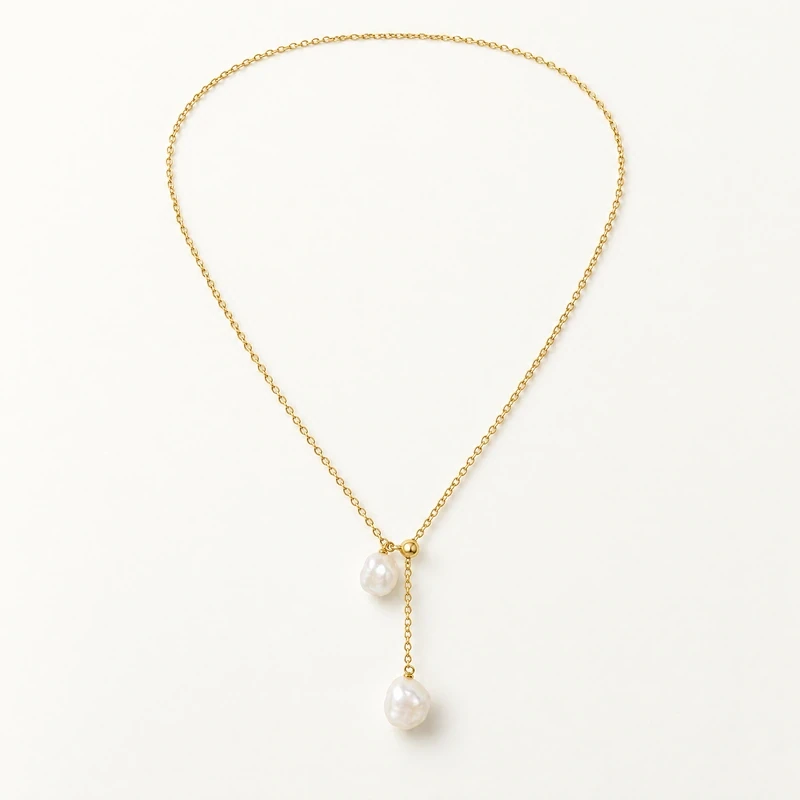
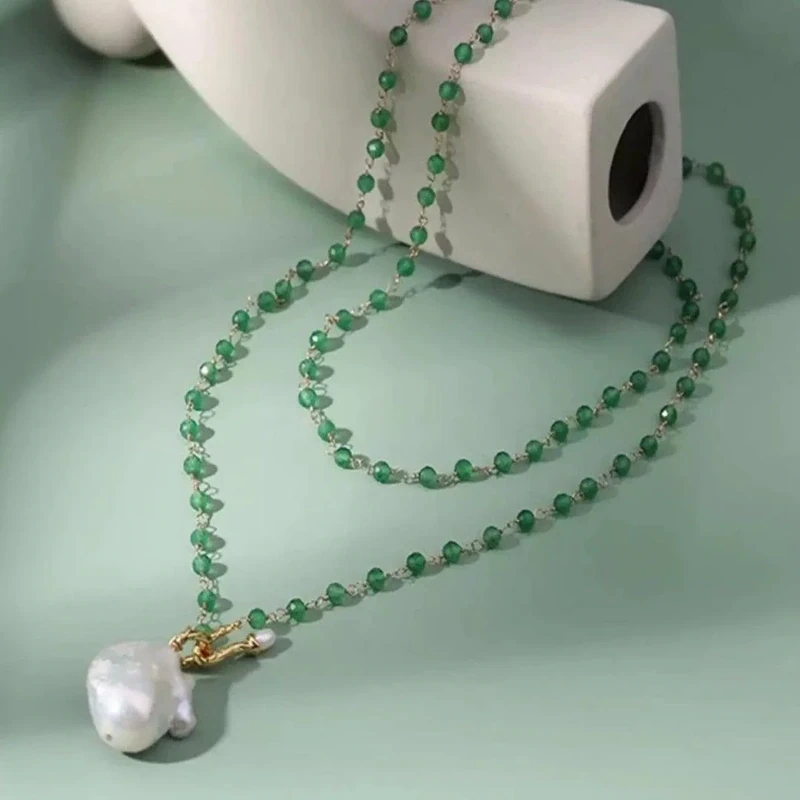
The difference between 97 cm and 118 cm is substantial enough to influence where a necklace falls, although the exact position depends on how it is worn and the wearer’s proportions. The 97 cm baroque pearl and green agate necklace combines freshwater baroque pearls with green agate beads and copper plated with recycled 18K gold. Its listed length gives a practical starting point: picture a long line over the specific top or jacket you plan to wear, then check that the beads remain visible and do not land on a distracting garment detail.
The 118 cm baroque pearl and green agate necklace offers a longer line. Its product description lists 2.7 mm beads and a weight of 24 g per piece, along with green agate and copper with 18K gold plating. Those details can help you imagine its scale, but they do not establish how it will fall on every wearer. Compare listed length with the clothing you expect to wear, and check the full strand’s position in a mirror. Neither length should be assumed to double-wrap safely or to include a particular clasp or extender.
Balance pendant scale and movement
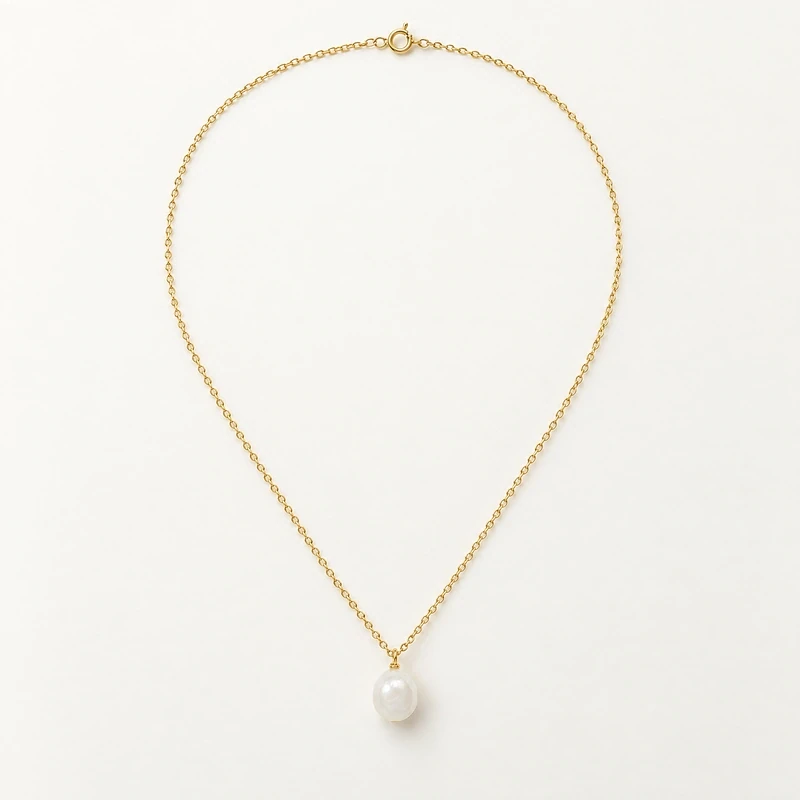
A pendant changes the visual center of a necklace. With a long, bead-focused strand, attention may travel along much of the line; with a pendant necklace, the eye tends to settle on the pendant. Keep the surrounding neckline simple enough for that focal point to read clearly. The UMA necklace is described as featuring a hand-wrapped baroque pearl with multitone luster. Its listed pearl pendant measures 25–35 mm, and the chain is listed as 4–6 mm, so the pendant has a defined presence rather than disappearing into the outfit.
The UMA chain is available in 30-inch (75 cm) and 39-inch (100 cm) options; the product description notes that the pictured model wears the 30-inch version. Choose between those stated options by considering where you want the pendant to fall over your usual neckline, rather than assuming an unlisted adjustment. Because a pendant can move as you walk, check that it sits comfortably over the garment and is not repeatedly hidden by a lapel or collar. The product lists sterling silver with 14k gold plating; that is distinct from solid gold, so describe and consider the material as listed.
Keep other accessories in proportion
When a long pearl necklace is the main accessory near the neckline, earrings can be a supporting detail rather than another focal point. Small or visually simple earrings often keep the overall effect composed, while larger or more elaborate earrings can work if the outfit has room for both. Make the choice by looking at the complete silhouette: a statement necklace, bold earrings, a patterned top and a busy jacket may each be attractive alone but feel crowded together.
Apply the same editing approach to scarves, collars and additional necklaces. A second strand is not necessary to make a long necklace look intentional, and the article’s styling advice does not imply that any particular necklace can be layered, detached or wrapped. For mixed-material pieces, include care in the decision: pearls are soft, and friction or contact with chemicals can be a concern. GIA advises avoiding ultrasonic and steam cleaners, acids, chemicals, perfume and excessive heat. Wipe pearls with a soft, clean cloth after wearing, and consult jewelry care guidance when deciding how to look after a mixed-material piece.
Make a final fit and styling check
Before wearing a long necklace out, put on the complete outfit and check it from the front and side. Confirm that the strand is visible, falls where you expect and does not cross a button, pocket or neckline detail in a distracting way. Move naturally, sit down and stand again to see whether the necklace shifts into an awkward position or catches on the fabric. This is especially useful with jackets and textured knits, where clothing can change how a necklace hangs or moves.
Then remove one competing detail if the overall look feels busy. You might swap a patterned top for a plain one, open a jacket, or choose a simpler earring—not change several things at once. For length, compare the actual stated option with the outfit rather than relying only on a label such as “long.” For a pendant, let its scale set the amount of visual activity around it. A clear single line, an uncomplicated backdrop and a quick movement check are practical ways to wear long pearls with intention and without overcrowding.