Layering pearl necklaces works best when each piece has a clear place rather than competing for attention. A useful arrangement creates visible space between necklaces, varies the visual scale, and feels balanced against the neckline of the clothes you plan to wear. The goal is not to follow a fixed formula: a short pearl accent can sit above a longer pendant, while a bolder pearl necklace may work better as the main feature with a quieter companion.
Start with the actual lengths and construction details you can confirm, then test the pieces together while moving naturally. Necklaces can shift, overlap or tangle even when they look separated on a table. Try the combination over the intended neckline, check it while standing and sitting, and make adjustments before deciding it is finished. This process is especially helpful when a necklace has an adjustable length or a movable pearl, since those details affect where the focal point rests.
Begin with the neckline and outfit
Choose the clothing first, then assess how much open space it leaves around the neck and upper chest. A crew neckline may cover much of a short necklace, while a V-neck creates a downward visual line that a pendant can echo. An open shirt collar provides another kind of frame, but its edges may interrupt a pendant or push a chain off center. Rather than assuming one necklace length suits every top, lay the pieces over the garment and observe where they land.
Look for a clear relationship between the neckline and the necklace ends. A necklace resting directly on the edge of a collar can appear crowded or disappear into the fabric; a little distance can make the outline easier to read. With a deep neckline, consider whether the longest piece ends within the visible area or extends beyond it. The right choice depends on the outfit and the intended focal point, so check the combination in a mirror from the front and side.
Plan visible space between lengths
For a layered look, different necklace lengths are a starting point, not a guarantee of separation. A shorter necklace may sit higher than a longer one, but the chains can still meet when you bend or turn. Put both on and note their resting positions; then walk, look down and turn your head. If the strands repeatedly settle on top of one another, choose a different pairing or adjust a length where the product description explicitly allows it.
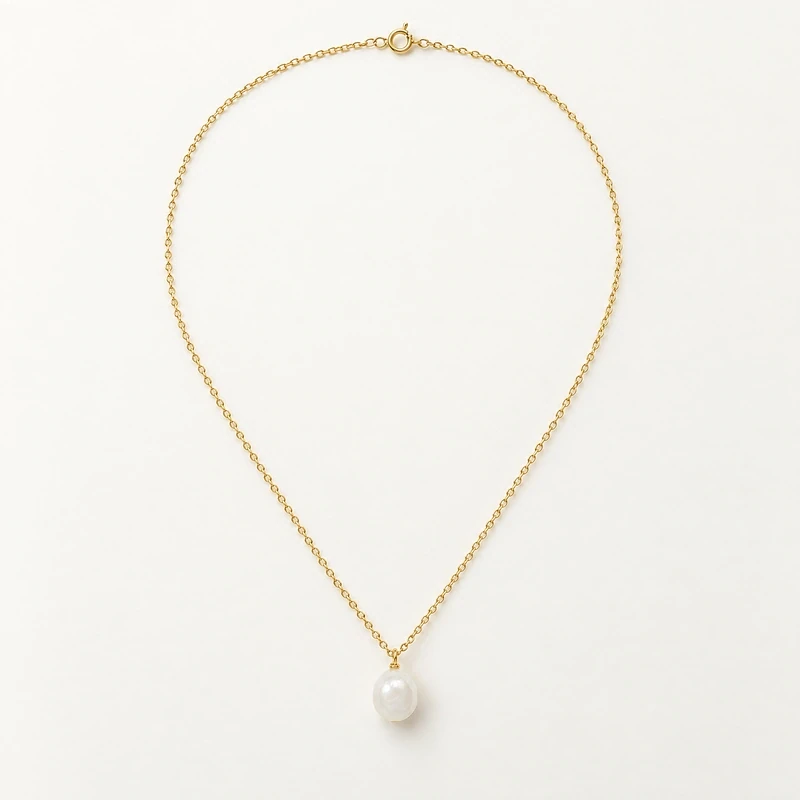
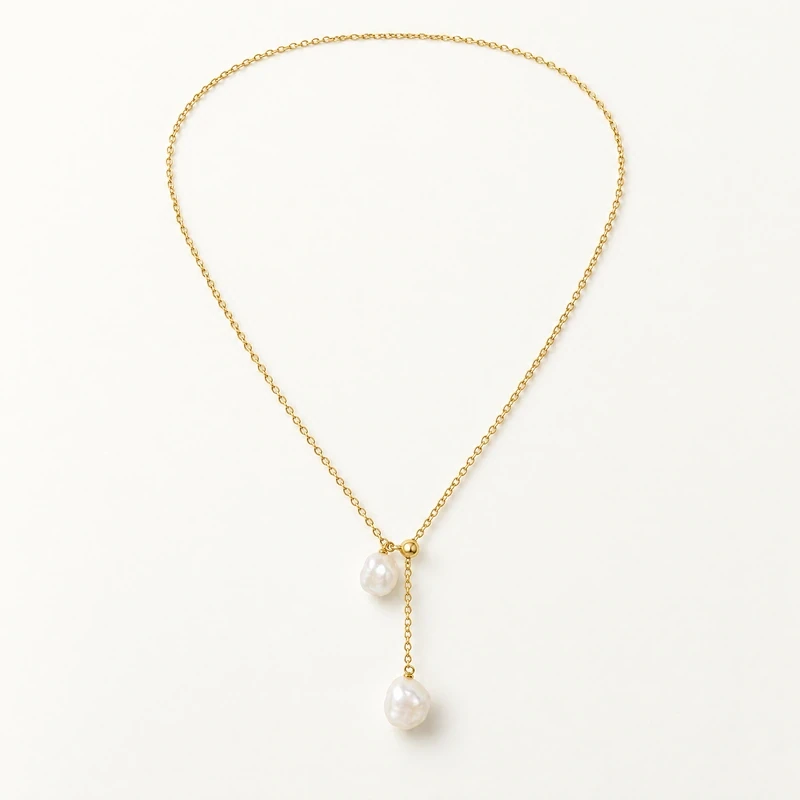
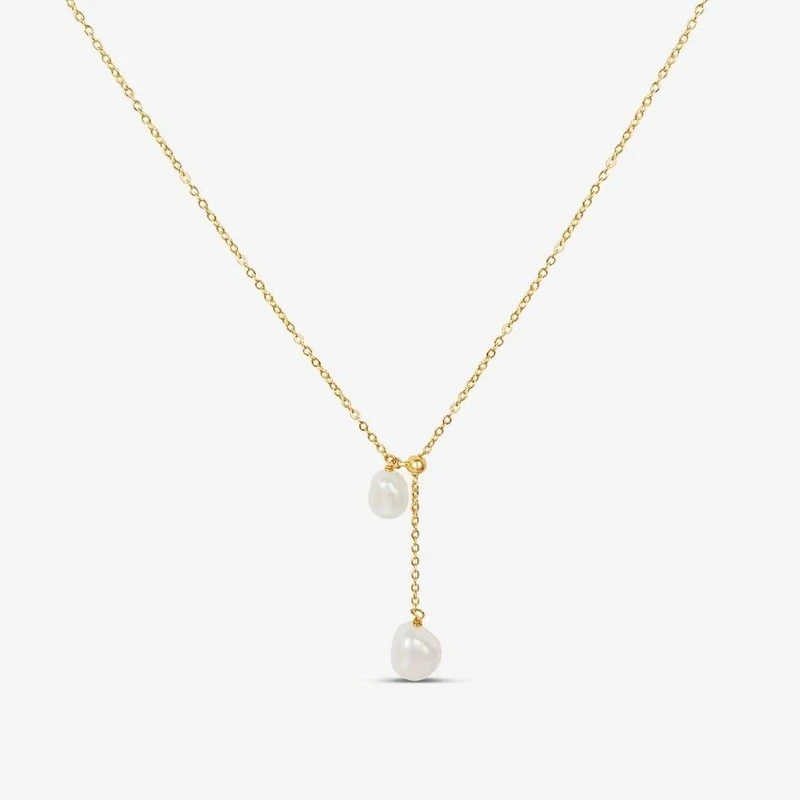
The Anna Small Pearl Letter Coin Necklace is approximately 38 cm long with a 7 cm extension. That stated adjustment gives you a practical range to test alongside another necklace. The Jade II Duet Pearl Necklace is approximately 50 cm total length and described as adjustable. These measurements can help you plan, but they do not predict exactly where a piece will fall on every person; neck and torso proportions, as well as the garment, affect the result.
Use contrast in pearl and chain scale
Layering can feel more deliberate when the necklaces have different visual weights. Pairing a small pearl detail with a bolder chain or larger pearl creates a focal hierarchy: one piece leads, while the other adds a quieter point of interest. If every necklace has similarly sized pearls and equally prominent details, the eye may not know where to settle. Contrast does not require a dramatic difference; a modest shift in pearl size or chain presence can be enough.
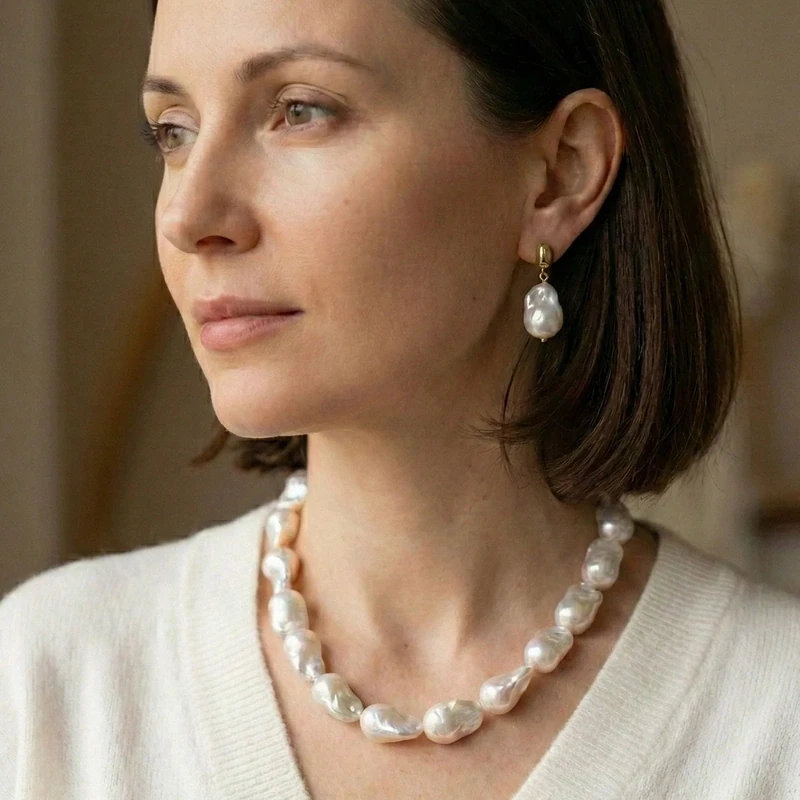
For example, the Anna necklace has a freshwater pearl approximately 5–6 mm and a letter coin approximately 6 mm, while the Jade II Duet features two freshwater baroque pearls approximately 10–12 mm. Their product descriptions offer a clear scale contrast to consider. The Baroque Pearl Necklace Ref. 080 is described as a bold chain accented with freshwater baroque pearls and finished with a pearl drop. Because it is visually more substantial, it may work as the leading layer with a smaller, simpler companion rather than another bold necklace.
Give each necklace a distinct role
Before putting pieces together, decide what each one contributes. One can provide the shortest line near the collarbone, another can carry the main pendant or pearl focal point, and a third—if used—can add a longer, relatively simple line. This role-based approach is more useful than adding pieces simply because they are available. With two necklaces, one focal point and one supporting detail are often enough to create an intentional composition.
Be alert to competing charms and pendants. A letter coin, a pearl drop and a sliding pearl may all draw attention in different places. If their visual centers cluster together, reposition an adjustable element only where the product description confirms that it moves, or try another pairing. On the Jade II Duet, the larger pearl slides up and down along the necklace, so its position can be adjusted. Do not assume other pearl necklaces have movable or detachable components unless their descriptions say so.
Test for tangles and movement
Check the necklaces together on your body, not just on a flat surface. Walk for a few minutes, turn your head, reach forward and sit down. Watch whether one chain repeatedly crosses the other, whether a pendant flips, or whether a pearl catches against a neighboring piece. A little movement is normal; persistent tangling can make a carefully arranged combination frustrating to wear. If the pieces keep crossing, try changing their order, selecting a larger length difference, or wearing only one of them.
Also notice how the layers behave when you put on or remove a jacket, scarf or bag strap. A chain that seems stable with a bare neckline may shift under a collar or rub against fabric. Avoid pulling chains apart sharply if they catch; take the necklaces off and separate them carefully. These simple tests help distinguish a combination that looks good in a still mirror from one that remains comfortable and visually composed through ordinary movement.
Balance the arrangement with clothing
Consider both the neckline and the visual weight of the garment. A patterned top, textured knit or prominent collar already adds detail, so a restrained pearl layer may be easier to read. With a plain, open neckline, a bolder necklace can take a more prominent role. This is a styling judgment rather than a strict rule: use the mirror to check whether the jewelry complements the clothing or seems to compete with its strongest feature.
Color and finish matter as part of that balance. The Anna necklace is described with yellow-gold 14k gold-filled metal, while the Jade II Duet offers a choice of yellow gold 14k gold-filled or 925 sterling silver. The Ref. 080 description specifies 14K gold-plated metal. Keep those material descriptions distinct when choosing a combination; gold-plated, gold-filled and sterling silver are not interchangeable terms. For broader options, browse the necklace collection and compare each item's stated details rather than assuming similar appearances indicate the same material.
Care for layered pearls thoughtfully
More layers mean more contact between chains, pearls and clothing, so take them off with care after wearing. Pearls are relatively soft, and conservative handling is sensible, particularly when a necklace combines pearls with metal components. Wipe pearl jewelry gently with a soft, clean cloth after wear. Keep it away from perfume, acids, chemicals, excessive heat, and ultrasonic or steam cleaners; these methods are not appropriate for pearls. For mixed-material pieces, take the most delicate component as your guide.
For additional guidance, consult the GIA pearl care and cleaning advice. If cleaning with warm soapy water is appropriate for the piece, strung jewelry should dry completely before storage. To keep your preferred combination ready to wear, store necklaces separately when practical and avoid leaving chains pressed together in a knot. Before the next outing, select the neckline, put on each necklace, check their resting distance, and repeat a brief movement test. That small routine helps preserve both the spacing and the ease of the layered look.