The best pearl necklace length for a neckline starts with a resting point, not a label. A necklace described as short or long still needs to work with the opening of your shirt, the edge of your dress and the amount of space you want around the pearl. Rather than relying on a universal body-size chart, measure the placement you prefer while wearing the clothes you expect to pair with it.
A piece of cord can help turn that preference into a useful shopping measurement. From there, compare the exact listed chain length, any extender and the pendant dimensions. These details answer different questions: the chain determines the loop around your neck, the extender offers additional length, and the pearl occupies space below its attachment point. Considering all three gives you a clearer basis for choosing among the pearl necklaces in the necklace collection.
1. Choose a Resting Point Before Measuring
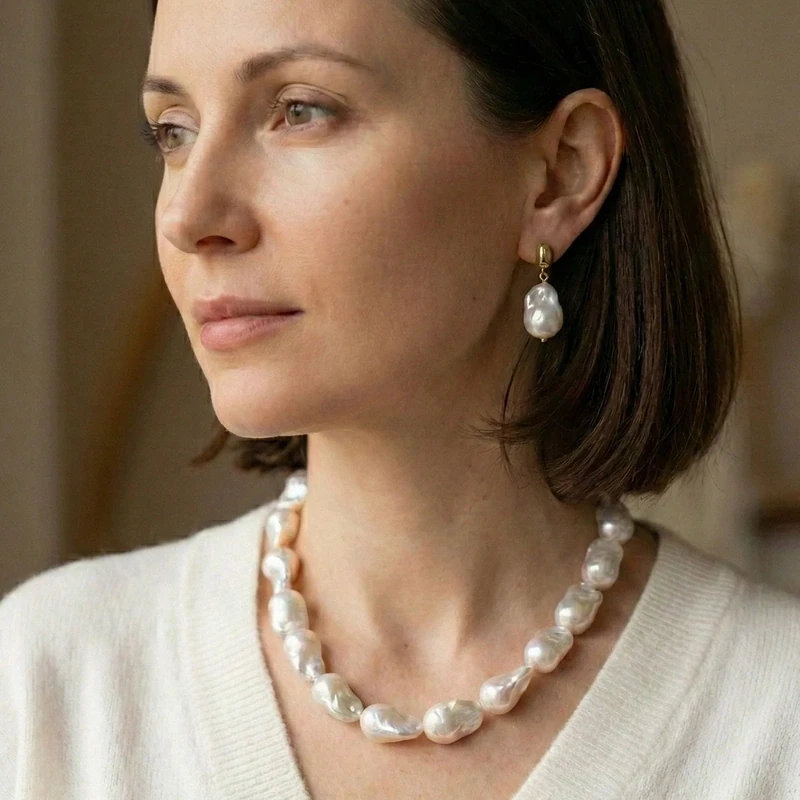
Put on a representative outfit and look at its neckline in a mirror. Decide whether you want the pearl above the fabric edge, within the opening or over the clothing. Each is a workable styling choice, but choosing one first makes your measurement meaningful. For a V-neck, you might prefer a pearl inside the opening with space beneath it. For a high neckline, you might instead want the necklace to sit visibly over the fabric.
Mark the desired location mentally or with a fingertip, then consider how much separation you want between pearl and neckline. A pendant positioned directly on the edge may compete with that line. If that is not the effect you want, move your preferred point slightly higher or lower. Keep the actual garment on during this exercise rather than estimating from memory.
2. Use Cord to Measure Your Preferred Loop
Take a flexible cord and drape it around your neck in the route you want the chain to follow. Bring its ends together so the front of the loop sits near your preferred pendant position. Avoid pulling it tight to create a measurement that does not reflect how you intend to wear the necklace. This is a placement exercise, not a neck-circumference measurement.
Hold or mark the point where the cord ends meet, remove it and measure the resulting loop against a ruler or measuring tape. Record the length in centimeters to compare with the listings here. Repeat once to check your result. Because cord cannot reproduce every chain or pendant shape, treat the number as a practical reference rather than an exact preview. Make a separate note of where you want the bottom of the pearl to sit.
3. Compare Base Length and Extender Separately
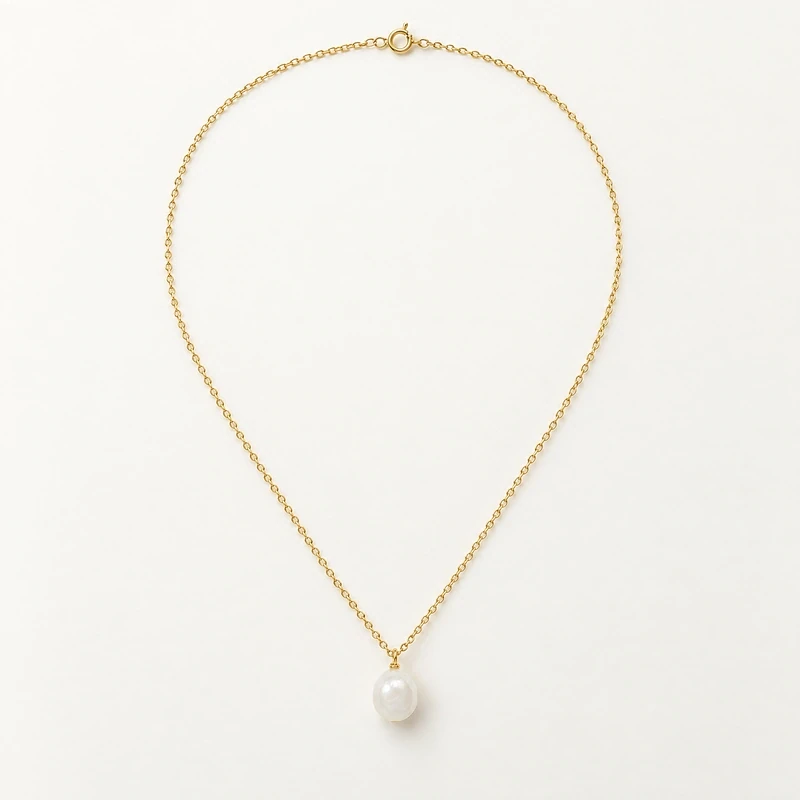
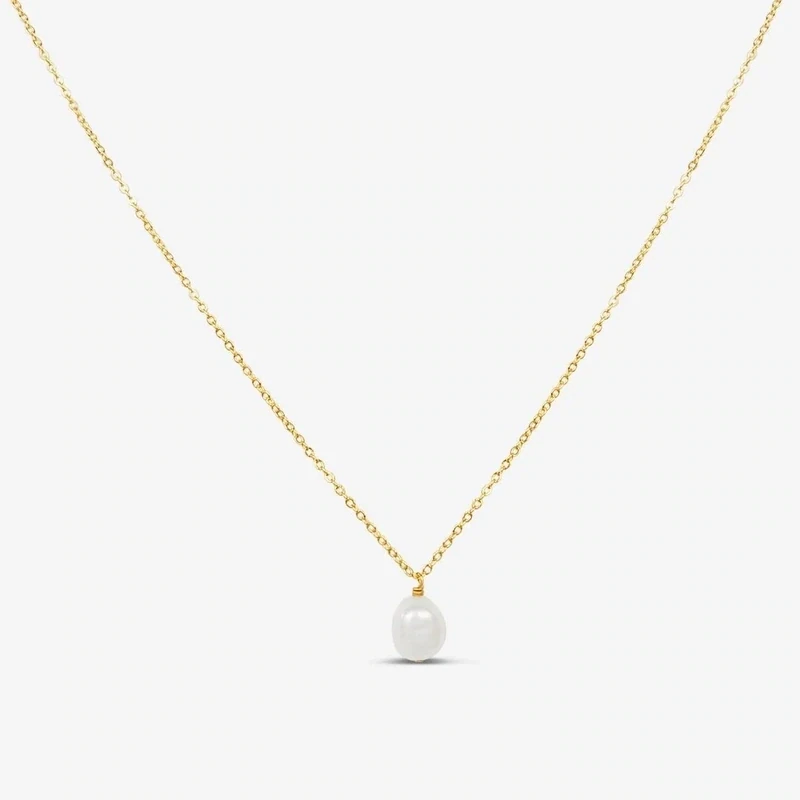
An extender matters because the starting length and the longest listed length can suit different placements. The Jade I Baroque Pearl Pendant has two chain options: 40 cm plus a 5 cm extender, or 45 cm plus a 5 cm extender. Their respective maximum totals are 45 cm and 50 cm. Compare your cord measurement with both the base length and the maximum, not just one number.
If your preferred loop measures around 44 cm, the 40 cm option with its extender includes that measurement within its stated span. If it measures around 48 cm, the 45 cm option is the relevant comparison. These are length comparisons, not promises of an identical resting point. Do not assume that an extender allows shortening below the base length, or that every intermediate setting is available unless specified.
4. Read Shorter Necklace Measurements Literally
The Large Freshwater Pearl Pendant Necklace lists an approximate necklace length of 36 cm with a 6 cm extension chain. That gives an approximate maximum of 42 cm. Compare those figures with your cord measurement before deciding whether it suits a close-to-the-neck placement. A descriptive label such as “choker” would not replace this check: the listed measurements are the useful starting point.
Try a cord loop at approximately 36 cm, then at approximately 42 cm, with your intended neckline. This shows whether the listed length span overlaps the placement you like. If your preferred loop is longer than the approximate maximum, do not expect the extender to reach it. Equally, if you want a shorter loop than the listed base length, do not assume the necklace can be adjusted down to that measurement.
5. Allow Space for the Pearl Pendant
Chain length alone does not describe the full visual footprint. Jade I lists an approximately 10–12 mm freshwater baroque pearl, while the Large Freshwater Pearl Pendant Necklace lists a 10 × 7 mm freshwater pearl pendant. Baroque describes an irregular shape. For Jade I, the product description also notes that individual pearls vary in appearance, so avoid imagining every example as a perfectly matching outline.
Use a ruler to visualize the listed dimensions beside your chosen neckline. Then consider the space beneath the chain’s lowest point, where the pendant will be seen. Do not simply add a pearl dimension to the chain length: the loop measurement and pendant measurement describe different things. Without a complete hanging measurement, you cannot calculate an exact lower edge. You can still decide whether a smaller pearl or a more prominent pendant better suits the opening.
6. Evaluate a Long Necklace as Its Own Choice
The MONTE Baroque Pearl Necklace lists a chain length of 40 in (100 cm), a chain measurement of 4–6 mm and a pearl pendant of 25–35 mm. Its freshwater baroque pearl varies in shape and appearance. This is a substantially different length to assess, not merely another short-necklace setting. Use the listed 100 cm measurement to create a cord loop and inspect its placement on your actual outfit.
For a high neckline, consider whether you like the pendant against a clear area of fabric or near a seam or pattern. With an open neckline, check where the long loop passes from skin onto clothing. Move and sit while observing the cord. Do not assume the necklace can be doubled, detached or shortened; those features are not specified. Choose it for the listed configuration rather than an imagined alternative.
7. Check Placement Across Your Regular Necklines
Repeat your cord test with two or three outfits you wear regularly. A scoop neck, button-front shirt and high-neck top offer different spaces for a pendant. Record the loop length you prefer for each instead of trying to assign one “correct” necklace length to your body. For a button-front shirt, test it with the number of buttons you normally leave open, since that defines the visible opening.
Compare your notes for overlap. If several outfits work with a similar loop length, that measurement can guide your first choice. If the preferred placements differ, an extender may be useful where its stated span covers them. Keep metal selection separate from length: Jade I offers 925 sterling silver or 14k gold-filled metal, while the other two necklaces offer their own silver and vermeil options. A metal preference does not change the listed length information.
8. Make a Final Length-and-Neckline Check
Before choosing, write a short comparison with four entries: your preferred cord loop, the necklace’s listed base length, its extender if specified, and its pendant dimensions. For Jade I, specify which chain option you mean. For the Large Freshwater Pearl Pendant Necklace, retain the word “approximately” with its length. For MONTE, compare the stated 100 cm chain directly with your long-loop test rather than expecting an unlisted adjustment.
Return to the outfit you most want to wear and repeat the best-matching cord placement. Check both the intended pearl position and its separation from the fabric edge, then sit and stand once more. If the listed measurements do not support that placement, choose a different length rather than relying on a style label. Your final decision should connect one real neckline, one measured preference and one clearly understood necklace configuration.