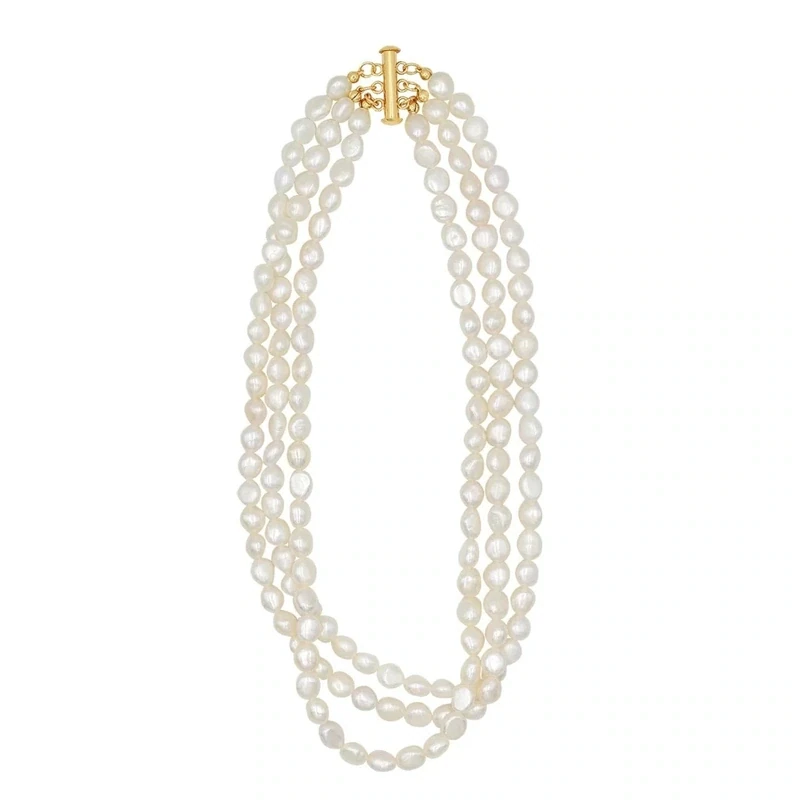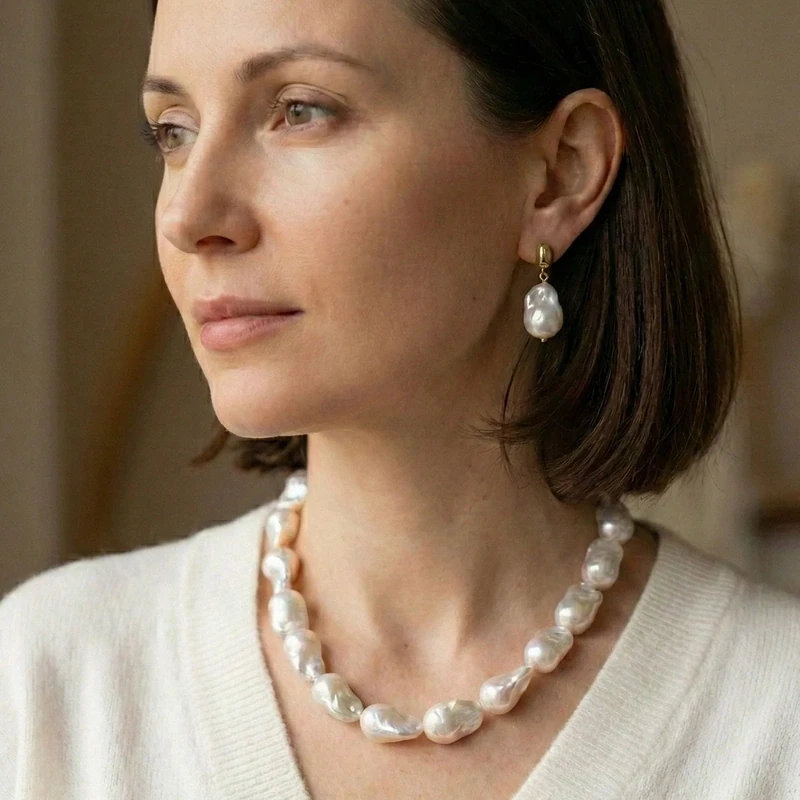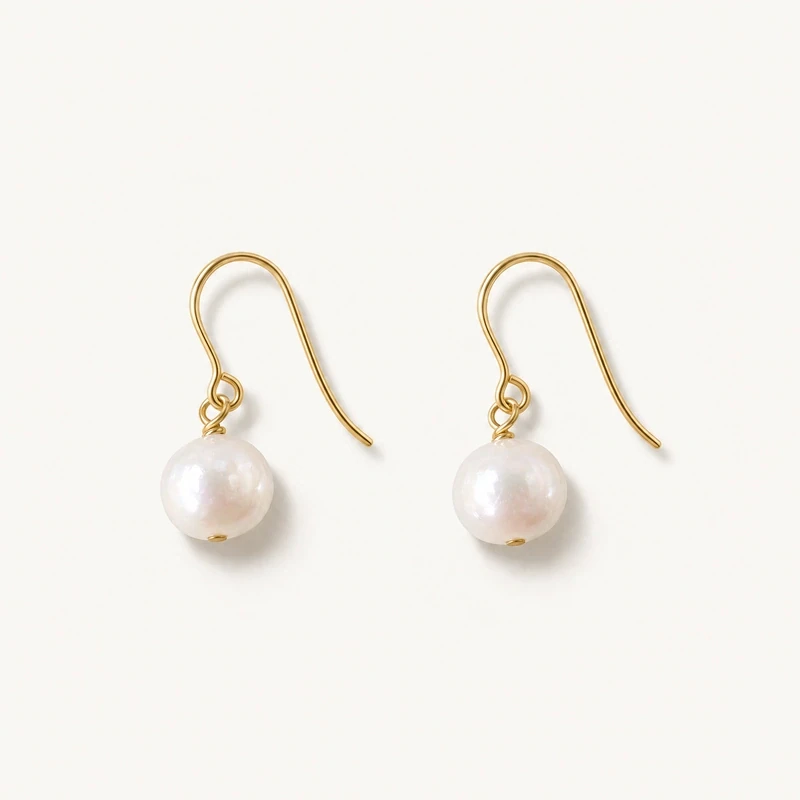
Jewelry that combines pearls with shell, gemstones, ceramic, crystal, clay or plated metal needs a more cautious approach than a single-material piece. A method that may suit one component could be unsuitable for another, and the materials may meet at settings, connections or a strand. When the construction or care instructions are unclear, avoid experimenting and ask the seller or maker for guidance.
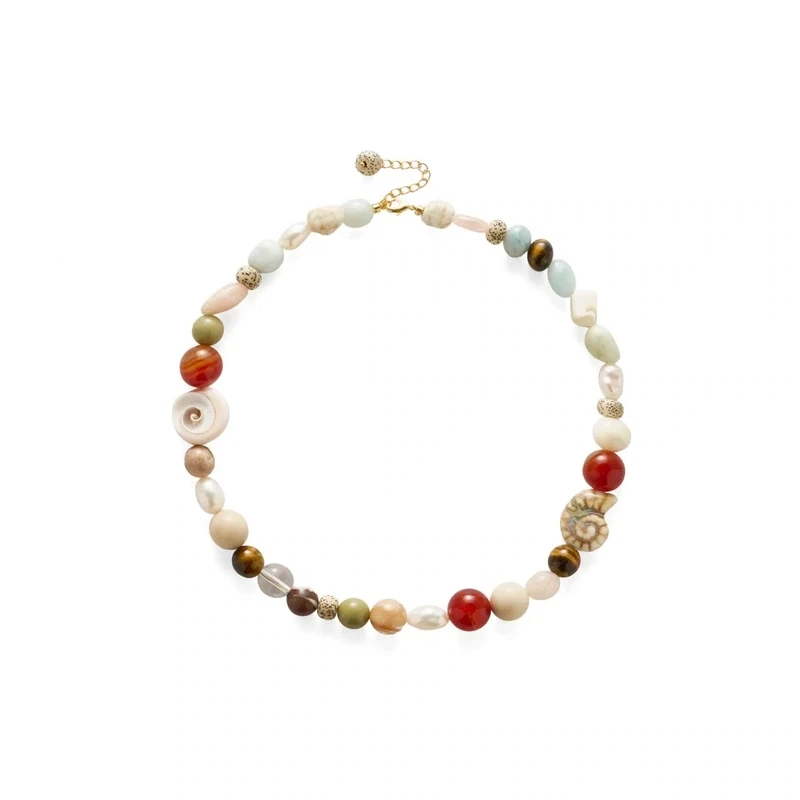
A useful default is to keep the piece away from chemicals, moisture beyond gentle wiping, and heat; put it on after applying personal-care products; and clean it with a soft, clean cloth after wearing. These steps are especially relevant to pearls, which are relatively soft. For example, the Conch Shell Beaded Necklace combines shell, freshwater pearl, natural stone, ceramic, crystal and copper with 18K gold plating. Its varied materials call for careful, restrained handling rather than one aggressive cleaning method.
Start with the most delicate component
When a piece contains several materials, base your routine on the component that calls for the gentlest treatment. Pearls are soft, with a hardness of 2.5 on the Mohs scale, and can be affected by acids, chemicals and excessive heat. GIA advises avoiding ultrasonic and steam cleaners for pearls. Those devices are poor choices for a mixed-material item when a pearl is among its components, even if another part appears sturdy.
Apply the same conservative thinking to shell, mother-of-pearl, clay, ceramic, crystal and gemstones when their specific treatments or construction are not known. Do not assume that a material name alone tells you its finish, setting method or tolerance for cleaners. A piece such as the Allie White Flower Earrings combines handmade polymer clay flowers, Swarovski crystals, mother-of-pearl accents and sterling silver fish hooks. Care should protect the full combination, not just its metal parts.
Keep perfume and household products away
Perfume, hairspray, cosmetics and household cleaners can expose jewelry to chemicals that may affect pearls or other components. Put jewelry on after personal-care products have been applied and have had time to settle. Remove it before cleaning, swimming, bathing or using products that could splash onto it. This is a precaution, not a claim that every listed material reacts in the same way.
Do not use vinegar, alcohol, bleach, ammonia, abrasive powders or a homemade solvent mixture as a shortcut. Even if a recipe is recommended for one kind of stone or metal, it does not establish that it is safe for a pearl, shell, clay flower, crystal, plating or an unknown adhesive or connection in the same piece. If a spill occurs, blot gently with a soft clean cloth rather than rubbing or applying another chemical. For persistent residue or a visible change, stop and seek care advice specific to the item.

Use a gentle wipe as your regular routine
After wearing, wipe the piece with a clean, soft cloth. Use light pressure and work around the components without pulling on beads, chains or settings. This simple step is consistent with GIA’s advice for pearls and avoids introducing a cleaner whose effects on the other materials are uncertain. Keep the cloth free of polishing compounds unless the maker confirms that they are appropriate for every component.
Do not soak a mixed-material piece as a routine. GIA notes that occasional cleaning of pearls with warm, soapy water may be possible, but that does not automatically make immersion suitable for an entire necklace or pair of earrings containing additional materials. If a piece is strung, any water-based cleaning requires complete drying; avoid leaving moisture caught between beads or around connections. When in doubt, use the dry-cloth routine and request item-specific instructions before going further.
Understand plated metal without overcleaning it
Metal descriptions matter. Gold-plated jewelry has a gold layer over another metal; it is not the same as solid gold or gold-filled jewelry. Vermeil is a distinct category with a sterling silver base. Sterling silver marked 925 is 92.5 percent silver. These terms describe different constructions, so a plated item should not be treated or described as solid gold simply because its surface is gold-colored.
The Conch Shell Beaded Necklace is described as copper with 18K gold plating, while the JUDITH Malachite & Pearl Necklace has a 14K gold-plated sterling silver clasp. Those details are product-specific and should not be generalized to other pieces. Avoid metal dips, abrasive polishing and vigorous rubbing on plated areas unless the maker gives suitable instructions; such methods may be inappropriate for a coating or nearby delicate materials. No plating description alone establishes that an item is waterproof, hypoallergenic or tarnish-free.
Inspect connections before and after wearing
Before putting a mixed-material piece on, take a moment to look for loose beads, a bent hook, a gap near a setting, a frayed strand or a clasp that does not close as expected. Check without tugging. If anything appears unstable, set the piece aside rather than testing it by pulling or wearing it. A small change can be easier to address before it becomes a lost component or a more complicated repair.
After wear, check again for residue, moisture, a new scratch or a loosened connection. For earrings, inspect the visible components and the fitting; do not assume that a metal description for one fitting applies to an alternate option. The Allie White Flower Earrings offer a choice of fish-hook or clip-on earrings, but the listed material detail specifically identifies 925 sterling silver fish hooks. If you need to know the clip-on fitting material or the right way to care for it, ask before relying on an assumption.
Let moisture and heat be reasons to pause
Keep pearls away from excessive heat, steam and prolonged dampness. Do not use a hair dryer, radiator or direct sun to speed drying after a piece has become wet. Instead, blot carefully with a soft cloth and allow it to dry naturally in a safe place. With strung jewelry, make sure it is completely dry before putting it away, as GIA advises for pearl jewelry cleaned with water.
For mixed materials, do not interpret “natural stone,” “ceramic,” “crystal” or “polymer clay” as a complete care specification. The exact stone, finish, assembly and any treatments may not be stated. That uncertainty is a reason to avoid soaking, heat and unverified cleaners, not to guess at a material’s durability. For broader pearl guidance, see the jewelry care collection and consult the listed GIA pearl care guidance for pearl-specific precautions.
Store pieces separately and ask when unsure
Store mixed-material jewelry separately so pieces do not rub against one another or catch on neighboring items. Choose a clean, dry place away from direct heat and strong sunlight. Keep the jewelry in a soft pouch or a compartment where beads, pearls and decorative surfaces are not pressed together. Avoid hanging a heavy beaded piece in a way that puts unnecessary strain on its strand or connections; lay it flat when practical.
If you notice a change in color, surface, setting or strand, do not polish, glue or replace a component on your own. Take clear notes about what you observe and ask the seller or a qualified jewelry professional what care or repair is appropriate for that specific construction. The JUDITH necklace, for instance, combines malachite beads, a large baroque freshwater pearl and a gold-plated sterling silver clasp, so advice should account for the whole piece rather than the clasp alone. A gentle wipe, a careful inspection and separate storage are sensible starting points; when those are not enough, pause and seek clarification before trying a stronger treatment.