Cleaning a strung pearl necklace begins with deciding what needs cleaning and what holds the pearls together. A necklace may contain closely arranged strands, visible thread, metal links, or several materials that require different care. The safest starting point is not a bowl of water: it is a close look, followed by gentle wiping with a soft, clean cloth.
Pearls are soft, and their care should account for both the pearl surface and the surrounding construction. GIA allows occasional warm soapy water cleaning, while emphasizing that strung jewelry must dry completely. That is not permission to wash every pearl necklace in the same way. Use the following decision process to distinguish routine wiping from a more involved cleaning, especially when the thread or metal finish is unknown.
1. Identify the Construction Before Adding Water
Lay the necklace on a clean, soft surface and look at how the pearls are arranged. Closely placed pearls may conceal the material running through them. A spaced-chain design may show more metal between pearls, but visible chain does not establish how every pearl is attached. If you cannot identify the connecting material, treat it as unknown rather than assuming silk, another thread, or an entirely metal construction.
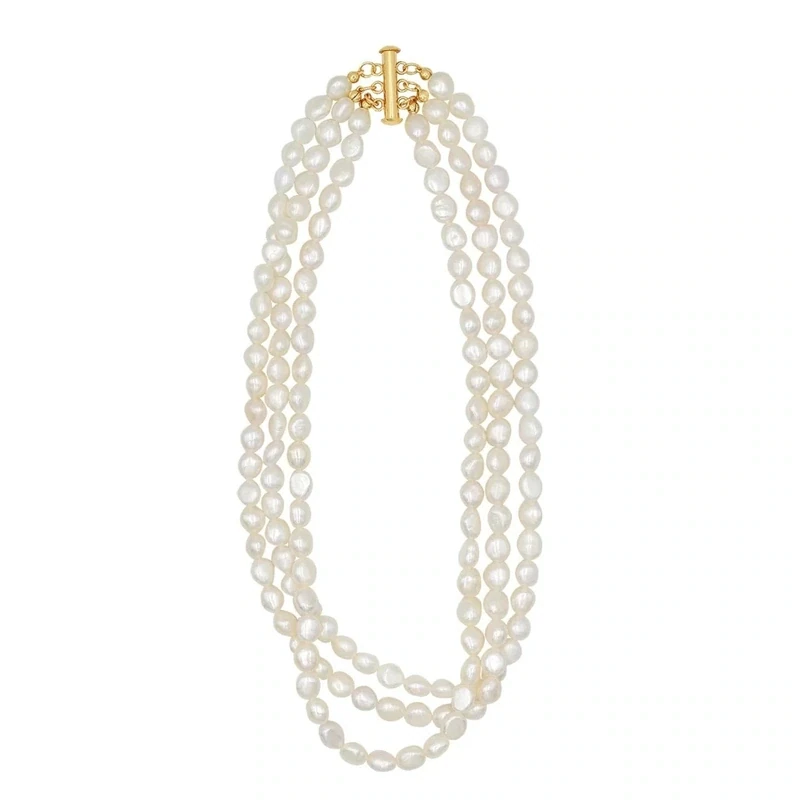
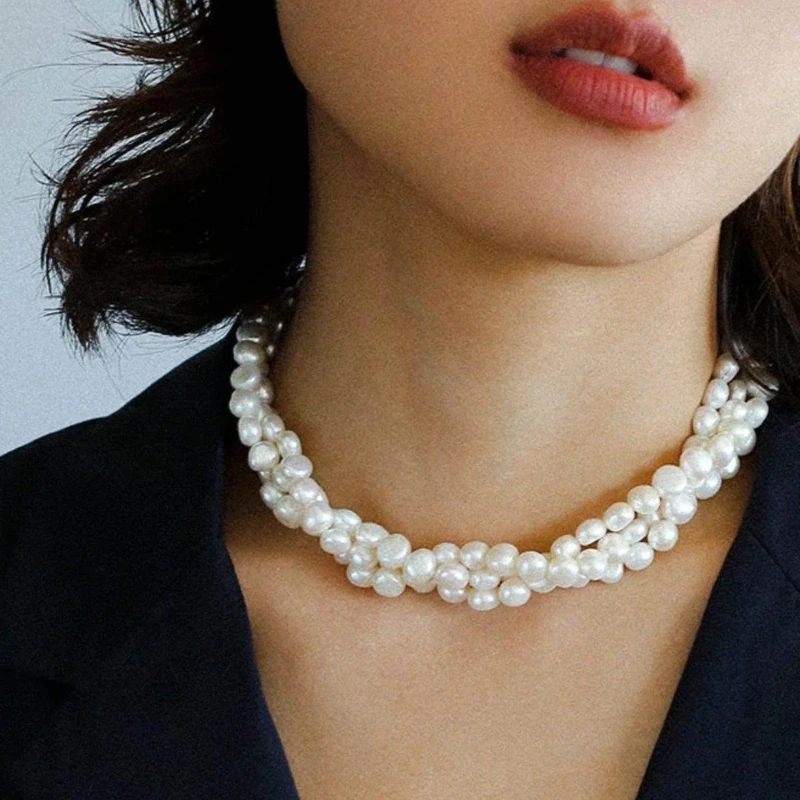
The Vintage Baroque Pearl Necklace is described as a multilayer necklace with strands of 6–7 mm freshwater baroque pearls and copper plated with 18K gold. Those details establish pearl and metal materials, not the strand thread or whether immersion is appropriate. Record what you actually know, then choose a cleaning method that does not depend on missing information.
2. Check Condition and Decide Whether to Continue
Before cleaning, inspect accessible connections, the spaces between pearls, and any visible thread. Look for a loose connection, an opening that seems unusual, or thread that appears frayed. These are reasons to pause rather than pull the necklace through a cloth or begin wet cleaning. Do not tug on strands to test their strength; a visual check is the more conservative starting point.
Next, distinguish a light surface film from dirt lodged in a difficult gap. A film may need only gentle wiping. Material that does not lift easily is not a reason to scrub harder or push a pointed tool between pearls. If the necklace appears damaged or the residue cannot be removed conservatively, seek a jeweler’s assessment before proceeding. Cleaning should not become a repair attempt, particularly when the construction is unclear.
3. Make a Soft Cloth the Default Cleaning Method
GIA recommends wiping pearls with a soft, clean cloth after wearing. Support the necklace on the surface beneath it and wipe accessible pearl surfaces gently, working through a small section at a time. Avoid drawing the whole necklace tightly through a folded cloth. The purpose is to lift surface residue, not to polish forcefully or place tension on the strand.
For a multilayer piece, separate the layers only as far as they move freely, and keep the rest supported while working. Use a clean portion of the cloth as you progress. This routine is also the practical default when the thread is unknown or the necklace combines pearls with a plated finish. For broader mixed-material precautions, the jewelry care guidance is a useful companion to this strand-specific decision process.
4. Reserve Warm Soapy Water for Suitable Situations
According to GIA’s pearl care and cleaning guidance, occasional cleaning with warm soapy water is possible. The important word is occasional: it does not replace routine wiping, and it does not establish that every complete necklace can be immersed. Before using water, consider the thread, the metal components, the condition of the piece, and any specific care instructions available for it.
If compatibility remains uncertain, stay with dry wiping and ask for construction-specific advice. Where warm soapy water cleaning is appropriate, use a restrained approach rather than prolonged soaking or vigorous rubbing. Do not treat stronger cleaners as a shortcut for stubborn residue. Avoid acids, chemical cleaners, perfume contact, steam cleaners, and ultrasonic cleaners. Pearls have a Mohs hardness of 2.5, so aggressive cleaning is not an appropriate response to dirt that resists gentle care.
5. Keep Unknown Thread Out of a Wash Routine
A description that says pearls are strung together does not identify the thread. The Flat Baroque Pearl Necklace features freshwater baroque pearls strung together, with copper plated with 18K recycled gold. Its pearls are listed as 1.8 cm wide, and its necklace length is 39–43 cm. None of those specifications confirms silk thread or supplies a washing instruction.
For a necklace like this, do not infer water tolerance from its appearance or from another pearl strand’s care routine. Keep your first cleaning attempt limited to accessible surfaces with a soft cloth. If wet cleaning seems necessary, ask about the actual stringing material and appropriate method before proceeding. When wiping, support adjacent pearls rather than letting the necklace hang from the section in your hand. This keeps your cleaning process gentle without making assumptions about the hidden construction.
6. Treat Spaced-Chain Designs as Mixed-Material Jewelry
If your necklace has pearls spaced along a chain, examine the metal and pearl areas separately while planning care for the whole piece. A method suitable for one material is not automatically suitable for the other. Do not apply a metal-focused cleaning routine across the pearls, or assume that visible chain makes the complete necklace washable. Unknown attachments still call for restraint.
The Gabriella Pearl Choker Necklace contains 10 freshwater pearls, approximately 5 mm each, and is offered in either 14k gold-filled yellow gold or 925 sterling silver. Those are separate material options, not interchangeable labels; 925 sterling silver means 92.5 percent silver. The product description does not identify every attachment detail or provide permission to immerse the necklace. Whichever option you have, begin with gentle cloth cleaning and keep stronger metal cleaners away from the pearls.
7. Allow Complete Drying Without Added Heat
If an appropriate cleaning method introduces moisture, drying is part of the cleaning process, not an optional finishing step. GIA states that strung jewelry must dry completely. Lay the necklace supported on a clean, soft surface rather than hanging it while wet. Remove accessible surface moisture gently with a soft cloth, without squeezing pearls together or pulling along the strand.
Do not use excessive heat to hurry the process. A dry-looking pearl surface alone does not confirm that concealed thread or spaces between components are fully dry. There is no universal drying time listed for these necklaces, so avoid relying on a fixed number of minutes or hours. If you cannot determine whether hidden areas have dried, leave the necklace supported longer and seek advice before wearing or storing it. Uncertain drying is another reason to avoid unnecessary wet cleaning.
8. Choose the Least Involved Method That Works
For each cleaning session, make three decisions in order: whether the necklace appears sound, whether gentle wiping removes the residue, and whether any further method is compatible with its complete construction. A close strand with unknown thread should not enter a wash routine merely because pearls can sometimes be cleaned with warm soapy water. A chain-based necklace should not receive unrestricted metal cleaning merely because some metal is visible.
Put that process into practice after your next wear: place the necklace on a soft surface, inspect it without pulling, and wipe the pearls with a clean cloth. If that resolves the surface residue, stop there. If it does not, identify the thread and other materials before considering water or requesting professional help. After any suitable moisture-based cleaning, allow complete drying without heat. This gives you a specific next step while keeping uncertainty from turning into an unnecessarily aggressive cleaning method.