Pearl hoops and huggies combine two visual elements: the outline of the metal hoop and the size and shape of the pearl. A smaller hoop can keep attention close to the ear, while a larger outline gives the earring a more open profile. A pearl charm or a pearl attached to the hoop adds another point of interest, so the overall impression depends on the relationship between these parts, not on diameter alone.
Three examples make the comparison concrete: hoops measuring approximately 12 mm, approximately 15 mm, and approximately 20 × 20 mm. Their pearls also differ in size and placement. These measurements are useful starting points rather than a guarantee of how an earring will look on every wearer; ear shape, hairstyle, and personal preference all affect the result. Consider the outline first, then decide how much visual emphasis you want the pearl to add.
Read the measurements as proportions
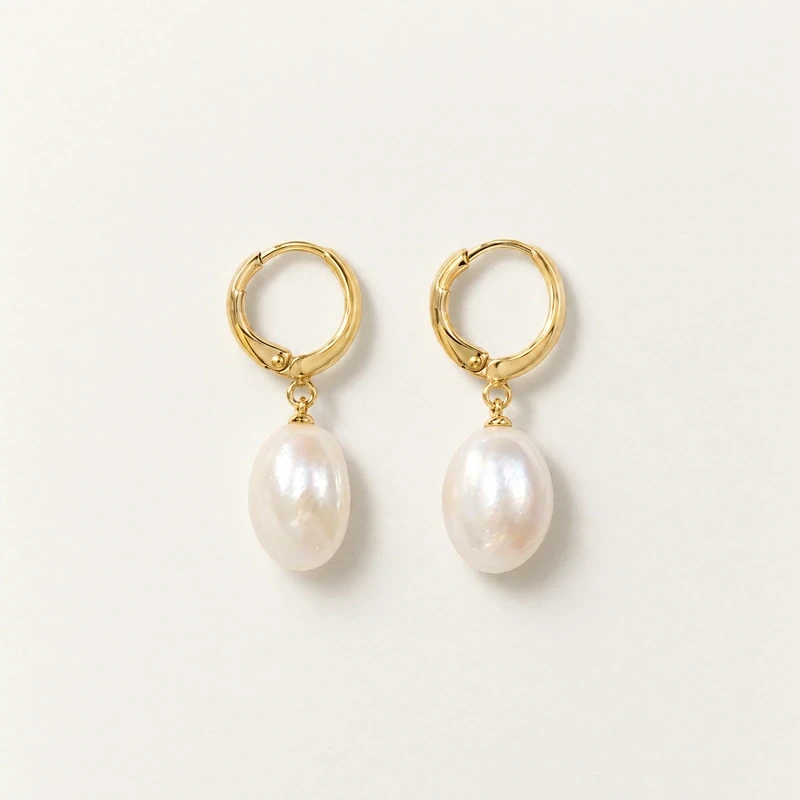
The approximately 12 mm hoops on the Lucy Pearl Drop Huggie Hoops form the most compact outline in this comparison. The listed pearl options are approximately 7–9 mm for size S and 9–11 mm for size L. Because the pearl hangs below the small hoop, it can be a prominent part of the silhouette even though the hoop itself is modest. Choosing between the pearl sizes changes the balance: the smaller option keeps the drop lighter in scale, while the larger option makes the pearl more noticeable.
The Ada Baroque Pearl Hoops measure approximately 15 mm, with pearls approximately 8–9 mm. The Julia Pearl Hoop Earrings have a more open, approximately 20 × 20 mm outline and pearls approximately 6–7 mm. In the Julia design, a smaller pearl sits against a larger hoop, so the metal shape reads more clearly. Comparing measurements this way is more helpful than assuming that the largest pearl must create the largest-looking earring.
Huggie outline versus a more open hoop
A huggie’s compact outline tends to keep the visual footprint near the earlobe. This can suit someone who wants a close-fitting look with a pearl drop providing a little movement and vertical emphasis. The Lucy pair illustrates that combination: approximately 12 mm hoops with baroque freshwater pearls. The word “huggie” describes a style, but it does not establish an individual fit or a particular fastening mechanism. Check product details and consider your own ear rather than assuming every huggie closes or sits in the same way.
A 15 mm hoop offers a little more open metal outline, while a 20 × 20 mm hoop gives the shape more room to register. The Ada’s removable pearl charms let the wearer choose whether to wear the hoops with those charms, as stated in the product description; that creates a different visual arrangement without requiring a change in hoop size. The Julia’s approximately 20 × 20 mm outline presents as a medium-sized hoop with one pearl on each hoop. These are distinctions of design and scale, not a ranking from dressy to casual.
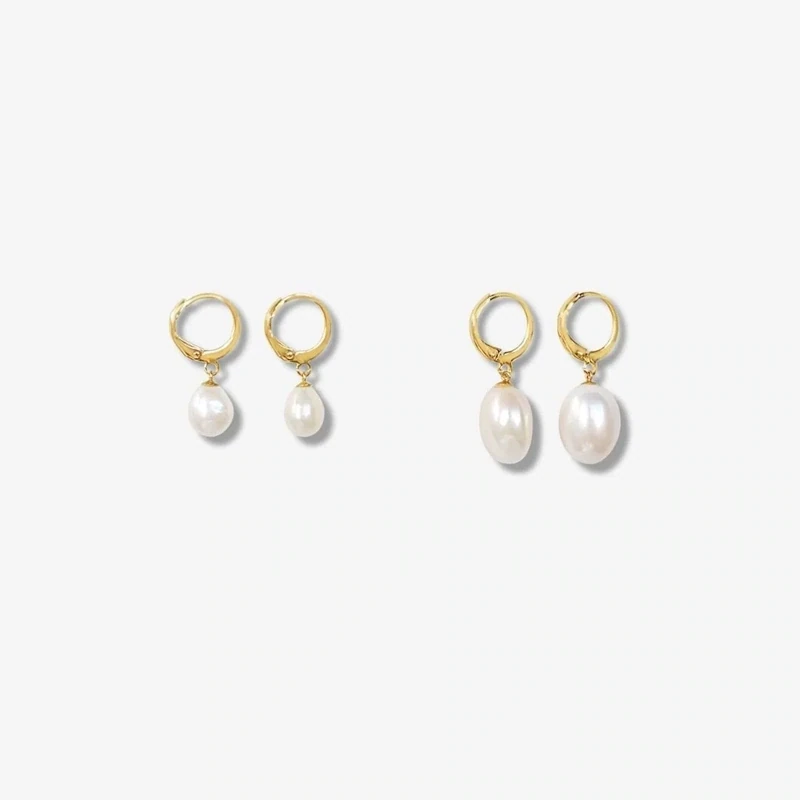
How pearl size and shape affect the look
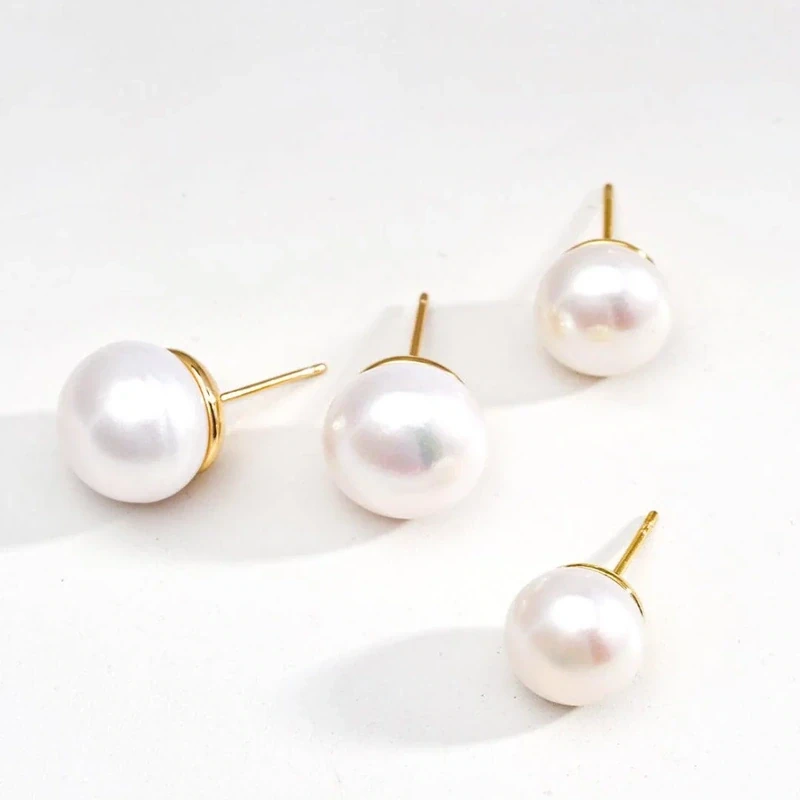
Pearl size changes the balance between the hoop and the drop. The Lucy’s size S pearls are approximately 7–9 mm, and size L pearls approximately 9–11 mm; its 12 mm hoop stays the same in either option. A larger pearl can draw the eye downward and make the drop more prominent. With the Julia, the approximately 6–7 mm pearl is paired with a more open hoop, leaving the outline especially visible. The Ada places approximately 8–9 mm pearls with 15 mm hoops, creating a closer relationship between charm and hoop.
Shape matters too. Baroque means irregular in shape; it does not identify a pearl species or prove that a pearl is uncultured. The Lucy and Ada descriptions identify their pearls as freshwater baroque pearls and note that shape and surface may vary. That variation means a pair may not match the pictured example exactly. The Julia description identifies freshwater pearls without specifying a baroque shape. If a consistent, smooth outline is central to your choice, read the product description carefully rather than assuming all pearls have the same shape or surface.
Match the outline to your hairstyle
Hair worn up, tucked behind the ears, or cut above the jaw leaves more of the earring visible. In that setting, a 20 × 20 mm hoop can make its outline part of the overall look, while the smaller Lucy hoop keeps the metal shape compact and places emphasis on its hanging pearl. A 15 mm hoop sits between those examples in listed scale. These are styling possibilities, not fixed rules: clothing, face shape, and the way an earring sits can change what feels balanced.
With hair worn down, consider whether the hoop might be partly covered. A compact huggie with a pearl drop may still show a distinct point of interest below or beside the ear, whereas a larger outline may be easier to notice when the hair is moved back. Try looking at the full silhouette from the front and side, and notice whether you want the pearl, the metal outline, or both to stand out. If you wear multiple earrings, compare their visible shapes together rather than choosing by measurement alone.
Choose a pair for the effect you want
Start by naming the role you want the earrings to play. For a close, pearl-led shape, consider a 12 mm huggie and decide between the Lucy’s two stated pearl ranges. For a charm-hoop design, the Ada combines approximately 15 mm hoops with approximately 8–9 mm baroque pearls and removable charms. For a more open outline with smaller pearls, the Julia pairs approximately 20 × 20 mm hoops with approximately 6–7 mm freshwater pearls. This approach narrows the choice through actual listed measurements instead of broad labels such as “small” or “statement.”
Next, check materials and options independently of appearance. Lucy is listed with baroque freshwater pearls and 14k gold-filled metal. Ada is available in 14k gold-filled metal or sterling silver, depending on the selected Colour/Metal option. Julia is available in 925 sterling silver or 14k yellow gold-filled metal. These terms describe different materials; a gold-filled option is not the same as solid gold, and sterling silver 925 means 92.5 percent silver. Review the selected option for the specific pair you are considering.
Think about comfort without assuming a fit
Dimensions help compare designs, but they do not tell you how an earring will feel in your ear. The listed measurements do not specify the weight, the details of every fastening, or how a particular pair will sit on an individual wearer. Do not assume that two hoops with similar measurements have the same closure or fit. If these points matter to your decision, look for the relevant product details or ask for clarification before choosing.
Consider your usual wear as well. If you prefer earrings that stay visually close to the ear, the compact huggie outline may appeal; if you like a visible metal curve, the larger Julia outline may better match that preference. A charm adds a separate element to the Ada design, while the Lucy’s pearl drop is part of its described huggie style. You can compare the available designs in the earring collection, but use each product’s own measurements and material listing rather than generalizing from the collection.
Store pearl hoops with their shapes in mind
Pearls need gentle handling. After wearing, wipe them with a soft, clean cloth, and avoid exposing them to perfume, chemicals, acids, excessive heat, or ultrasonic and steam cleaners. GIA describes pearls as soft, with a Mohs hardness of 2.5, and gives further pearl care and cleaning guidance. For jewelry combining pearls and metal, conservative care is sensible. Do not assume a cleaning method suitable for one material is suitable for every part of a mixed-material earring.
Store hoops so their outlines and pearl elements are not pressed or tangled against other jewelry. Keep pairs together, and give hanging pearls or removable charms room to rest without catching on chains or other pieces. If cleaning with warm, soapy water is appropriate, follow careful guidance and let any strung jewelry dry completely; avoid soaking a piece when its construction is unclear. For a practical routine, wipe the earrings after wear, return them to a separate space, and check that any charm is stored securely alongside its matching hoop.
Make the comparison before you choose
Use the measurements as a simple decision path: choose the approximately 12 mm Lucy if you want a compact hoop with a choice of two pearl sizes; consider the approximately 15 mm Ada if the removable pearl charms and intermediate outline suit your style; look at the approximately 20 × 20 mm Julia if you want the hoop shape to be more visually open around a smaller pearl. Then account for hairstyle, the degree of pearl emphasis you prefer, and the listed metal option. None of the three measurements predicts fit or comfort on its own.
Before settling on a pair, revisit the product details for the exact pearl range, materials, and options, especially where baroque variation is noted. Decide how you will wear and store the earrings, and avoid treating “huggie” or “hoop” as a promise about fastening. That short comparison gives you a grounded choice based on outline, pearl proportion, and care rather than an assumed universal rule for how pearl hoops should look.