Jewelry measurements can answer questions that a product photograph cannot: how far an earring may hang, how broad a pendant is, or how much each earring weighs. The challenge is that listings use several different kinds of measurements, and a number is useful only when you know what it describes. Length, drop, width, component size and weight are not interchangeable.
Read the full measurement line alongside the material and fitting details, then compare those figures with a piece of jewelry you already own or a simple ruler. Treat words such as “approx.” as meaningful, and do not rely on an image to establish exact scale. A considered comparison can help you picture proportions without assuming that two pieces with a similar length will look or feel alike.
Start by identifying what each number measures
Look for the noun attached to every figure. “Long” or “length” usually describes the overall vertical dimension stated in the listing, while “wide at the widest point” identifies a horizontal span at the broadest area. If a listing gives both, keep them separate: an earring may be long and narrow, or shorter and wider, even when the two dimensions have similar numbers.
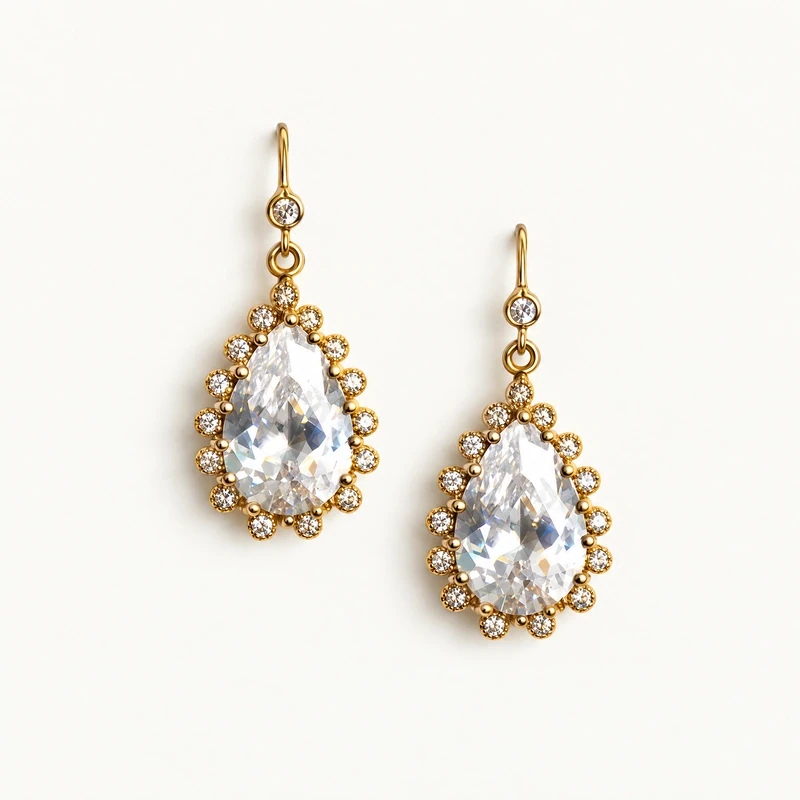
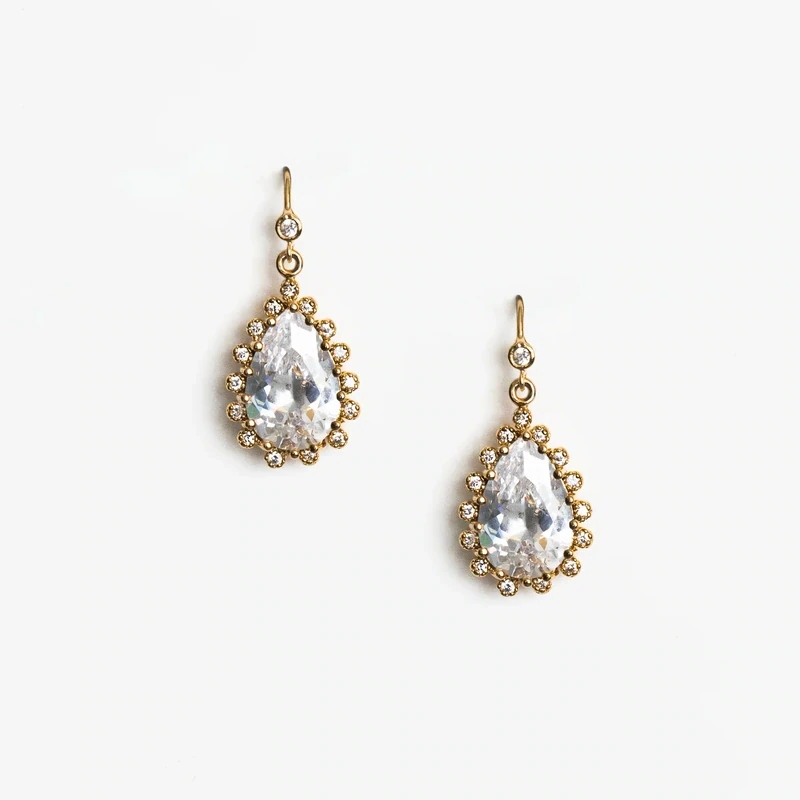
Product examples make the distinction clear. The Michele Rhinestone Earrings are listed at approximately 28 mm long and 12 mm wide at the widest point. The 28 mm figure describes length; 12 mm describes width, not a second measure of drop. Converting units can aid comparison—28 mm is 2.8 cm, and 12 mm is 1.2 cm—but it does not change what each measurement represents.
Length, drop and overall height are not automatic synonyms
For earrings, a stated length gives a useful sense of vertical scale, but do not assume every seller measures from the same starting point or uses “length” to mean precisely the same thing as “drop.” A product description may specify overall length without explaining whether the measurement starts at the top of the fitting or at the decorative element. Use the stated wording, and avoid adding an unlisted measurement.
The MIA Mother-of-Pearl Earrings are listed at approximately 72 mm long, or 7.2 cm, and approximately 6 mm wide at the widest point. That describes a notably long, slim profile in measurement terms. It does not tell you the exact distance below the earlobe when worn, since the listed length is not explicitly identified as a worn drop measurement. For a practical preview, hold a ruler beside your ear and compare the listed length while remembering that the fitting and placement affect how a piece sits.
Read component measurements separately from the whole piece
A listing may give dimensions for the complete item and for one of its components. Those numbers answer different questions. Whole-piece length helps you judge overall scale; a pendant or pearl measurement can show how large the focal element is within that design. Never substitute the component figure for the full jewelry measurement, or assume that each part contributes to the total in a simple, directly additive way.
On the MIA earrings, each mother-of-pearl pendant is listed at approximately 6 × 20 mm, while the earrings as a whole are approximately 72 mm long and 6 mm wide at the widest point. The pendant’s 6 × 20 mm dimensions refer to that component, not to the complete earring. The 6 mm figure also happens to match the stated maximum width of the whole earring; similar numbers do not make the measurement labels interchangeable. Check whether a product gives dimensions for a pearl, charm, pendant or full piece before comparing it with another item.
Understand width as a shape clue
Width can be as important as length when estimating visual presence. A narrow drop may extend a long way downward but occupy little horizontal space; a broader design may read more prominently even if it is shorter. “At the widest point” is especially useful for irregular or tapered forms because the listed width does not imply that the piece is equally broad from top to bottom.
For a simple at-home comparison, mark the length and width on a paper strip or use a ruler held beside a mirror. Keep the orientation in mind: a 12 mm width is just over 1 cm, while 6 mm is 0.6 cm. These comparisons offer a scale reference, not a preview of how the jewelry will move or appear from every angle. Details such as shape, shine, color and contrast also affect visual prominence, and a flat measurement cannot capture them.
Check whether weight is per earring, pair or piece
Weight is useful context, but only when its basis is clear. A figure may refer to one earring, a pair, or another complete piece. Read the wording rather than guessing from the number. The distinction matters when comparing earrings: a per-earring figure is not the same as the total weight of a pair, and multiplying or dividing is appropriate only when the description explicitly identifies the basis.
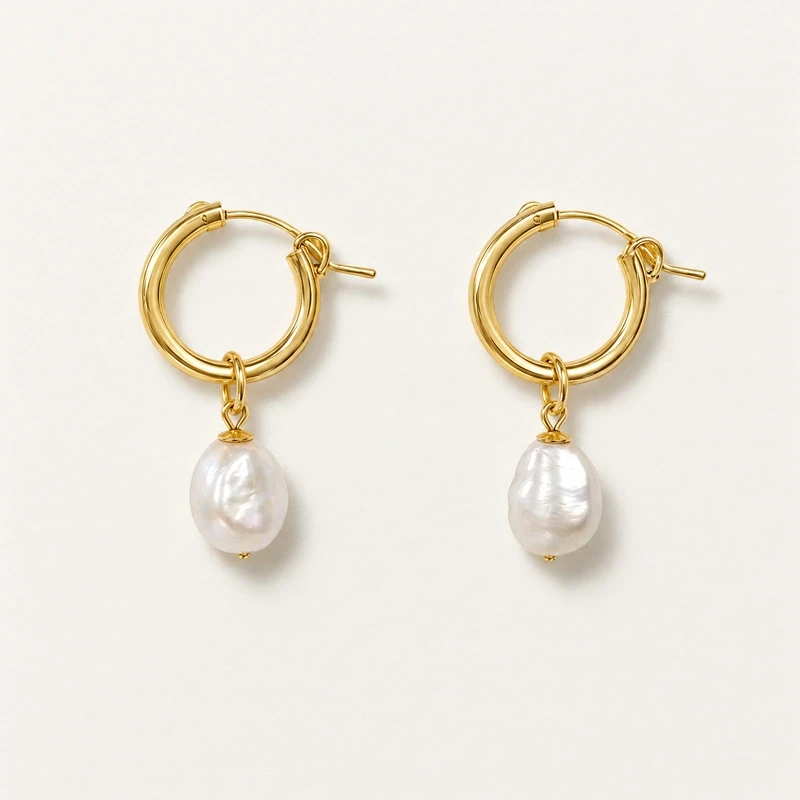
The Three-Pearl Drop Hoop Earrings are listed as 4 cm long and 6.5 g per earring, and the product is sold as a pair. In this case, the weight label specifically applies to each earring; do not mistake 6.5 g for the pair’s stated total. The 4 cm length is equivalent to 40 mm. Measurements help make a more informed comparison, but they do not guarantee a particular wearing sensation: fit, balance, movement and personal preference are not established by length and weight alone.
Interpret “approximately” as a cue to allow variation
“Approx.” means the listed dimension is not presented as an exact, guaranteed value. Use it to understand the intended scale and compare options, while allowing for small differences. This is particularly relevant when a design includes shaped or irregular elements. A number is still helpful, but it should not be treated as a promise that every piece measures identically at every point.
Keep the type of measurement in view even when it is approximate. “Approximately 28 mm long” remains a length estimate, and “approximately 12 mm wide at the widest point” remains a width estimate. For the Three-Pearl Drop Hoop Earrings, the listing states 4 cm long and 6.5 g per earring; it does not label those figures approximate. Avoid transferring “approx.” from one product or measurement to another. When close-fitting proportions matter, compare the wording and listed dimensions carefully rather than inferring extra precision.
Use photographs as context, not as a ruler
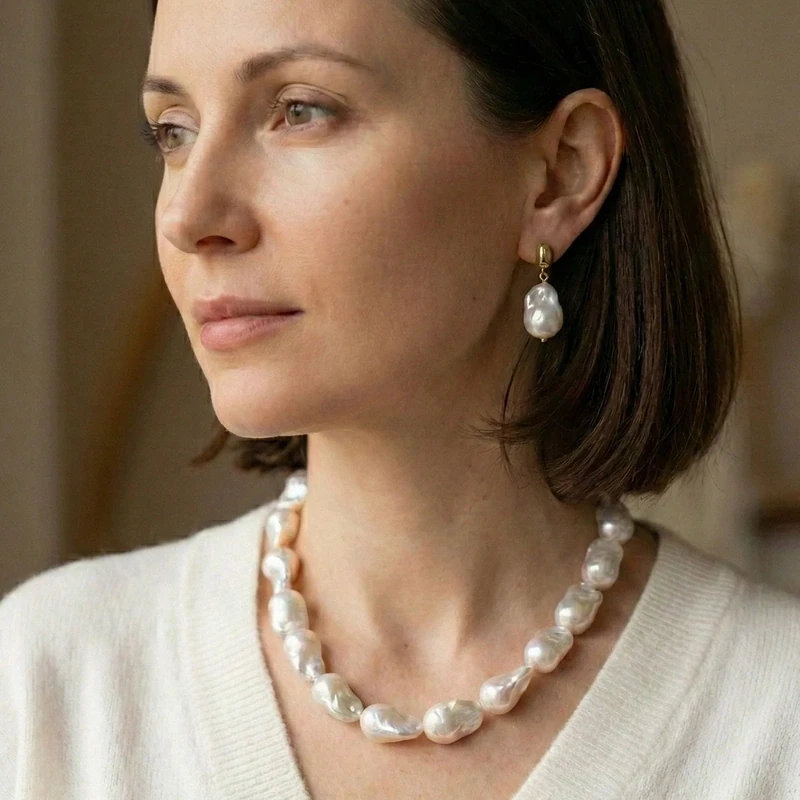
A product photograph can help you notice shape, color and the relationship between elements, but an image is not a dependable scale reference. Camera distance, framing, angle and screen size can change the apparent size of jewelry. A piece photographed close to the lens may look larger than it is, while a smaller image on a phone can make it seem tiny. Without a stated scale reference, visual comparison alone cannot establish exact dimensions.
Instead, use the measurement text first and the photograph for visual context. If the listing gives a width and a length, sketch a simple outline to those dimensions or compare them with a ruler. Then consider the pictured shape without assuming that the image establishes how long a drop will appear on your body. The earring collection is a useful place to compare styles, but apply the same measurement-reading method to each listing rather than treating photographs as a shared scale.
Make a short, consistent comparison before choosing
When deciding between pieces, write down the measurements in the same format: overall length, maximum width, any component size, and weight with its stated basis. Convert millimetres to centimetres if that makes the numbers easier to picture, but preserve the original labels. For example, compare 72 mm long with 28 mm long as lengths, not with a pendant’s 20 mm dimension or a width measurement.
Next, match those figures to your priorities. If you want a long visual line, focus on length; if you want a fuller profile, look closely at width and shape; if weight matters to your choice, verify whether the figure is per item or per pair. Treat approximate values as helpful guides, not exact guarantees, and do not use a photograph to fill in a measurement the listing does not state. This simple check makes online comparisons more deliberate and helps you choose a scale that suits the way you plan to wear the piece.