A small pearl jewelry capsule is not a shopping checklist or a demand to own matching pieces. It is a way to make a few deliberate choices for the outfits and occasions that recur in your life. Start by noticing when jewelry would be useful: perhaps a workday shirt, a weekend layer, or a familiar dinner outfit. The goal is to cover those situations with pieces you enjoy wearing, rather than collecting options for every imagined event.
A practical capsule can include one pair of earrings, one pendant, and one bracelet, but there is no required formula. You might use only one or two categories, or decide that a different scale suits your wardrobe better. Pearl shape, metal choice, length, and fit all affect how a piece works. Use the process below to identify genuine gaps, compare options against clothes you already own, and establish a care routine that helps pearls remain part of regular rotation.
Start with recurring outfit needs
Before choosing jewelry, list three or four outfits you wear often. Include the neckline, sleeve length, and setting rather than just calling an outfit “casual” or “dressy.” A crew-neck top may leave space for a pendant, while a collared shirt could make a short chain compete with the neckline. A bracelet may be visible with rolled sleeves but largely hidden beneath a cuff. These observations make the capsule specific to your real wardrobe.
Then decide what each outfit needs, if anything. One look may benefit from a small finishing detail; another may already have a patterned collar or prominent accessories. Mark pieces as useful, optional, or unnecessary. This keeps the capsule focused on recurring uses instead of a target number of purchases. If you already have earrings that work with most outfits, keep them in the plan and consider whether the actual gap is a pendant or bracelet rather than another pair.
Build a simple use matrix
A compact matrix can expose overlap. Write your recurring outfits down one side and jewelry categories across the top: earrings, pendant, and bracelet. Note whether each category is useful, obscured, or distracting for each outfit. For example, drop earrings may show clearly with a simple top, while a pendant may sit awkwardly against a high neckline. A bracelet might suit a short-sleeved outfit but be impractical with a close-fitting cuff.
Use the matrix to select the piece with the most meaningful coverage, not the one that fills a blank space on principle. A single pair of pearl drops could serve several outfits; a pendant may have broader use if you wear open necklines frequently. If two pieces solve the same need, compare how often you would reach for each and whether their proportions differ enough to justify both. This is a wardrobe tool, not a scoring contest: personal preference can outweigh a small difference in the number of checked boxes.
Choose earrings for scale and routine
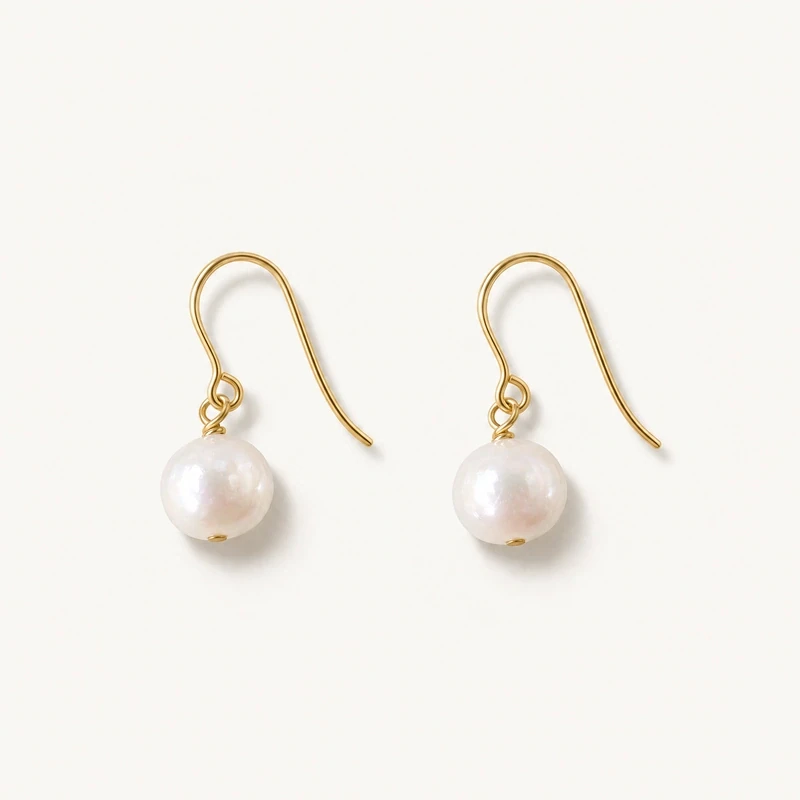
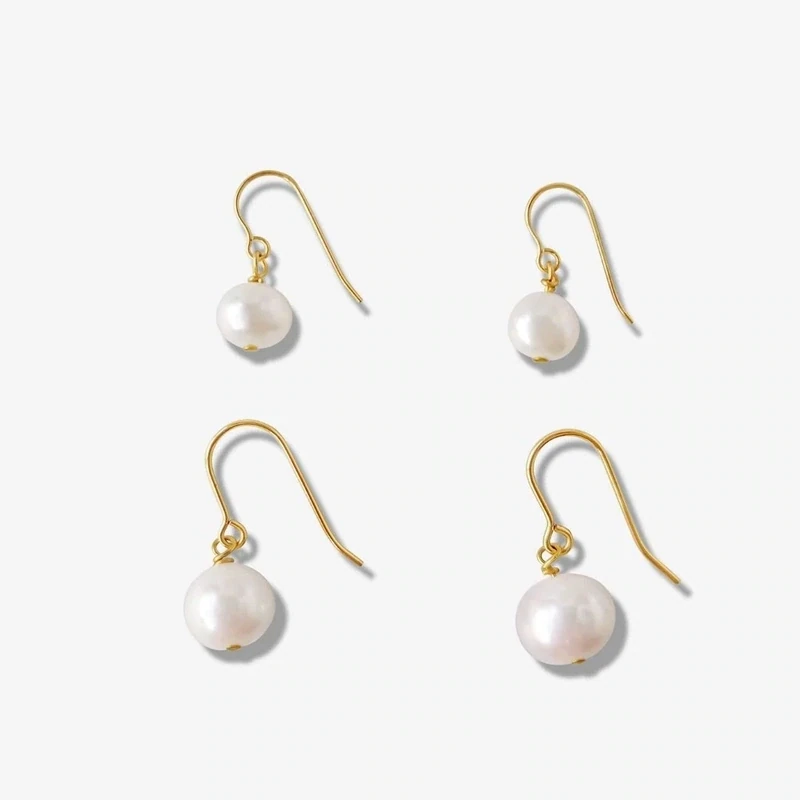
Earrings are close to the face, so scale can change the impression of an outfit without requiring a large collection. The Emma Freshwater Pearl Drops are offered in small and large sizes. The small option measures 15–18 mm in total length, including an approximately 6–7 mm pearl; the large option measures 20–25 mm, with an approximately 8–9 mm pearl. Consider those listed measurements alongside your usual hairstyle, glasses, and collar shapes.
A smaller drop can be a considered choice for frequent wear when you prefer a subtle detail; the larger option may be more visible against longer hair or a plain neckline. Neither is universally more versatile. These earrings use freshwater pearls, which may have spots or blemishes and may not be perfectly round. Their listed metal options are 14k gold-filled or 925 sterling silver; these are distinct materials. Compare the option with the metal you tend to wear, and think about whether the earrings will be comfortable for your own routine without assuming a particular fit or wear experience.
Use a pendant to bridge necklines
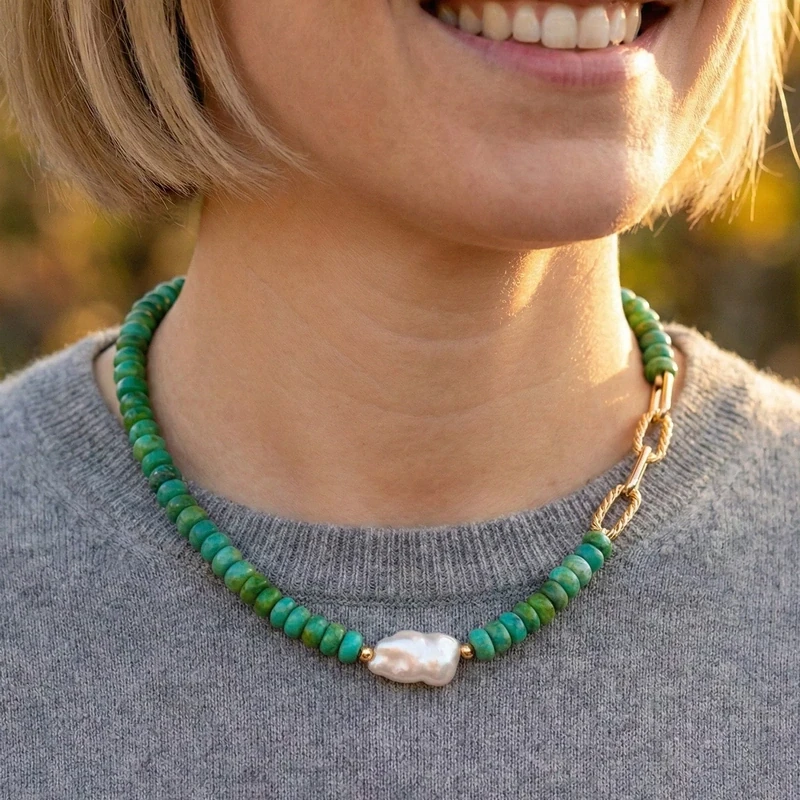
A pendant can provide a repeated point of focus across simple tops, but chain length determines where that detail rests. The Jade I Baroque Pearl Pendant has a freshwater baroque pearl measuring approximately 10–12 mm. Its chain is offered at 40 cm plus a 5 cm extender, or 45 cm plus a 5 cm extender, giving listed total lengths of 45 cm or 50 cm. A longer option may sit differently over a crew neck than a shorter one, so compare the measurements with garments you actually wear.
Baroque describes an irregular shape, not a pearl species or proof of origin. Each pendant pearl has its own shape and natural imperfections, so its appearance will vary. That variation can make it a distinctive capsule piece, but choose it with an appreciation for irregularity rather than an expectation of uniformity. The listed metal options are 925 sterling silver or 14k gold-filled metal. If you are deciding between chain lengths or metals, lay a similar-length necklace over a typical outfit and check whether the pendant lands where you want it to without competing with buttons, prints, or another necklace.
Make bracelet fit part of the decision
A bracelet earns a place in a capsule when its length suits your wrist and the way you use your hands. The Anna Freshwater Pearl Bracelet features one freshwater pearl of approximately 5 mm. Listed choices are 17 cm, 18 cm, or 19 cm, plus an adjustable length of 15 cm with a 5 cm extender. These are specific length options; the description does not establish how a particular option will fit an individual wrist.
Use a flexible tape or a piece of string to measure around your wrist, then compare that measurement with the listed length and the amount of ease you prefer. Check the product details if you need clarification about how a chosen length is measured. The bracelet is offered in 14k gold-filled yellow gold or 925 sterling silver. Select the option that coordinates with your other frequently worn jewelry, but avoid treating different metal descriptions as interchangeable. If a bracelet is likely to catch on sleeves or interfere with your work, it may be a lower priority even if it completes a visual set.
Coordinate without requiring a matching set
A capsule can feel coherent through repeated materials, scale, or mood without every item matching exactly. You might pair small pearl drops with a baroque pendant, using the shared pearl material as a connection while allowing the pendant’s irregular shape to stand out. Alternatively, wear one pearl piece at a time when a top already has texture or detail. The aim is to create combinations that feel natural with your clothes, not to wear all three pieces together by default.
Metal coordination is another flexible choice. If you usually wear silver-tone jewelry, sterling silver options may integrate easily; if you prefer a warmer look, consider the listed gold-filled options. You can also decide that a little variation suits your wardrobe. Before adding a piece, try it with at least two outfits from your matrix and check its scale against other accessories. For more ideas about working a single piece into everyday outfits, browse the earrings collection or explore the necklaces collection as practical category references, rather than assuming a coordinated set is necessary.
Keep a realistic rotation and care routine
A small rotation makes it easier to remember how each piece works and to notice when one is being overlooked. Store jewelry so pieces are not tangled or rubbing against one another, and put pearl items away after wearing. Pearls are soft, so avoid ultrasonic and steam cleaners, acids, chemicals, perfume, and excessive heat. GIA guidance recommends wiping pearls with a soft, clean cloth after wear. These precautions matter even when a piece is only worn occasionally.
For an occasional deeper clean, warm soapy water may be appropriate for pearls, but mixed-material jewelry calls for conservative care. If a piece includes a chain or other materials, follow care guidance suitable for the whole item; do not assume a method appropriate for pearls is appropriate for every component. Strung jewelry should dry completely after cleaning. The jewelry care guide is a useful place to keep care decisions in view. A brief wipe and return to storage after wear is a manageable routine for a capsule that gets used regularly.
Review the capsule before adding anything
After a few weeks, revisit your outfit matrix. Which piece did you wear most? Which outfits still feel underserved, and which item stayed in storage because of its scale, length, or fit? This review is more useful than adding a piece simply because a category is missing. If earrings already cover nearly every recurring look, your next step might be to adjust how you wear them rather than buy another pair. If a bracelet is inconvenient with your usual sleeves, leaving it out is a sound capsule decision.
For each possible addition, name the outfit it will serve, check its listed dimensions and material option, and compare it with what you already wear. For pearls, also consider the expected variation in shape or surface and whether that character appeals to you. Then make a care plan that fits your routine before putting the piece into regular rotation. A useful pearl capsule is small because it reflects real needs—not because it follows a fixed number—and it should remain easy to wear, coordinate, and care for.