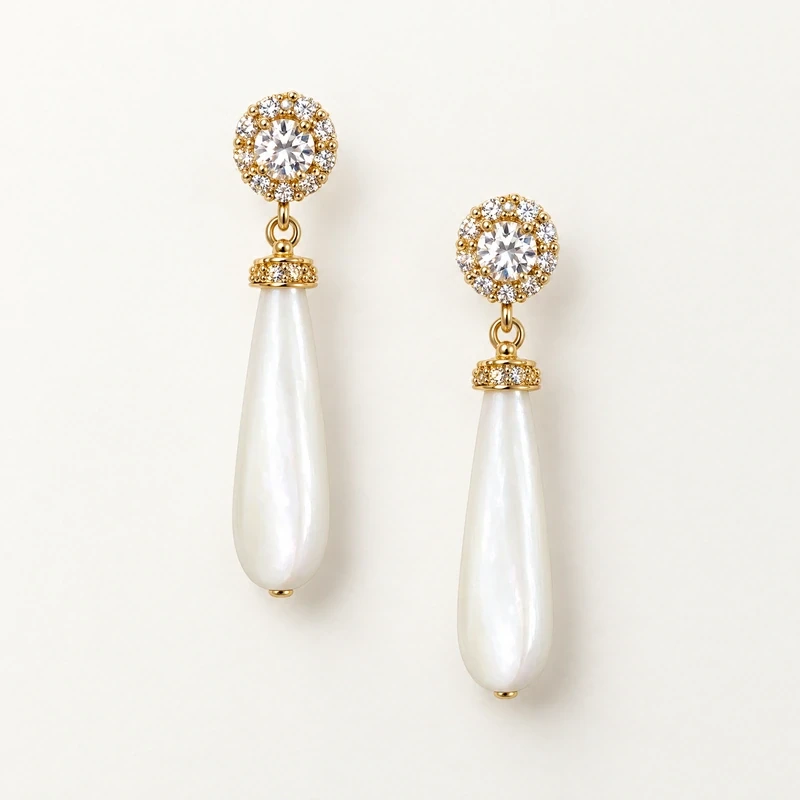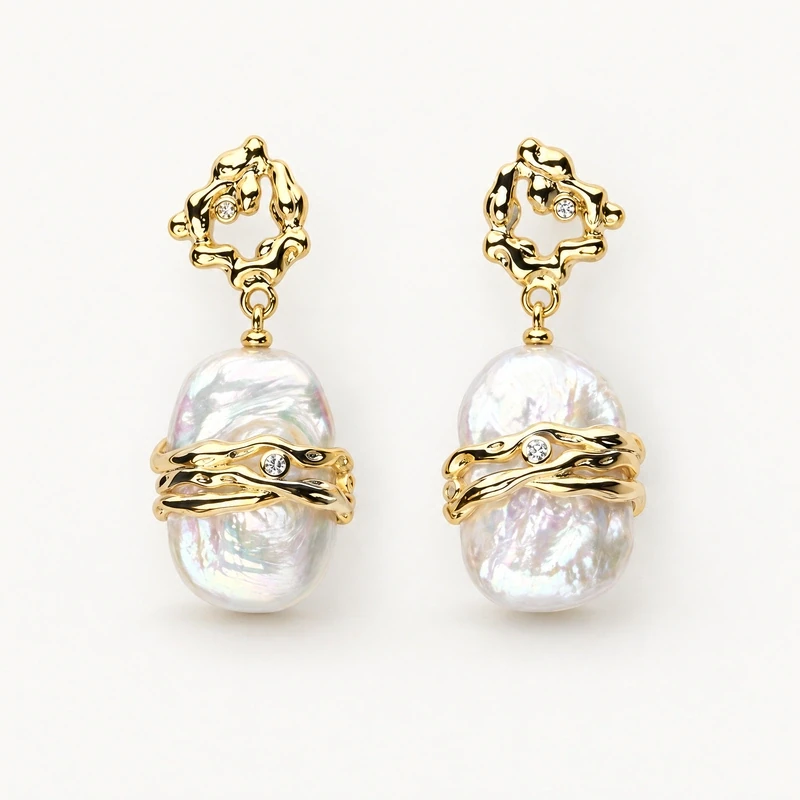
Jewelry descriptions often list several materials in a single line: a pearl, a silver post, a chain, and perhaps a plated finish. Reading those details carefully helps you understand what a piece is made from and where each material appears. The number 925 is a specific silver-content designation, but it does not automatically describe every component of an item or the finish applied to it.
When comparing sterling silver jewelry, look beyond a headline such as “silver” or “gold colour.” Check the material statement component by component, then confirm whether the listing offers different finishes or fittings. This guide explains what 925 means, how to interpret plating, and how to make a considered choice without assuming that a material label promises particular wear or skin-related results.
What the 925 mark tells you
Sterling silver marked 925 contains 92.5 percent silver. The figure describes the silver content of the sterling silver material; it does not mean that an entire multi-material piece is 92.5 percent silver by weight. A pair of earrings can include pearls, crystals, posts, chains, and other components, each with its own description. The remaining portion of sterling silver is not specified here, so a listing should not be read as identifying its ingredients unless it explicitly does so.
Use 925 as a useful material detail, not as a complete description of construction, finish, or performance. If the listing says “925 silver post,” that statement applies to the post, not automatically to every part of the earring. If it says “925 sterling silver chain,” the chain is the component identified. For context about precious-metal descriptions, the FTC guide to buying gold and silver jewelry explains distinctions in metal terminology. When assessing a particular piece, the product’s own component list remains essential.
Read the description component by component
Start by dividing the description into its named parts. Look for the main decorative element, the post or fastening, any connecting chain, and the stated finish. This simple approach prevents a material listed for one component from being mistakenly applied to the whole item. It also helps you compare two pieces that may look similar but use different materials or component arrangements.
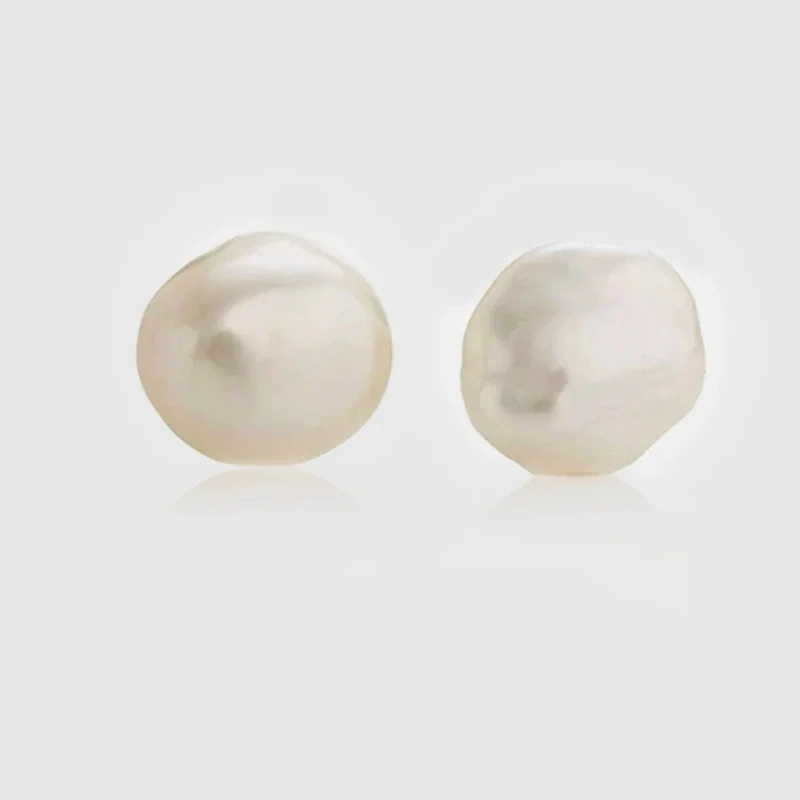
For example, the Baroque Pearl Stud Earrings are described as baroque pearls with S925 sterling silver. Their listed length is 1.2 cm, and the pair weighs 1–1.2 g per earring. The product description does not assign separate materials to additional components, so do not add assumptions beyond those details. A useful reading habit is to match each material phrase to the component named beside it, then note any information the listing does not provide.
Understand plating as a finish
Gold plating and rhodium plating describe finishes applied to a base material; they do not turn the base into solid gold or pure rhodium. A product can therefore have a sterling silver component and a plated surface at the same time. Keep those facts distinct: the base material tells you what the named component is made from, while the plating describes its stated finish. The product description does not establish how thick a plating layer is or how long it will retain its appearance.
Gold-plated, gold-filled, solid gold, and vermeil are not interchangeable terms. Vermeil has a sterling silver base, while “gold plated” alone does not establish that a piece is gold-filled or vermeil. Nor does a gold-colour finish prove that a component is solid gold. The FTC resource above is useful when you need to compare metal terms, but product-specific wording matters. Avoid treating a colour name as a material guarantee, and check whether a listing separately names the base metal and finish.
Compare finishes without assuming the base changes
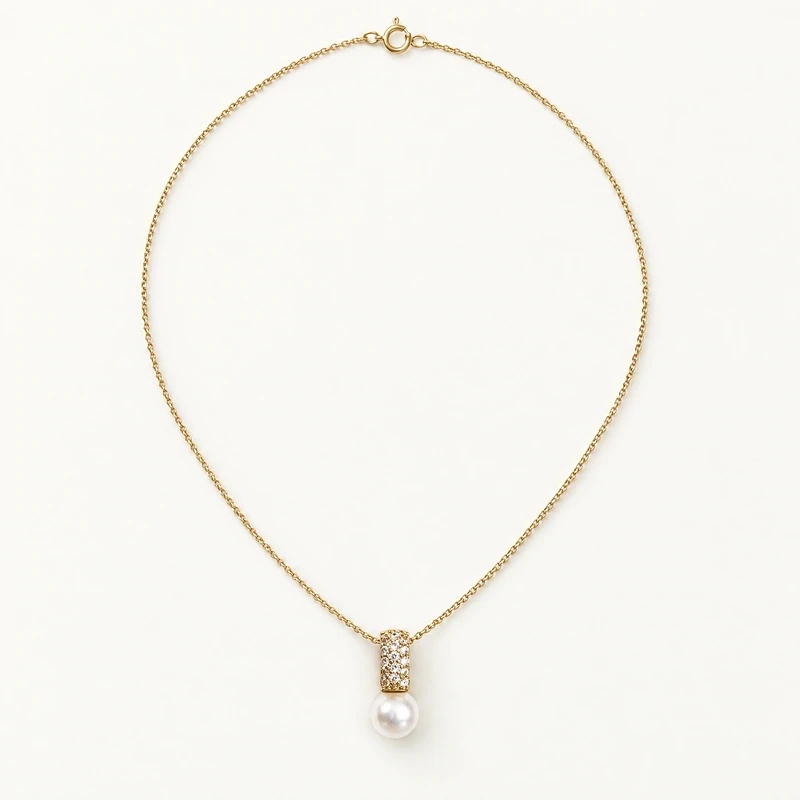
The KINLEY Swarovski Pearl Earrings show why component-level reading matters. Their description lists an 8 mm Swarovski pearl, a 925 sterling silver post adorned with cubic zirconia, and a matching 925 silver chain. It then distinguishes rhodium plating from 16K gold plating as finish options for the post and chain. The listing also offers a silver- or gold-colour finish, so the selected option affects the stated surface finish rather than changing the described silver base.
The product offers either an original post or a clip-on version and measures 85 mm in total length, with a maximum width of 8 mm. Do not infer that the clip-on fitting has the same material description as the post: the listed details do not separately identify its fitting material. Likewise, Swarovski pearls are manufactured pearl components, not freshwater or Akoya cultured pearls, and cubic zirconia is not a natural diamond. Keeping each term attached to its named component avoids conflating appearance, material, and fastening choices.
Check selected options before choosing
When a product offers multiple finishes, fittings, or metal choices, treat each option as a distinct selection. Read the relevant choices in the product description and confirm which one you are considering before comparing it with another item. Do not assume that every material stated in a general description applies identically to every alternate fitting or option. If a detail you need is not specified, the accurate conclusion is that the description does not say.
The Anna Freshwater Pearl Bracelet provides a clear example of explicitly separate metal choices: 14k gold-filled metal in yellow gold or 925 sterling silver. These are different stated options, not synonyms for a gold-plated silver finish. The bracelet has an approximately 5 mm freshwater pearl and can be selected in 17 cm, 18 cm, or 19 cm lengths, or an adjustable length of 15 cm plus a 5 cm extender. Compare the metal selection and length independently so that you know which listed configuration fits your needs.
Do not read skin claims into a metal label
A 925 designation identifies silver content; it does not establish that a piece is hypoallergenic, nickel-free, allergy-safe, or suitable for every wearer. The product descriptions listed here do not make those claims, and the presence of sterling silver or a plated finish alone is not enough to assume them. Metal sensitivity and individual reactions vary, so material terminology should not be treated as a medical assessment or a guarantee of comfort.
Use the information that is actually provided. If a description identifies a 925 silver post and a plated finish, those are useful facts, but they do not answer every question about the alloy or all components. Do not infer the material of an unspecified clip-on fitting, clasp, or other part. If a particular metal is a concern for you, look for an explicit statement covering the relevant component and ask for clarification when the listing does not provide it. Avoid relying on broad labels such as “silver-tone” to establish the underlying metal.
Use a practical checklist before buying
Before choosing a piece, check five details in order: the named base material, the component it applies to, any stated plating, available options, and the measurements or count. Separate descriptive appearance from composition; “gold colour” communicates a look unless the listing gives a more specific metal description. For an earring, verify whether the post and fastening are both described. For a bracelet, compare the chosen metal option with the length configuration rather than assuming one choice determines the other.
Then note what remains unanswered. A listing may not state alloy ingredients, plating thickness, care outcomes, or the material of every fitting. Those omissions should not be filled with guesses. For practical maintenance, consult the jewelry care guidance and follow any product-specific instructions that are actually provided. The most reliable purchase decision comes from matching the selected option to the exact component details and measurements listed, and seeking clarification where an essential fact is absent.