Baroque pearl means a pearl with an irregular shape. The word describes its outline rather than identifying a species, a place of origin, or the way it formed. That distinction matters when shopping: a description can accurately call a pearl baroque while still needing separate information about its pearl category, dimensions, and accompanying metal.
Irregularity also changes how to approach a purchase. Instead of expecting every pearl to follow an identical outline, look for a design whose overall character you enjoy and read its variation notes carefully. Understanding what baroque does—and does not—tell you makes it easier to compare earrings and pendants without mistaking expressive shape for evidence of uncultured origin or a particular level of quality.
1. Baroque Names the Shape, Not the Pearl Category
Think of baroque as one descriptive field in a longer product description. It answers the question, “What kind of outline does this pearl have?” It does not answer, “Which pearl category is it?” Freshwater, Akoya, South Sea, and Tahitian are different pearl categories; baroque is a shape description rather than another category alongside them. Not all baroque pearls are freshwater.
In the phrase “freshwater baroque pearl,” the two words therefore do different jobs. Freshwater identifies the stated category, while baroque describes irregular shape. Keeping those roles separate prevents an easy misunderstanding: seeing several freshwater baroque designs does not establish that every baroque pearl is freshwater. When comparing listings, look for both pieces of information rather than treating either word as a complete description.
2. Irregular Shape Does Not Establish Uncultured Origin
Natural pearls form without human intervention, whereas cultured pearls grow with human intervention and care. Cultured pearls are real pearls. Neither an irregular outline nor an unusual-looking contour establishes that a pearl formed without human involvement. A baroque shape alone cannot tell you whether a pearl is natural or cultured.
The GIA explanation of pearl categories and formation provides this distinction. Apply it carefully to retail wording: phrases such as “naturally irregular” or “natural imperfections” can describe appearance without documenting uncultured origin. If formation is important to your decision, seek an explicit statement about it. Do not substitute an interpretation of the word “natural” for information the listing does not actually provide.
3. Read Variation Notes as Part of the Design
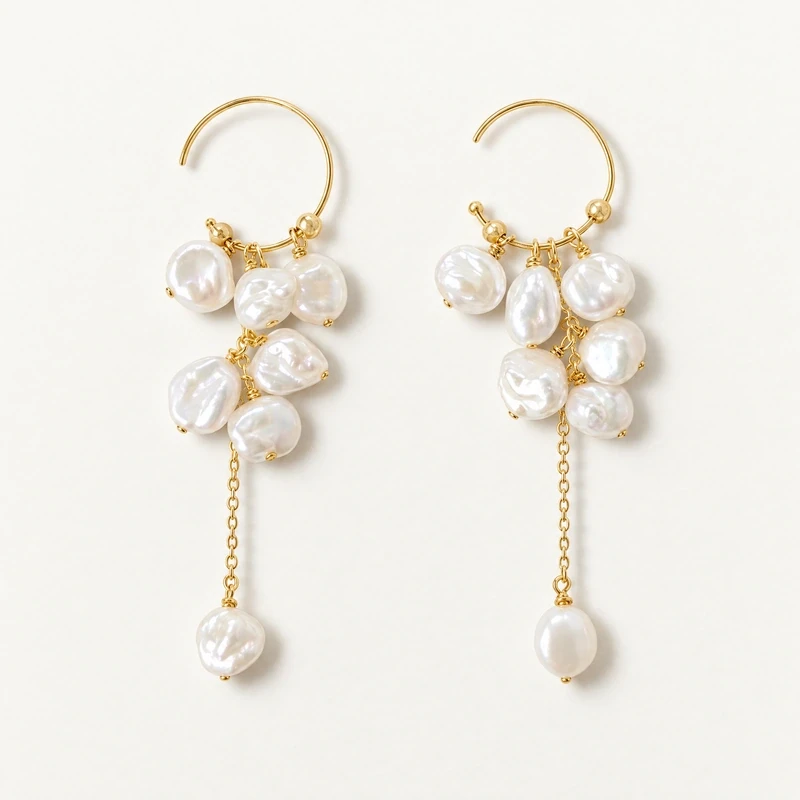
A baroque description sets an expectation of irregularity, but the product’s own variation statement tells you more about what to expect from that particular design. The Ada Baroque Pearl Hoops description says each pearl is unique and the pair may differ from the images. The Jade I pendant likewise states that its pearl’s irregular shape and natural imperfections mean its appearance will vary.
These statements matter if you prefer highly consistent outlines. Ask yourself whether you like the design because of its general proportions or because of one specific pearl shape pictured in a listing. If your preference depends on a particular contour, ask what appearance information can be provided before choosing. Do not assume the displayed example establishes an identical shape for every piece, or that all earrings will have perfectly matching pearl outlines.
4. Separate Shape, Size, and Surface Description
Shape and measurement answer different questions. “Baroque” describes irregularity; an approximate millimeter range gives a separate indication of size. Ada’s pearls are approximately 8–9 mm, while the Jade I pendant’s pearl is approximately 10–12 mm. Those measurements do not promise a uniform outline. Nor should an approximate pearl measurement be treated as a complete specification of the finished jewelry’s dimensions.
Surface wording deserves its own reading. When a listing mentions imperfections, note that disclosure without assuming either superior quality or unacceptable condition. Decide what information would help you judge the piece: a clearer description of the pearl’s outline, clarification of visible variation, or confirmation of the stated size range. An irregular shape is not a grading certificate, and appearance language should not be stretched into claims the seller has not made.
5. Read the Whole Description for Baroque Earrings
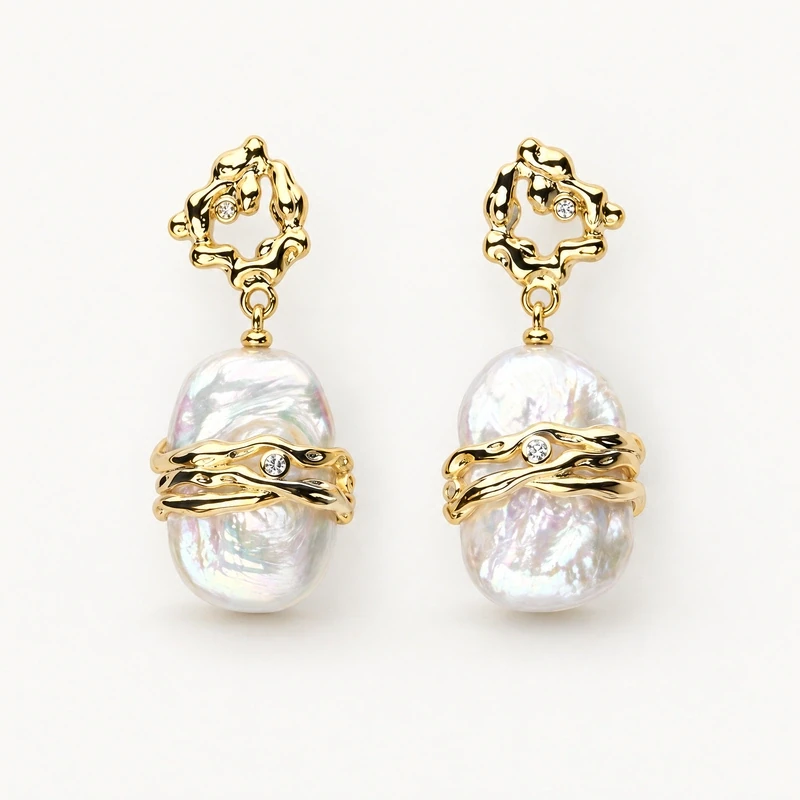
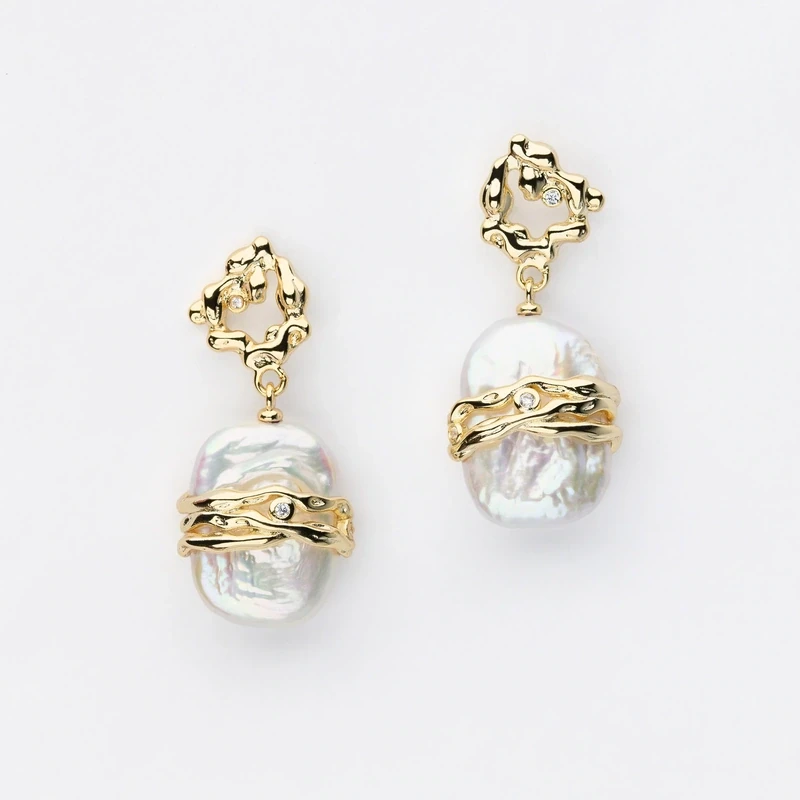
The Baroque Pearl Earrings Ref. 027 combine freshwater baroque pearl, gemstone accents, and 14K gold-plated metal. Here, the pearl’s shape is only one part of the design. The sweeping metal curves and accents also contribute to its statement character. The product description does not specify dimensions or identify the gemstone accents more precisely, so those details should remain open questions.
The Ada Baroque Pearl Hoops offer a different arrangement: approximately 15 mm hoops with removable freshwater baroque pearl charms. Their pearls measure approximately 8–9 mm. Metal choices are 14k gold-filled or sterling silver, depending on the selected option. Compare these designs by their stated construction and your styling preference, not by assuming their shared use of baroque means they have the same size, metal, or features.
6. Use a Single-Pearl Pendant to Judge Proportion
A single-pearl pendant lets you consider irregular shape without also deciding how two pearls should relate as a pair. The Jade I Baroque Pearl Pendant features one freshwater baroque pearl measuring approximately 10–12 mm. Its stated variation means the shape should be approached as an individual feature rather than a fixed outline repeated across every pendant.
Its chain options are 40 cm plus a 5 cm extender or 45 cm plus a 5 cm extender, giving total lengths of 45 cm or 50 cm. Choose between 925 sterling silver and 14k gold-filled metal. For styling, consider where you want the pearl to sit relative to a shirt opening or neckline. Comparing these lengths with a necklace you already wear can help you choose, while remembering that the pearl measurement is separate from chain length.
7. Keep Pearl Language Separate from Metal Claims
A pearl’s shape says nothing about the accompanying metal. Solid gold, gold-filled, gold-plated, and vermeil are distinct descriptions; vermeil has a sterling silver base. Sterling silver 925 means 92.5 percent silver. A gold-colored appearance, or the presence of a freshwater pearl, cannot establish which metal construction a piece uses.
For these designs, retain the exact distinctions: Ref. 027 specifies 14K gold-plated metal; Ada offers 14k gold-filled or sterling silver; Jade I offers 14k gold-filled or 925 sterling silver. Check your selected option rather than carrying one product’s material into another. While browsing the earrings collection, compare pearl description and metal description independently. Neither baroque shape nor these metal labels alone supports assumptions about waterproof performance, allergy safety, or a guaranteed period of wear.
8. Make Your Choice with a Four-Part Description Check
Before selecting baroque pearl jewelry, check four things: the stated pearl category, the variation note, the actual measurements, and the selected metal option. For earrings, also read any information about how the pearls relate as a pair. For a pendant, distinguish pearl size from chain length. This process turns an appealing shape word into a practical comparison without requiring you to infer missing details.
Then identify your priority. If you want removable pearl charms, Ada explicitly supplies that feature. If you prefer one pearl on a chain, consider Jade I’s stated lengths. If metal curves and gemstone accents appeal to you, review Ref. 027 while noting its unspecified dimensions. Choose the design whose documented details suit your preferences, and ask about any unresolved point before purchasing. Baroque is a useful starting description; the complete listing should guide the final decision.