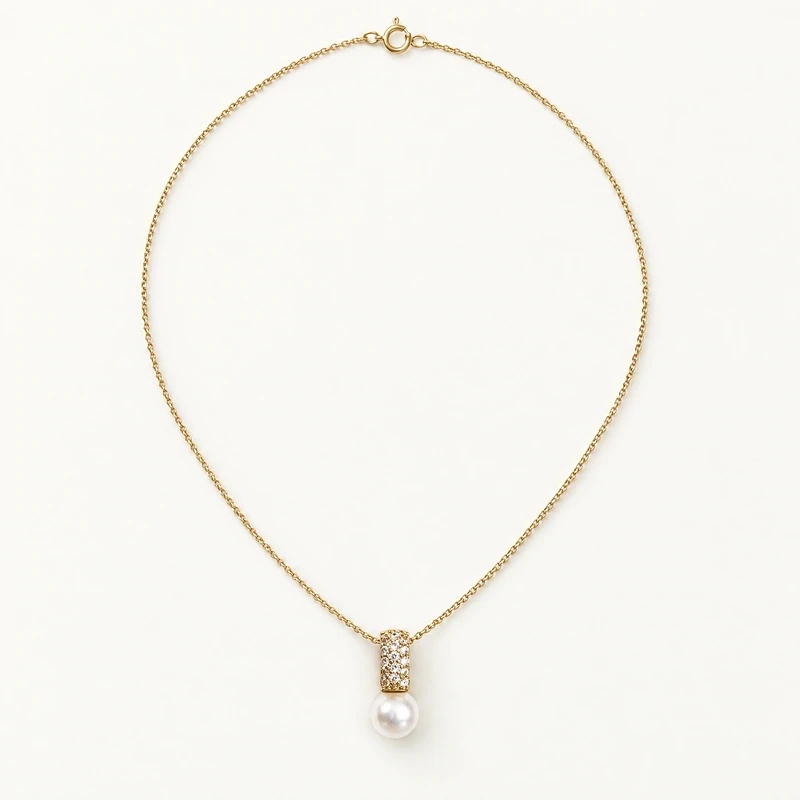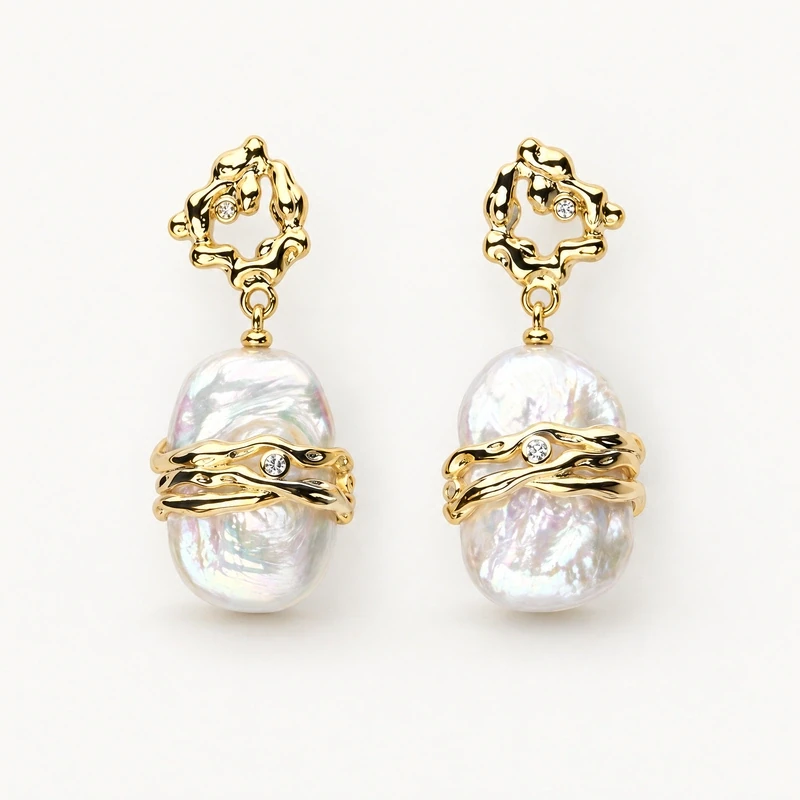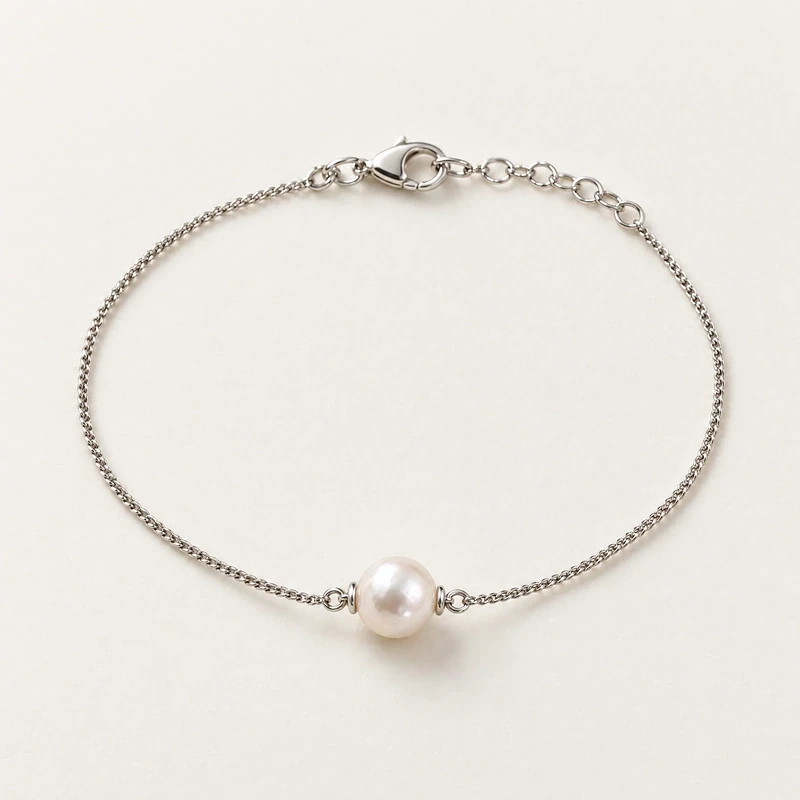
Mother of pearl and pearls appear together in jewelry descriptions, but the names do not identify the same material. Mother of pearl is shell material used for decorative elements such as pendants and flowers. A pearl is a separate pearl component rather than a shaped piece of shell. Understanding that distinction helps you read a product description without assuming that every pale pendant or floral detail is a cultured pearl.
For buyers, the useful question is not which material is better. It is how each material contributes to the design you want to wear. A narrow shell pendant creates a different outline from a floral arrangement combining several materials. Length, width, fittings and the complete material list deserve attention alongside the name. The following comparisons focus on those practical choices, with conservative care rather than unsupported promises about durability.
1. Separate Shell Material from Pearl Terminology
Read mother of pearl as the name of a shell material, not as another category of loose pearl. In an earring description, a mother-of-pearl pendant or flower identifies a shell element within the design. Its cut outline can be central to the overall look. The word pearl appearing inside the longer name does not establish that the element is a freshwater, Akoya or other cultured pearl.
Cultured pearls are real pearls, but they grow with human intervention and care. Natural pearls form without human intervention, as explained in GIA’s pearl description. Neither origin should be assigned to a product simply because its description says pearls. Similarly, baroque describes an irregular pearl shape; it does not identify a species or prove uncultured origin. Keep these distinctions in mind without using them to infer details missing from a listing.
2. Read the Whole Earring, Not Just Its Main Element
A mother-of-pearl earring may combine shell with metal fittings and other decorative components. That makes the complete material list more useful than the headline alone. The EDIA Mother-of-Pearl Earrings, for example, feature a mother-of-pearl pendant and a 925 silver post adorned with cubic zirconia. They are offered in gold or silver colour, with post or clip-on fittings. Their approximate total length is 36 mm, with a widest point of approximately 9 mm.
Those details answer different questions. The shell identifies the pendant material; cubic zirconia identifies an additional decorative material, not natural diamond. The 925 silver description means 92.5 percent silver and applies to the specified post. It should not be extended to the alternate clip-on fitting. Gold colour is also a colour description, not evidence that the earrings are solid gold, gold-filled or vermeil. Separate appearance from material composition when making your shortlist.
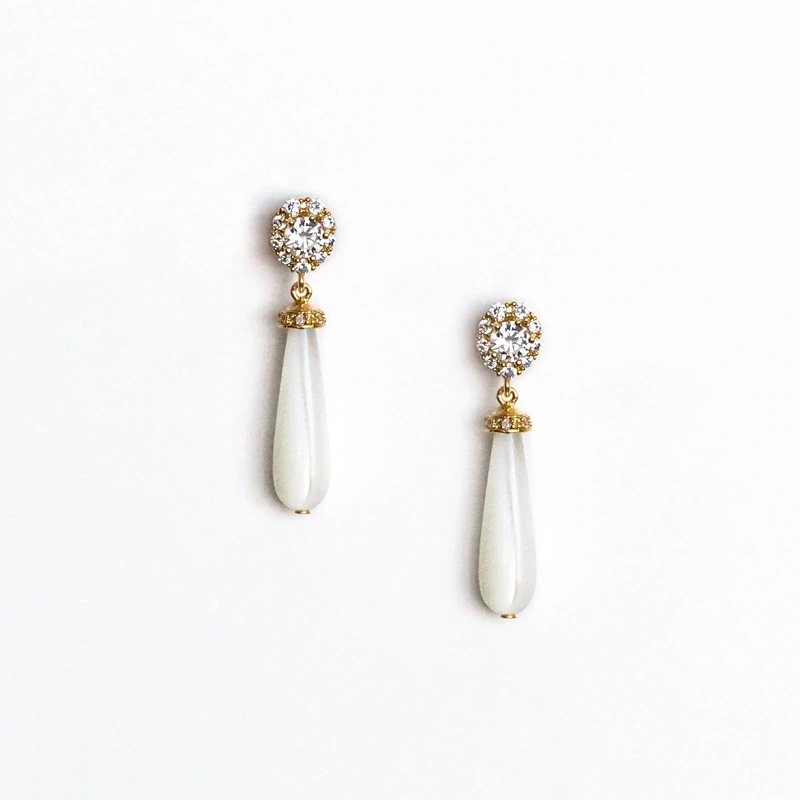
3. Compare Total Length with Shell Pendant Size
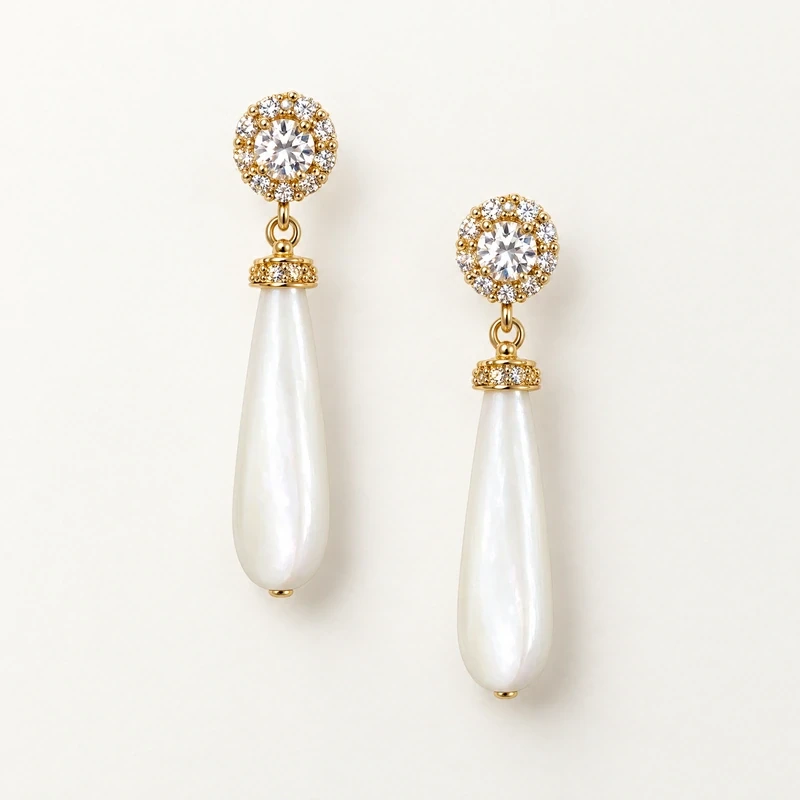
Long earrings need more than one measurement to describe them usefully. Total length tells you the overall drop, while the dimensions of an individual pendant describe only that component. The MIA Mother-of-Pearl Earrings have an approximate total length of 72 mm and are approximately 6 mm at their widest point. Each water-drop-shaped mother-of-pearl pendant measures approximately 6 × 20 mm. These are separate measurements, not interchangeable ways of describing the same piece.
MIA combines those long shell pendants with cubic zirconia charms and a gold-colour finish. Post and clip-on styles are offered, with 925 silver ear posts specified for the post style only. For a practical comparison, mark 72 mm on a ruler or paper strip and hold it beside your ear. Then compare the listed 6 mm width with the outline you prefer. This is a visual planning exercise, not a prediction of weight, movement or comfort.
4. Use Shape and Proportion to Plan an Outfit
Choose between a shorter pendant and a longer drop by considering the space around your neckline. EDIA’s approximate 36 mm total length offers a different proportion from MIA’s approximate 72 mm length. A simple neckline can leave a long, narrow earring visually distinct. If a collar or scarf already occupies that area, compare its edge with the proposed earring length before deciding which outline suits your outfit.
Hair placement is another styling choice you can control. Wearing hair away from the ears can make a shell pendant’s outline easier to see, while loose hair may make its overall length more important than small details. Neither arrangement is a rule. Try the outfit with a paper length guide first, and compare both front and side views. Avoid assuming that a narrow earring must be lightweight or comfortable: dimensions alone do not establish either quality.
5. Recognize Mother of Pearl in Floral Designs
Mother of pearl need not be the main hanging pendant. It can also form decorative flower elements within a broader composition. The ALTHEDA Floral Earrings combine Swarovski crystals, pearls, opals and mother-of-pearl flower elements. Their listed measurements are 58 mm long and 32 mm wide at the widest points. Compared with a narrow drop, that listed width gives you a different basis for planning the space around the ear.
The materials should remain distinct when you describe this design. Swarovski crystals are not natural diamonds, and the separate mention of pearls does not identify their category or origin. ALTHEDA offers original hook or clip-on earrings; its materials list also specifies rhodium-plated 925 sterling silver earring posts. Do not assume that this identifies every alternate fitting. If fitting material matters to your purchase, clarify which specification applies to your chosen version before deciding.
6. Compare Mixed Materials Without Ranking Them
A mixed-material floral design and a streamlined shell pendant solve different styling problems. If you want a clear, narrow outline, compare EDIA and MIA by their listed dimensions and pendant descriptions. If you want a broader floral composition, consider ALTHEDA’s flower elements and combination of crystals, pearls and opals. This comparison concerns design structure, not a claim that one material or style has greater quality.
While browsing the earring collection, keep a short comparison note for each candidate: principal element, additional materials, total length, widest point and available fitting. Leave unprovided details blank rather than guessing. This method also prevents a gold-colour finish from being mistaken for a specific gold construction. Solid gold, gold-filled, gold-plated and vermeil are distinct descriptions; vermeil has a sterling silver base. A colour name alone does not establish any of them.
7. Take a Conservative Approach to Cleaning
Mixed-material earrings should not be cleaned as though every component has identical requirements. For pieces containing pearls, GIA’s pearl care guidance advises avoiding ultrasonic and steam cleaners, acids, chemicals, perfume and excessive heat. It also recommends wiping pearls with a soft, clean cloth after wearing. Use that guidance conservatively when pearls share a design with shell, crystals, opals or metal, rather than assuming a method suitable for one component suits the complete earring.
For mother-of-pearl designs without a separately listed pearl, a cautious routine is still sensible: apply perfume before putting on earrings, avoid spraying the assembled piece, and gently wipe it after wear. Do not interpret this as a waterproof or tarnish-free claim. Consult the jewelry care information before choosing a cleaning method. Although occasional warm soapy water is possible for pearls, that alone does not authorize soaking an entire mixed-material design.
8. Make Your Choice with a Three-Part Check
Start your final comparison with the material distinction: are you choosing a shell pendant, a design containing pearls, or a combination of both? Next, check proportion using the actual listed total length and width. EDIA, MIA and ALTHEDA provide three different outlines to consider, without requiring you to infer weight, pearl origin or fitting composition. Finally, confirm that the selected post, hook or clip-on option has the details you need.
Write down one preferred shape, one workable length and your intended fitting before returning to the product page. Match those choices against the product description, then identify any unanswered material question. This gives you a concrete next step: clarify the missing detail or choose the design whose stated specifications meet your needs. Mother of pearl and pearls can both belong in an appealing composition; an informed choice begins by recognizing what each element actually is.