A quick visual check before wearing pearl jewelry can help you notice obvious changes before they become a problem. Look over the piece in good light, handle it gently and take your time. You are not trying to certify that jewelry is safe or predict how long it will last. The goal is to identify visible concerns—such as a clasp that will not close, a chain that catches, or thread that appears frayed—and decide whether to wear the piece, set it aside or ask a qualified jewelry professional for advice.
Use the same basic routine for bracelets, earrings and necklaces, while adapting it to the construction you can actually see. A bracelet with a chain and lobster clasp calls for different observations than an earring with a thread chain. Do not tug on pearls or try to test a suspected weak point by force. If anything looks loose, damaged or unfamiliar, stop and seek an assessment rather than attempting a repair at home. Pearl jewelry also benefits from gentle handling because pearls are relatively soft; after wearing, wipe them with a clean, soft cloth.
Start with a calm, well-lit visual check
Choose a clean, uncluttered surface and enough light to see the whole piece. If the jewelry is already on, remove it carefully before inspecting it; do not pull it over clothing or force a fastener. Set it down rather than holding it above a hard floor, where a pearl or small component could fall. Look at the jewelry from more than one angle, without pressing, bending or twisting it. A close look is useful; forceful handling is not.
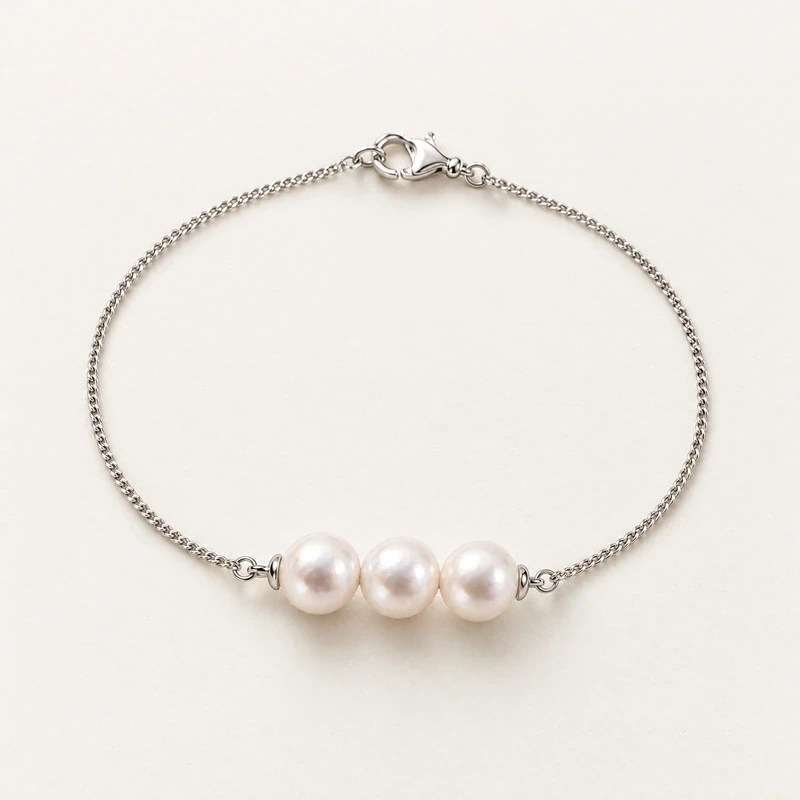
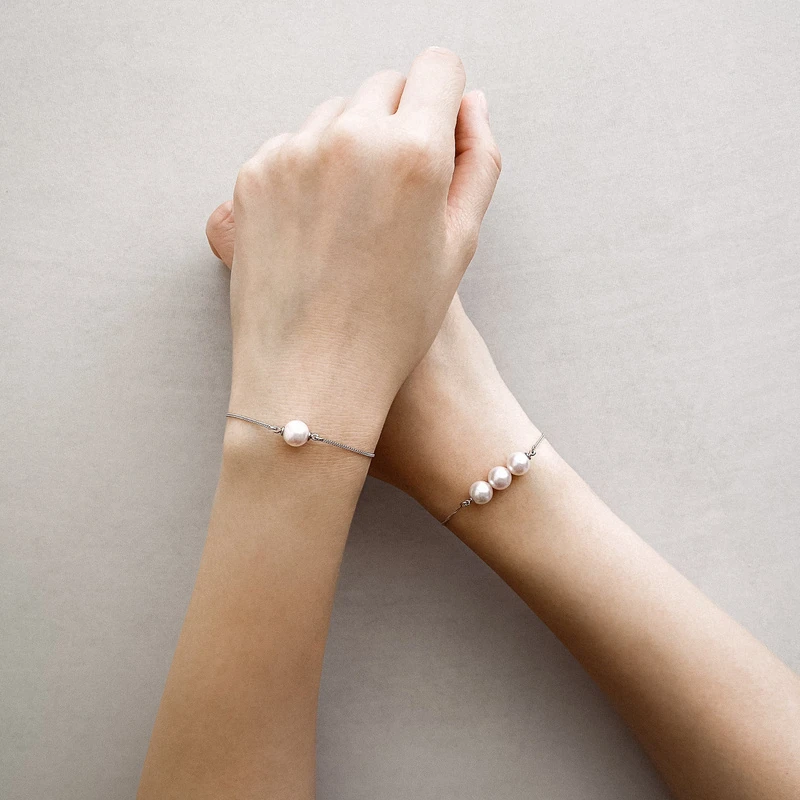
Compare the piece with what you remember about its usual appearance. Note a new gap, a bent-looking section, a change in how a clasp sits, or a component that seems to move independently. These observations do not diagnose the cause, but they give you a clear reason to pause. The three-pearl WYNETTE bracelet, for example, is described as having a sterling silver chain and matching lobster clasp. Those details identify areas to look over; they do not mean that every pearl bracelet has the same construction.
Inspect a clasp without forcing it
If the piece has a clasp, look for visible bending, a gap, a part that appears out of position, or an opening mechanism that does not move as it normally does. Close and open it gently only if it operates easily. It should not require a hard pull, squeezing with tools or repeated fiddling. Do not wear the piece if the clasp will not close securely, opens unexpectedly during ordinary gentle handling, or appears damaged. A visual inspection cannot establish how much strain a clasp can safely take.
Not all pearl jewelry has a clasp, and the product descriptions do not identify one for every example. Avoid assuming that a particular earring or bracelet has a particular fastener. On the WYNETTE bracelet, the listed lobster clasp is a specific feature to inspect; its description also lists a rhodium-plated sterling silver chain. If you see a concern at the clasp or its connection, set the bracelet aside. A qualified jewelry professional can assess the issue and explain suitable next steps without you testing the connection by pulling on it.
Follow the chain or visible connecting parts
Where a chain is present, let it rest naturally and scan its length for an obvious kink, flattened or misshapen area, open-looking connection, or snag. Notice whether the chain catches when it moves gently across a smooth surface. Do not drag it across the pearl or try to straighten a kink with your fingers. The purpose is to spot a reason to stop, not to see whether a questionable section can withstand more handling. If a link looks separated or the chain’s shape has changed, avoid wearing the piece until it has been assessed.
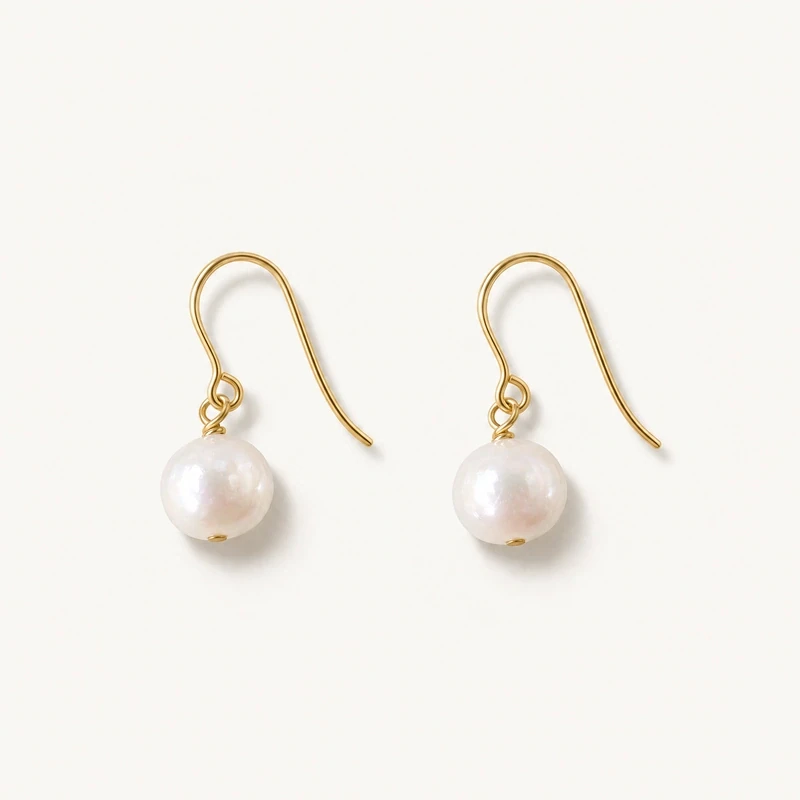
The Adeline Freshwater Pearl Earrings are described as having a delicate thread chain, with an approximate drop of 9–10 cm including the pearl. That product detail supports a careful visual check of the visible chain; it does not tell you to tug on it or imply a repair method. Check that it hangs as you expect and look for visible snags or damage. If you cannot tell whether a mark is a harmless feature or a structural concern, do not guess. A jewelry professional can examine it directly.
Look closely at threads and attachment points
If thread is visible, inspect it for fraying, loose-looking sections, discoloration that appears new, or a place where it seems to be separating from another component. Look where pearls meet visible connecting elements, but do not twist pearls to check how firmly they are attached. Pearls may have natural surface characteristics, so a mark on a pearl is not by itself proof of damage. Focus on changes in the thread or connection, and on anything that moves or catches in a way that seems unusual.
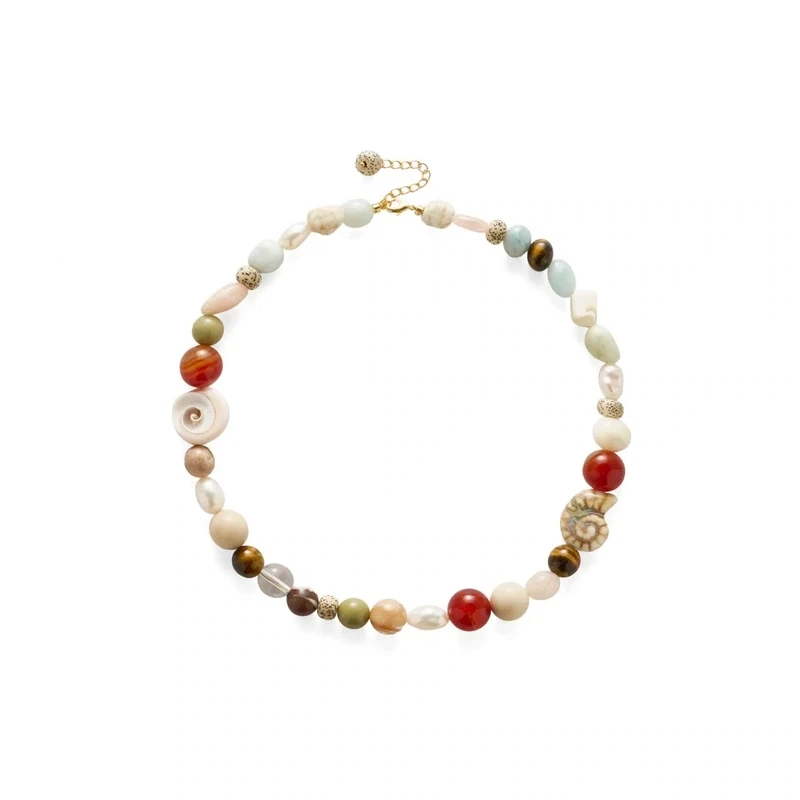
Descriptions do not always specify how pearls are attached, and you should not infer hidden construction from a product name or appearance. For instance, the listed details for the IDA bracelet describe freshwater baroque pearls and gold-plated silver, but do not state an attachment method. Check only what is visible, and leave uncertain construction to a qualified professional. If thread looks worn, an attachment appears loose, or a pearl shifts unexpectedly, stop wearing the piece. Do not add adhesive, knot thread or attempt to restring it as a quick fix.
Check the fit and how the piece moves
A comfortable fit should not require force to put on or remove. For a bracelet, notice whether it sits as expected and whether it catches, pinches or feels unusually tight during ordinary movement. For earrings, confirm that they rest in a familiar position without pulling or catching. Do not keep wearing a piece that feels unstable, causes discomfort or seems likely to snag. Fit can be affected by the wearer and the way an item is worn, so product measurements are reference details rather than a guarantee that a piece will suit every person.
The WYNETTE bracelet is offered in listed lengths of 155 mm, 165 mm or 175 mm, with a stated total length of approximately 155–177 mm. The IDA bracelet description gives an approximate 5.5 cm diameter and 17 cm perimeter and describes it as adjustable. These listed measurements can help you compare listed dimensions with your preference, but they do not replace trying a piece on carefully or assessing how it feels. Do not stretch, reshape or force a bracelet to improve its fit.
Know when to stop wearing a piece
Set the jewelry aside if a clasp will not close, a chain appears separated or badly distorted, thread is visibly fraying, a pearl or fitting seems loose, or the piece catches or feels unstable. Stop as well if you notice a new sharp edge or a component that could snag clothing or skin. These are practical stop-wearing signals, not a diagnosis of what has failed. Store the piece safely while you decide what to do; do not wear it “just once” to see whether the concern gets worse.
When something has changed but the cause is unclear, choose caution. Take note of what you observed and explain when you first noticed it to a qualified jewelry professional. Avoid home repairs involving glue, pliers, heat or improvised replacement parts. These methods may cause additional damage or obscure the issue, and this checklist cannot determine what repair is appropriate. The jewelry care guidance is a useful place to review gentle handling practices, but it cannot replace an in-person assessment of a damaged piece.
After wearing, clean gently and reassess
After wearing, wipe pearls with a soft, clean cloth and put the jewelry away carefully. Pearl care guidance advises avoiding ultrasonic and steam cleaners, acids, chemicals, perfume and excessive heat. Do not use a cleaning method just because it is suitable for another material in the same piece; mixed-material jewelry calls for conservative care. If a piece needs more than a gentle wipe, consult a qualified jewelry professional about an appropriate method rather than experimenting with household products.
The Gemological Institute of America notes that pearls are soft, with a Mohs hardness of 2.5, and gives guidance on cleaning and care. Its advice includes occasional cleaning with warm soapy water where appropriate; jewelry with strung components must dry completely. Follow conservative care when the construction is uncertain, and do not soak a piece if you do not know how its components should be treated. Before your next wear, repeat the visual check: confirm that visible connections look as expected, the piece fits comfortably and nothing catches. If it fails any of those checks, leave it off and ask a qualified professional before wearing it again.