Choosing between freshwater and Akoya pearls starts with understanding what those names tell you—and what they leave unanswered. They identify different pearl categories, but they do not provide a complete description of a finished bracelet or pair of earrings. Size, shape, pearl count, metal and overall proportions still need separate attention. A useful comparison therefore begins with the actual pieces you are considering, rather than a rule that one category must always be the better choice.
Three designs offer a practical way to read those distinctions: SHAY features one Japanese Akoya pearl, WYNETTE features three Japanese Akoya pearls, and KATRINA uses cultured freshwater pearls in a teardrop design. Their descriptions support specific comparisons, but not sweeping conclusions about every freshwater or Akoya pearl. The aim is to turn category language into a clear buying process while keeping origin, cultivation and styling questions separate.
1. Separate Pearl Category from Natural or Cultured Origin
Freshwater and Akoya are pearl categories. Natural and cultured describe a different distinction: how a pearl forms. Natural pearls form without human intervention, while cultured pearls grow with human intervention and care. Cultured pearls are real pearls, so the word “cultured” should not be read as a synonym for imitation. GIA's pearl description provides this useful foundation for interpreting jewelry terminology.
KATRINA explicitly lists cultured freshwater pearls. The listed SHAY and WYNETTE descriptions identify genuine Japanese Akoya pearls, but wording about a “natural pearl surface” or “natural blemishes” does not establish uncultured origin. Keep those statements in their proper roles: one describes the pearl category and named origin, while the other describes surface characteristics. If uncultured status matters to your decision, do not infer it from the casual appearance of the word “natural.”
2. Compare the Piece, Not an Assumed Category Ranking
A category name alone cannot settle which piece suits your wardrobe or preferences. Freshwater pearls have diverse sizes, shapes and colors, but that diversity does not mean every freshwater design presents all those possibilities. Likewise, a Japanese Akoya description identifies something specific about the pearls in that product; it is not a complete assessment of every aspect of the finished jewelry. Read the category as a starting point rather than a verdict.
For a useful shortlist, write down the features that will affect your choice: bracelet or earrings, one pearl or several, stated pearl size, overall length and metal description. Then compare designs against those priorities. Someone seeking a small pearl accent at the wrist is making a different decision from someone seeking a longer earring silhouette. Neither preference requires a universal ranking of freshwater against Akoya, and neither can be resolved by the category label alone.
3. Read Pearl Size as a Product-Specific Measurement
SHAY and WYNETTE each list Japanese Akoya pearls measuring 8–8.5 mm. KATRINA lists cultured freshwater pearls measuring 13–15 mm. Those figures describe these particular products, not a fixed size rule for their categories. It would be inaccurate to use this selection to conclude that freshwater pearls are always larger, or that Akoya pearls always fall within the range listed for these two bracelets.
Measurements also need to be read alongside design. KATRINA's teardrop presentation and stated drop lengths of 3.5 cm or 4 cm create a different proportion question from a pearl set along a bracelet chain. Do not assume that the 13–15 mm pearl measurement describes every dimension of the teardrop shape. Before choosing, consider where you want the jewelry to sit and how much visual emphasis you want it to have. Compare the full design measurements rather than isolating the pearl number.
4. Keep Shape Terms Separate from Pearl Category
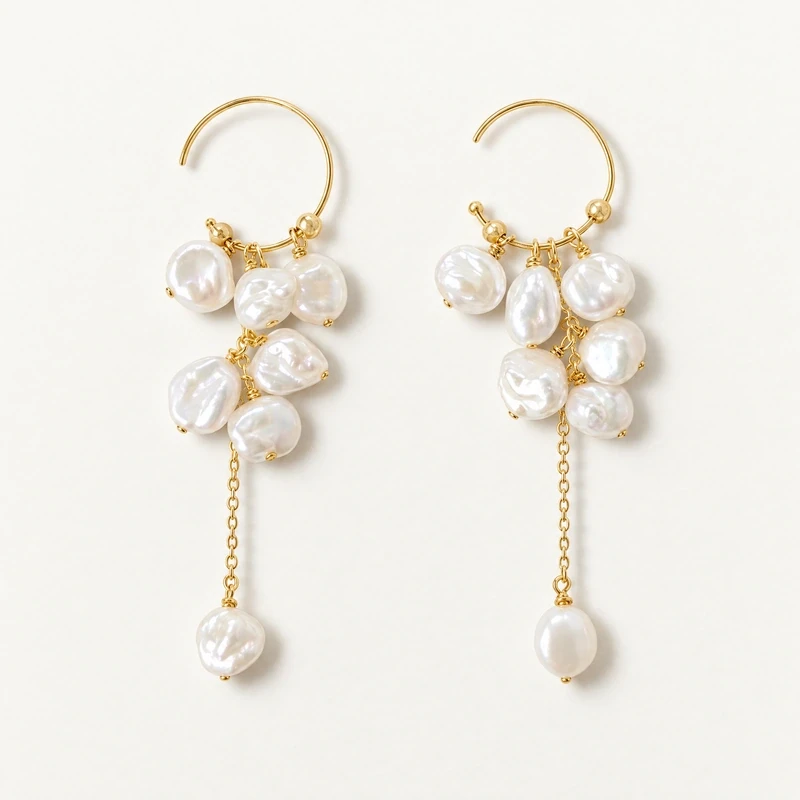
Shape language can help you identify a preferred silhouette, but it should not replace category information. KATRINA is described as a teardrop design with cultured freshwater pearls. That supports choosing it for a downward, elongated styling direction; it does not establish a rule that freshwater pearls are teardrop-shaped. Freshwater pearls have diverse shapes, and the description of one pair of earrings represents only that pair.
Baroque is another term worth keeping in the correct column of your comparison. It describes irregular shape, not one species and not proof of uncultured origin. You should not assume that all baroque pearls are freshwater, either. When reading a listing, separate three questions: what category is named, what shape is described, and what formation information is explicitly stated? This prevents an appealing shape word from carrying claims it does not actually support.
5. Use SHAY and WYNETTE to Compare Pearl Count
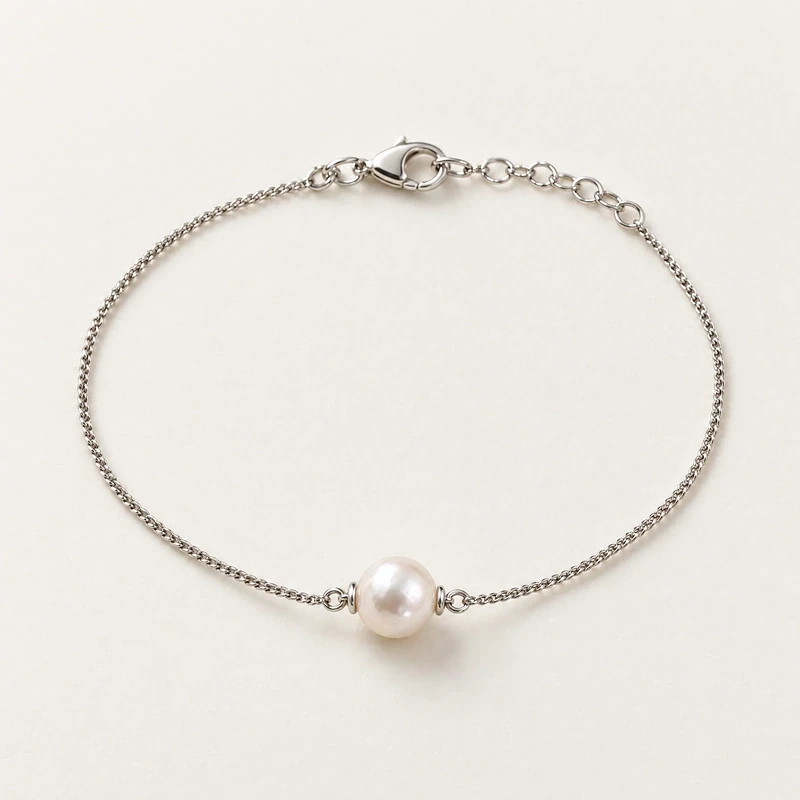
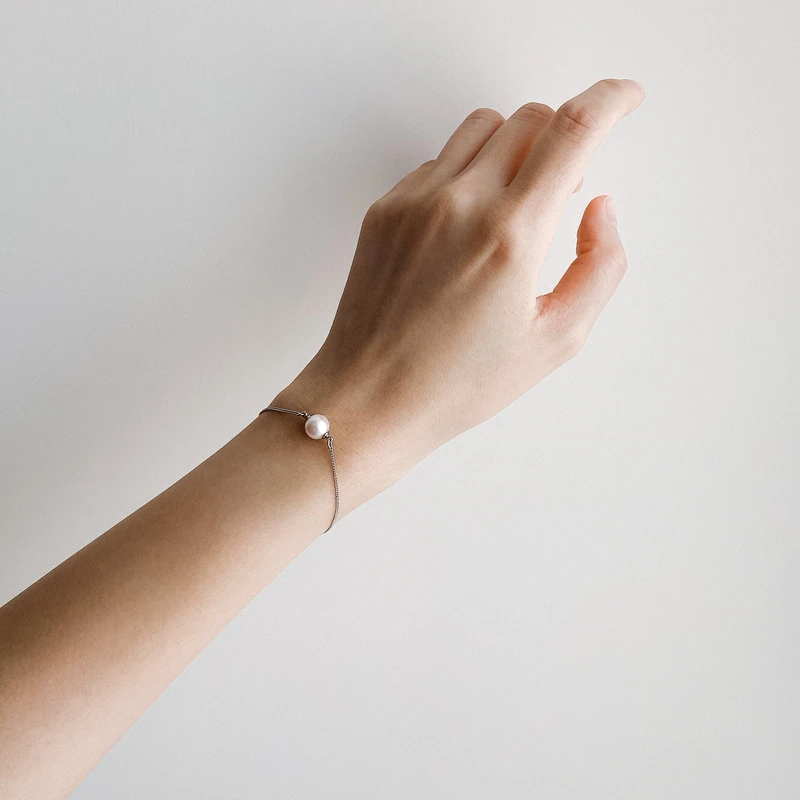
The SHAY Akoya Pearl Bracelet features one 8–8.5 mm Japanese Akoya pearl on a rhodium-plated 925 sterling silver chain with a lobster clasp. Its approximate total lengths are 155 mm, 165 mm and 175 mm, with other lengths also listed as available. This is a useful example of a single-pearl composition: choose it if your styling preference is for one clear pearl accent rather than a repeated pearl element.
The WYNETTE Bracelet with 3 Akoya Pearls uses three Japanese Akoya pearls, also measuring 8–8.5 mm, with a rhodium-plated 925 sterling silver chain and lobster clasp. Listed length choices are 155 mm, 165 mm and 175 mm; its stated approximate total range is 155–177 mm. Because the pearl category and size range match, these bracelets let you focus on count and composition. Three pearls are not automatically better than one; the distinction is how much pearl presence you want.
6. Read KATRINA's Materials and Origin Independently
The KATRINA Teardrop Pearl Earrings combine cultured freshwater pearls with 14k gold-filled metal. The pearls measure 13–15 mm, and the stated drop length choices are 3.5 cm or 4 cm. Each pair is handcrafted in Japan. That last statement concerns the earrings' making location; it does not establish where their freshwater pearls were cultivated. Keeping those details separate makes the description more informative, not less.
The metal comparison also deserves its own decision. Gold-filled is distinct from solid gold, gold-plated metal and vermeil; KATRINA's description should remain “14k gold-filled.” For SHAY and WYNETTE, 925 sterling silver means 92.5 percent silver, and rhodium plating is separately listed. Choose between these listed metal descriptions according to your preferred styling direction, without turning them into unsupported promises about wear duration, waterproof performance or suitability for sensitive skin.
7. Treat Surface Information as a Description, Not a Score
SHAY and WYNETTE state that their pearls may show minor blemishes. Read that as relevant surface information rather than proof of either uncultured origin or inferior value. It gives you something concrete to consider: how comfortable are you with the stated possibility of minor surface marks? Category labels alone cannot answer that preference, and a description should not be expanded into an assurance of flawless surfaces.
A disciplined comparison also avoids filling gaps with assumptions. If you want more detail about a particular pearl's appearance, ask for clarification rather than inventing a luster assessment from its category. For handling guidance, consult the jewelry care page and keep product-specific cautions in view: KATRINA's description expressly says its pearls are delicate and should be treated with care. None of these material descriptions establishes a waterproof, tarnish-free or allergy-safe promise.
8. Build a Shortlist from the Details That Matter
Start your final comparison with the jewelry format, then narrow by composition and dimensions. For bracelets, compare SHAY's single pearl with WYNETTE's three pearls, and check the listed total lengths against the way you prefer a bracelet to sit. The bracelet collection can provide a broader browsing route, but carry the same checklist into each listing rather than assuming every design shares these measurements or materials.
If earrings better serve your wardrobe, assess KATRINA's teardrop design, 13–15 mm pearls and two stated drop lengths as a separate choice. Record category, formation wording, named origin, size, count, length and metal in distinct notes. Then select the piece that meets your actual priorities, and clarify any missing detail before deciding. That process produces a more useful answer than “freshwater or Akoya?” alone: it identifies the particular design whose documented features match how you intend to wear it.