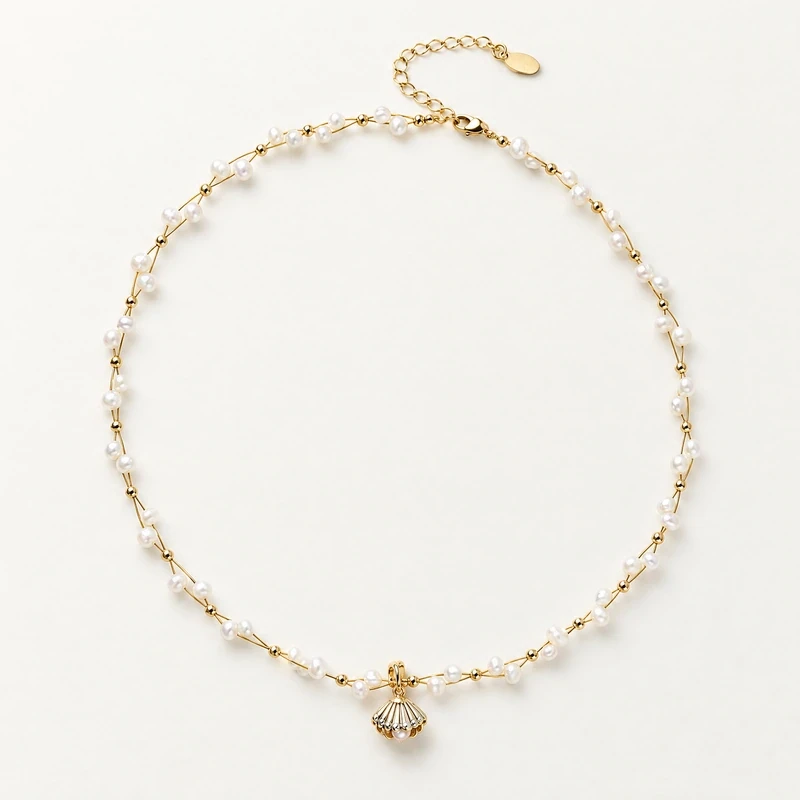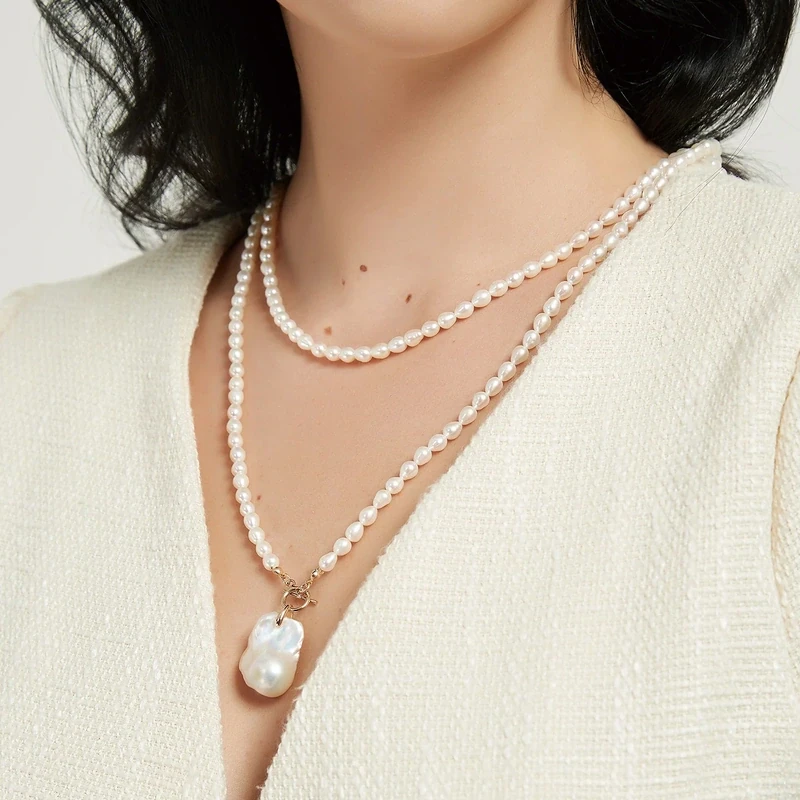
When a jewelry listing describes a pearl as Keshi, it gives you a useful product descriptor, but it is not a complete account of origin, formation, or quality. The word should be read alongside the other stated details: whether the pearls are freshwater, whether their shape is baroque, their approximate size, and how they are set in the piece. Those details help you picture the jewelry without assuming more than the listing says.
That distinction matters because pearl terminology can combine different kinds of information. Freshwater identifies a pearl category, while baroque describes an irregular shape. A Keshi label alone should not be treated as proof that a pearl is uncultured, all-nacre, rare, or superior. This guide explains how to assess the wording, compare hoops, drops, and bracelets, and ask focused questions when a product description leaves something important unclear.
Read each pearl term as a separate detail
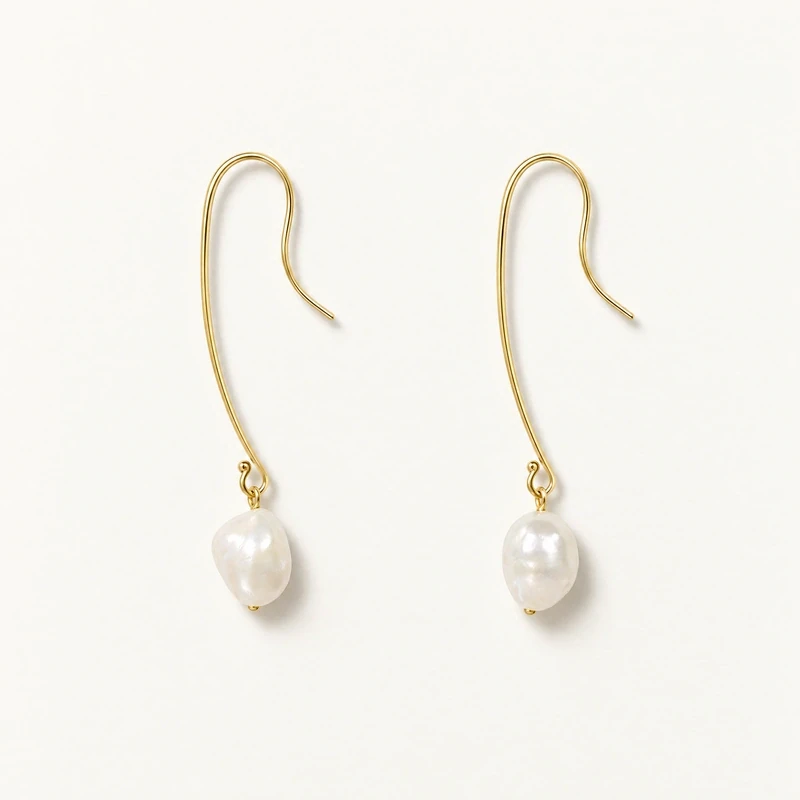
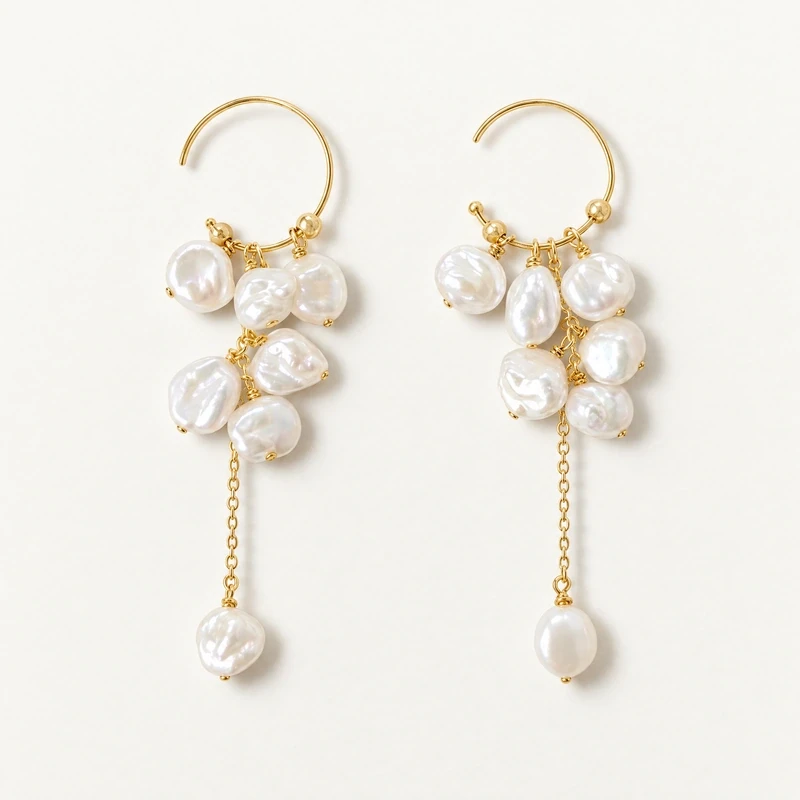
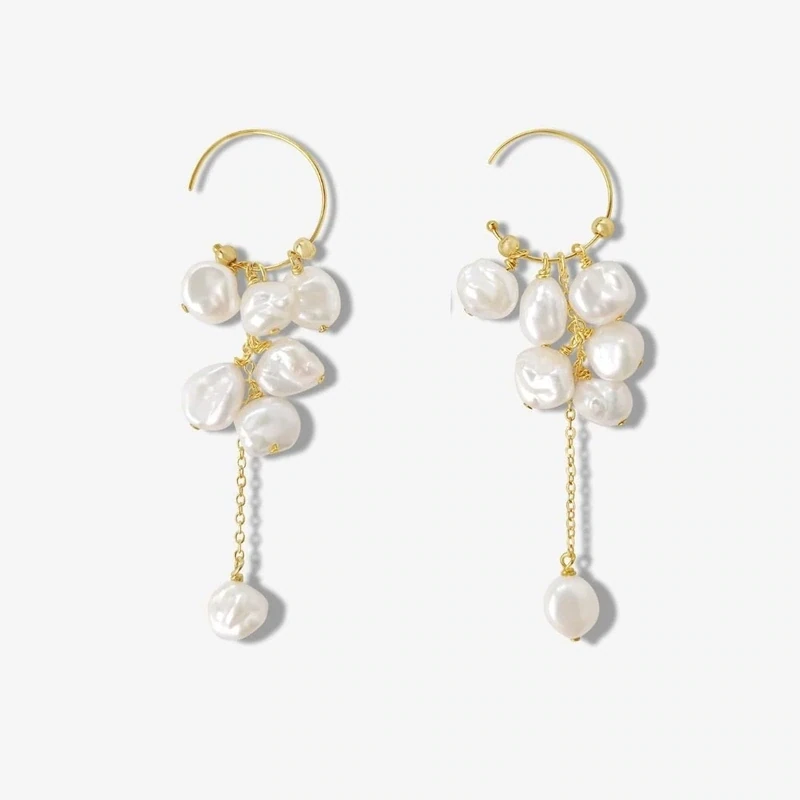
Start by separating the terms in a listing rather than treating them as interchangeable. For example, “freshwater” and “Keshi” appear together in the product descriptions of the Emery Baroque Pearl Earrings and the Caroline Keshi Pearl Hoops. “Baroque” adds information about shape: the pearl is irregular rather than uniformly round. It does not identify a pearl species or establish whether the pearl formed with or without human intervention.
GIA distinguishes natural pearls, which form without human intervention, from cultured pearls, which grow with human intervention and care; cultured pearls are real pearls. Freshwater, Akoya, South Sea, and Tahitian are distinct pearl categories. These distinctions are useful context, but they do not answer every product-specific question. Do not turn a Keshi label into an origin claim unless the seller supplies evidence for that claim.
What Keshi wording does—and does not—establish
For shopping purposes, take Keshi as the descriptor the product listing provides. The products here specifically describe freshwater Keshi baroque pearls, so those words support a clear, limited understanding: the listed pearls are freshwater, are described as Keshi, and have irregular baroque shapes. They do not by themselves give a detailed formation history or establish a universal rule about all pearls sold under the Keshi name.
In particular, avoid assuming that Keshi means uncultured, that every Keshi pearl consists entirely of nacre, or that the term guarantees rarity or superior quality. Those are stronger claims than the listed product details support. If one of those attributes affects your decision, ask the seller to state what they mean by the term and what product-specific information supports the claim. A precise answer should distinguish an observed feature, such as shape, from an assertion about origin or structure.
Baroque shape means individuality, not a fixed silhouette
Baroque pearls have irregular shapes, so a pair or strand may not look perfectly matched in outline. That variation can be an intentional part of the design rather than a defect. The Emery earrings state that their pearls naturally vary in shape and may have imperfections, and that each pair will differ from the images and from other pairs. The Caroline hoops similarly note that each pearl has an individual shape and may differ from the pearls shown.
Think about how much variation you would enjoy in the finished piece. If you prefer close visual symmetry, look for a description or seller response that explains how pieces are paired and what degree of difference to expect. If you like an organic, uneven look, individual shapes may be appealing. Remember that “baroque” alone does not promise a particular outline, color, surface, or origin; use the listed measurements and any available product-specific description to set realistic expectations.
Compare drops, hoops, and bracelets by how they wear
Long drops make a visible vertical line. The Emery earrings measure approximately 6.5 cm long, making length a useful starting point when deciding whether that silhouette suits your usual earrings and clothing. The Caroline hoops offer a different profile: the hoops measure approximately 3 × 3 cm and feature nine freshwater Keshi baroque pearls, each approximately 6–8 mm. These stated dimensions let you compare overall scale without guessing from the style name alone.
A bracelet places the pearls at the wrist rather than near the face. The Riley bracelet features 10 freshwater baroque Keshi pearls measuring approximately 6–8 mm, on a chain listed as approximately 20 cm long and adjustable to a shorter length. Consider whether you want a focal detail at the wrist or a more prominent earring silhouette, then compare the listed dimensions with jewelry you already wear. For more styles, browse the earrings collection or the bracelets collection.
Check metal options independently from pearl details
Confirm which metal option applies to the specific item you select. The Emery earrings are offered in yellow gold-filled or sterling silver, with the description identifying the gold option as 14k gold-filled and the silver option as 925 sterling silver. The Caroline hoops are offered in 14k gold-filled or 925 sterling silver hoops. These are distinct materials and should not be summarized as solid gold.
The Riley bracelet lists a 14k gold-filled chain in yellow gold or a 925 sterling silver chain, depending on the option. Sterling silver 925 means 92.5 percent silver. Read the selected option and the material wording together, especially when comparing a piece’s findings or chain with its pearls. Do not assume that a metal label describes every component unless the product description says so. If the exact component materials matter, ask which stated material applies to each part.
Use measurements to judge scale and fit
Measurements are practical reference points, not promises about how a piece will look on every person. Compare the approximate 6.5 cm earring length with an earring you own, or measure a similar hoop at about 3 × 3 cm. For pearls listed at approximately 6–8 mm, a ruler can help you imagine their scale. These comparisons are more reliable than assuming that words such as “drop” or “hoop” mean the same size across products.
For the Riley bracelet, the listing gives an approximate length of 20 cm and says it can be adjusted to a shorter length. If wrist fit is important, measure around your wrist and compare that measurement with the stated length; ask for clarification about the shorter adjustment range if it is not provided. The description does not specify every detail of how adjustment works, so do not infer a particular clasp or fitting construction. Check any unanswered practical question before choosing.
Ask for evidence that matches the claim
When a description raises a question, make it specific. Ask whether “Keshi” is being used as a product descriptor or as a claim about a particular formation history. If the listing says “natural,” clarify whether it refers to appearance or origin, since casual wording should not be taken as proof of uncultured origin. For claims about all-nacre construction, rarity, or quality, ask what evidence is available for the particular pearls rather than relying on the term alone.
Also confirm the details that affect your choice: pearl category, approximate size, expected variation, jewelry length, and the metal option for the piece you intend to buy. The Emery, Caroline, and Riley descriptions each provide concrete material or measurement information, while also warning that pearl shape can vary. A careful choice follows that evidence: decide which silhouette and metal option suit you, compare the stated dimensions, and seek a direct answer to any important question the listing does not resolve.