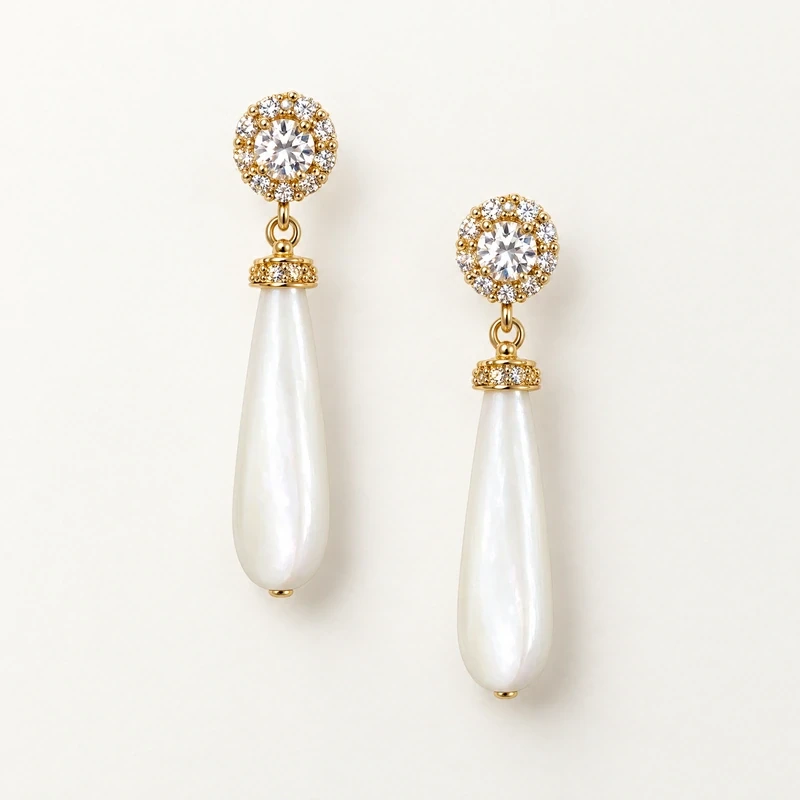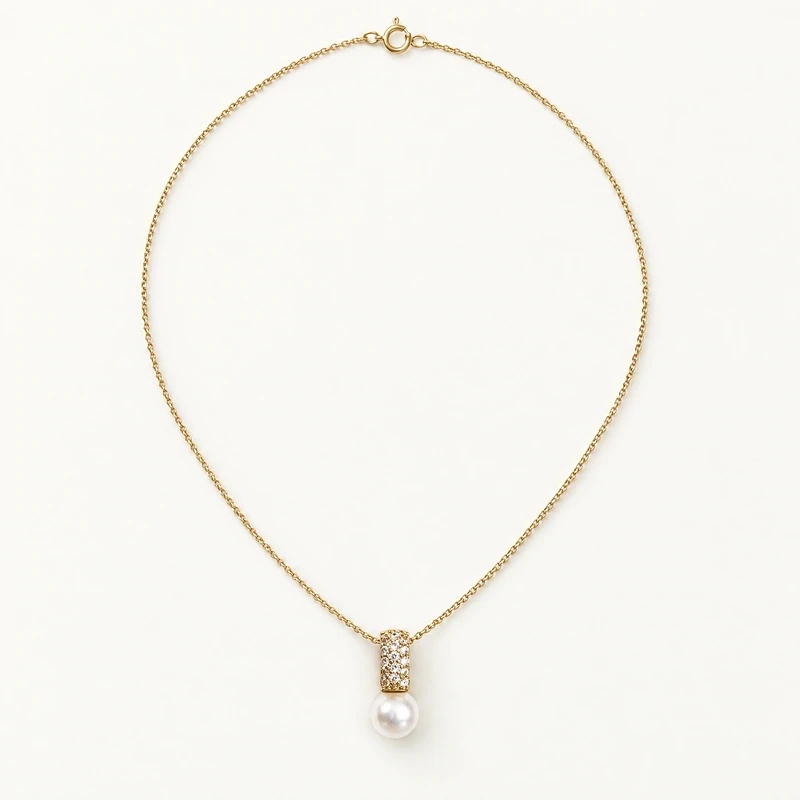
Gold jewelry descriptions can place several different terms side by side: solid gold, gold-filled, gold-plated, vermeil, and a karat marking such as 14K or 18K. They are not interchangeable labels. Some describe how gold relates to another metal; karat describes the fineness of a gold alloy. Knowing which kind of information each term provides makes it easier to compare pieces without relying on assumptions about appearance, wear, or value.
A useful comparison starts with two questions: What is the underlying material, and what does the gold wording actually describe? A product may have a sterling silver base under a gold layer, a different metal beneath a gold layer, or gold alloy used as the main material. The specific product listing matters, especially when it offers more than one metal option. The sections below explain the terms and apply them to three examples so that the distinctions stay practical rather than abstract.
Separate the material from the surface description
Start by identifying the main construction term. “Solid gold” refers to an item made of a gold alloy through its body, rather than an item described as having gold over another metal. “Gold-filled” and “gold-plated” both indicate that gold is associated with a different underlying material, but they are distinct construction terms and should not be treated as synonyms. “Vermeil” is a particular gold-over-silver description: its base is sterling silver. The words answer different questions, so a listing that says simply “gold” may not provide the same clarity as one that names both the gold treatment and the base.
Read the full materials line rather than drawing conclusions from a product title, gold color, or a single karat figure. A karat mark on a gold component does not, by itself, tell you whether the whole piece is solid gold or whether gold is applied over another material. Likewise, “gold on silver” identifies a relationship between gold and silver but does not automatically establish that the item is vermeil. Look for the seller to state the actual option and construction, and avoid filling gaps with assumptions.
What gold-filled and gold-plated tell you
Gold-filled describes a distinct category of jewelry construction in which gold is bonded to a base material. Gold-plated describes a surface layer of gold over another material. Both differ from solid gold, and neither term alone tells you the precise base metal, the thickness of a gold layer, or how long a particular piece will retain its appearance. Those details should not be inferred when a listing does not provide them. The names indicate broad construction distinctions, not a guarantee of a particular finish or wear experience.
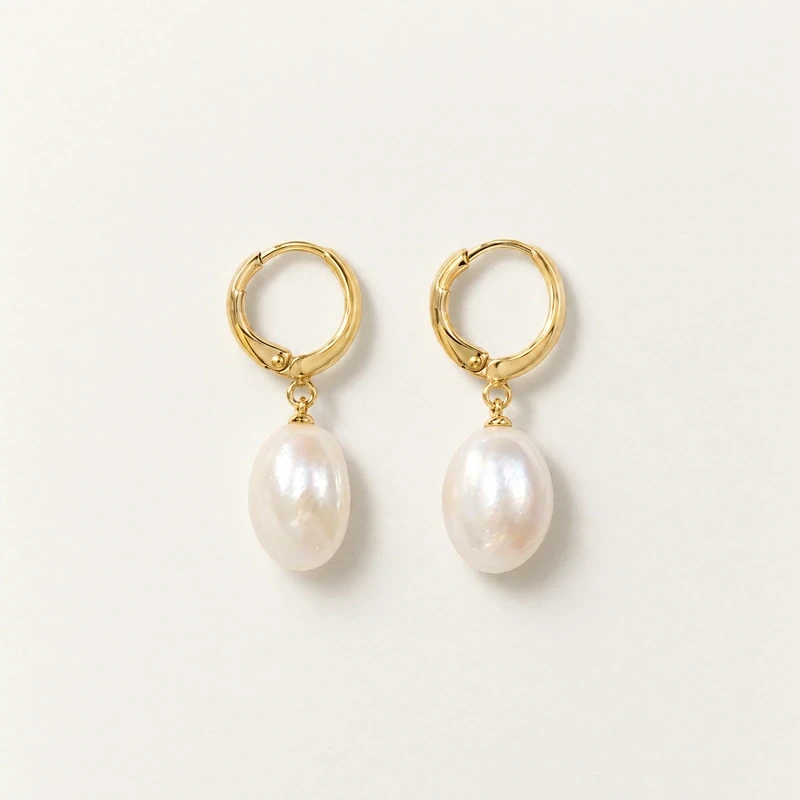
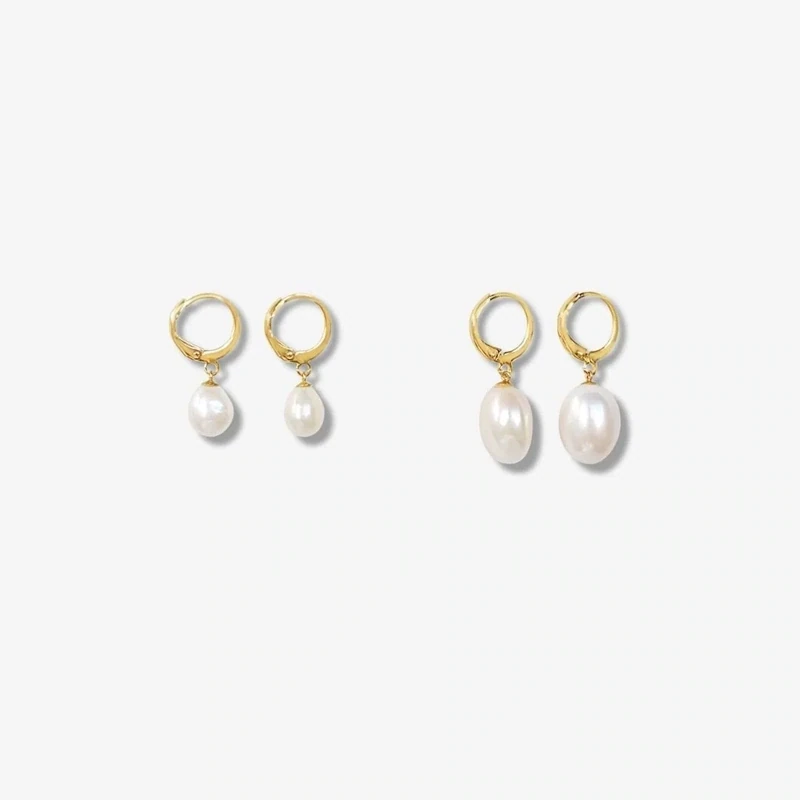
For example, the Lucy Pearl Drop Huggie Hoops are described as having baroque freshwater pearls and 14K gold-filled metal. That listing identifies the metal as gold-filled; it does not call the hoops solid gold. It also gives an approximate hoop measurement of 12 mm and two pearl-size choices. These are useful concrete facts to compare, but the gold-filled label should not be expanded into unlisted claims about a precise layer thickness, base-metal composition, or expected lifespan.
Vermeil has a sterling silver base
Vermeil is not just another way to say gold-plated. Its defining distinction here is the base: vermeil has a sterling silver base beneath the gold. Sterling silver marked 925 is 92.5 percent silver. The silver foundation and the gold surface are separate parts of the description, so a vermeil item is not the same thing as solid gold. If a product listing provides a gold karat for the surface, read that alongside the stated silver base; neither detail cancels out the other.
The Oval Freshwater Pearl Stud Earrings offer a clear example of separate options. The listing says buyers may choose 18K gold vermeil, described as 925 sterling silver plated with recycled gold, or sterling silver. Those are two different metal choices, not a single piece that should be assumed to have both finishes. The earrings are sold as a pair and use 12.5 mm freshwater pearls. When comparing options, keep the metal choice distinct from the pearl material and dimensions.
Karat measures gold fineness, not construction
Karat is a measure of the gold content in a gold alloy; it does not tell you whether the item is solid gold, filled, or plated. That distinction is easy to miss because karat numbers often appear prominently in product descriptions. A label such as 14K or 18K needs to be read in context: does it describe a gold alloy used as the main metal, a gold-filled component, or a gold surface over another metal? The rest of the materials description should answer that question.
The DORA Emerald & Akoya Pearl Drops illustrate why this matters. Their listed choices are “14k gold on silver” or “18K solid gold,” alongside Brazilian emeralds and Japanese Akoya pearls. The 14K gold-on-silver option is not described as solid gold or as vermeil, and it should not be renamed either. The 18K solid-gold choice is expressly identified as solid gold. The listing gives a pearl size of 8–9 mm and a 1.8 cm drop, but those measurements do not change the meaning of either metal option.
Compare options without collapsing them together
When a listing offers alternatives, treat each option as its own material specification. Note the exact wording for each one, then compare it with the construction you prefer. “Sterling silver” names a silver material; “gold vermeil” names gold over a sterling silver base; and “14K gold on silver” gives a gold-on-silver description without automatically making the same claim as vermeil. “18K solid gold” is a different construction statement again. Keeping these labels intact is more reliable than reducing them all to “gold” or “silver.”
A simple comparison note can help: write down the option, the stated base or main metal, and any karat wording. For the oval pearl studs, compare the vermeil choice against the sterling silver choice. For the DORA drops, compare the gold-on-silver option against the explicitly solid-gold option. If a detail you care about is missing—such as the base metal for a gold-filled item—ask for clarification rather than assuming it. This approach supports a decision based on disclosed materials, not on an imagined equivalence between labels.
Use product details as evidence, not decoration
Materials descriptions are most useful when read together with the rest of the listing. Check whether the metal applies to the full piece or a named component, whether the item has selectable versions, and whether the dimensions refer to the jewelry or to a stone or pearl. A product name or visual impression cannot settle those questions. On pearl jewelry, keep the pearl description separate from the metal description: a freshwater pearl does not establish the type of metal used for its setting, and a gold-colored setting does not reveal its construction.
For the Lucy hoops, for instance, the listed 14K gold-filled metal is paired with baroque freshwater pearls; the pearl shapes may vary, and the listing provides approximate size ranges. For the oval studs, the stated pearl measurement is 12.5 mm while the metal choice varies. For the DORA drops, the gem and pearl materials are listed separately from the two metal options. These examples show why it helps to record the exact wording, measurements, and chosen version instead of generalizing from one feature.
Set realistic expectations for finish and care
Construction terms describe materials; they do not guarantee that a piece will be waterproof, hypoallergenic, tarnish-free, or unaffected by wear. Do not assume that a gold surface will behave like solid gold, or that every gold-over-silver item has identical specifications. If care guidance is needed, consult the seller’s stated instructions for the specific piece rather than applying a promise based on the word “gold.” The jewelry care guidance can be a useful starting point for general handling, but it cannot replace product-specific material information.
Before choosing, make a short checklist: identify the exact metal option; distinguish the base from the gold surface; interpret karat as a fineness label rather than a construction label; and confirm any missing detail that would affect your decision. Then compare the actual design features—such as the approximate 12 mm hoops, the 12.5 mm studs, or the DORA drop length—without letting them blur the material terms. This gives you a grounded way to choose among gold-filled, plated, vermeil, and solid-gold descriptions, using only what the product listing actually states.