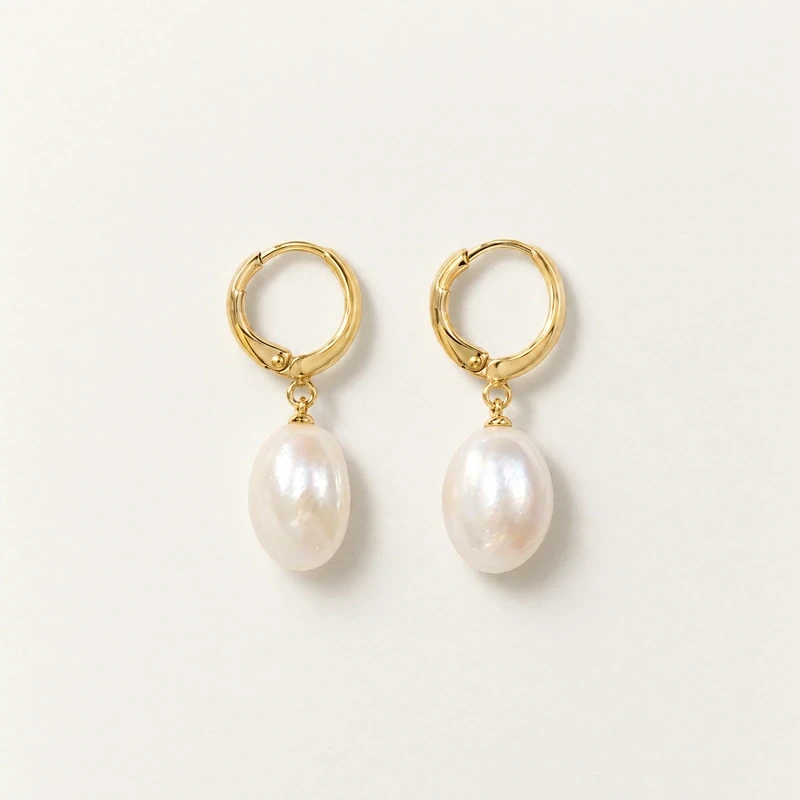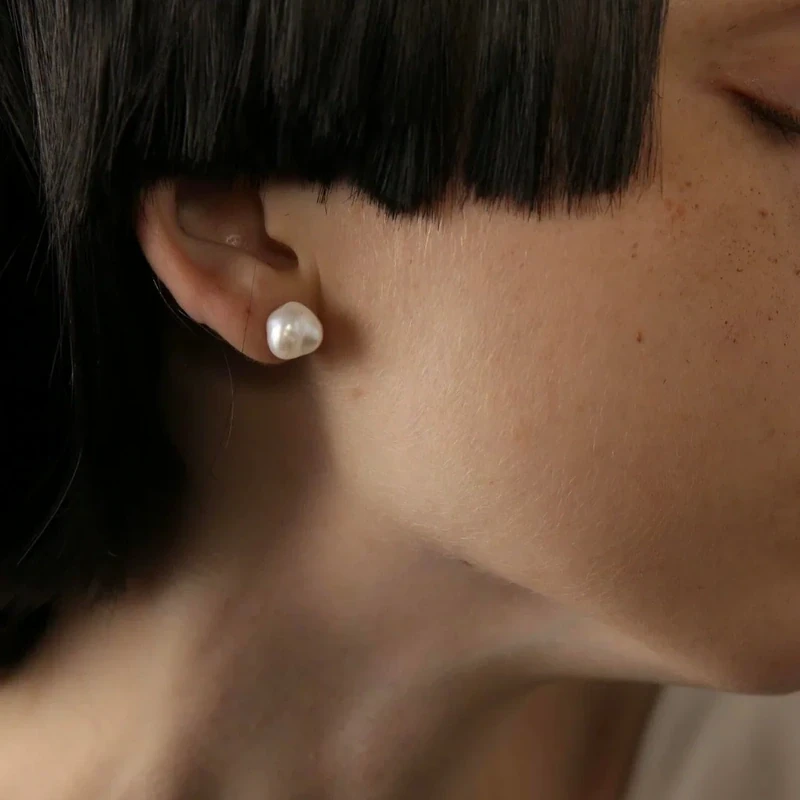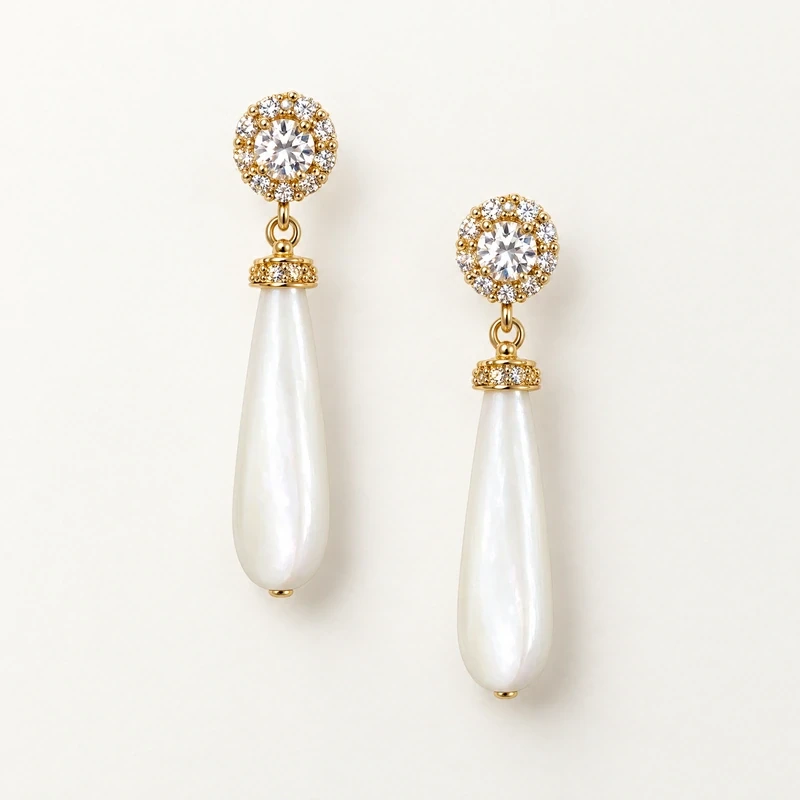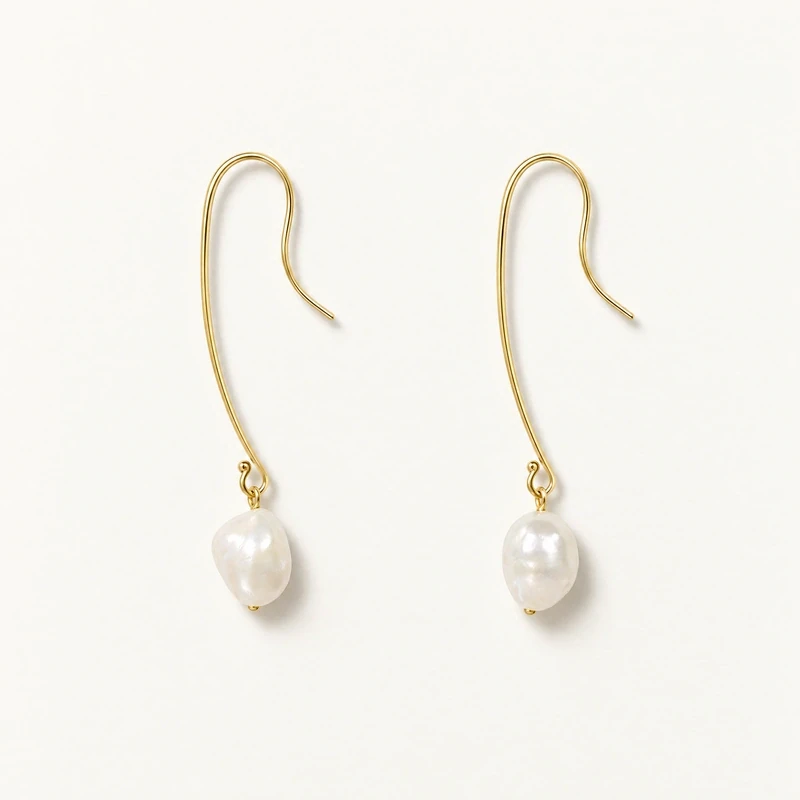
Pearls are not always perfectly round, evenly colored, or free of visible marks. When a description says that pearls are irregular, may have spots, or can differ from pictured examples, those details set expectations for appearance; they are not a promise that every individual pearl will look identical. Knowing what a listing discloses helps you decide whether a naturally varied look suits your preferences.
It is also useful to separate variation from uncertainty. An asymmetrical outline or a small visible surface characteristic may be part of the described appearance, while a mark that looks like a crack, chip, or other damage may warrant a question. A product description cannot establish how an item you have not seen will look in person. This guide offers a careful way to read the available information and identify what you may want clarified.
What “baroque” tells you about a pearl
Baroque describes an irregular pearl shape. It does not name a pearl species, establish its origin, or by itself tell you whether a pearl formed with human intervention. Cultured pearls are real pearls, and freshwater, Akoya, South Sea, and Tahitian refer to different pearl categories. The word “baroque” answers a narrower question: the shape is not uniformly round.
That irregularity can show up in an uneven outline or in differences between pearls used together. For example, the Gracie Baroque Pearl Earrings description notes that the freshwater pearls have naturally irregular shapes and that each pair may differ from the images. Treat that as a disclosure of expected appearance, not a guarantee that a particular pair will match a photo or another pair exactly.
Shape variation in a pair of earrings
When two pearls appear together, compare their general scale and placement rather than expecting mirror-image outlines. A pair can look coordinated while one pearl has a fuller curve and the other a narrower or less symmetrical contour. The product description is the best available guide to what kind of difference is intended. If it explicitly says the pearls may differ from those shown, allow for a distinct appearance in the item you receive.
The Kinsly earrings are described as having two freshwater baroque pearls, with slightly different drop lengths; their stated lengths are approximately 45 mm and 50 mm, including the pearls. Their pearls are approximately 9–11 mm, and the listing notes irregular shapes and individual imperfections. Those details help frame the design, but they do not specify the precise contour or surface of an individual pearl. If those particulars matter to you, ask for clarification rather than assuming a pictured outline is exact.
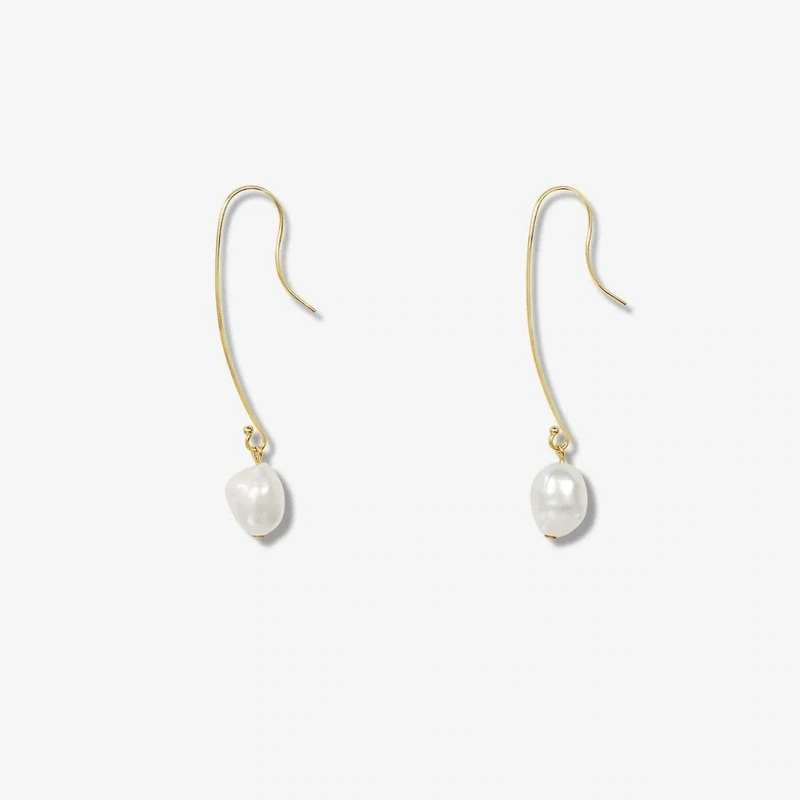
How to interpret surface spots and blemishes
A spot or blemish is a visible surface characteristic, but the word alone does not tell you its size, location, or prominence. Products may disclose such variation without describing each individual mark. The Emma Freshwater Pearl Drops, for example, may have spots or blemishes and may not be perfectly round. That statement sets a realistic expectation that the pearls can have visible differences; it does not identify how a particular pair will appear.
Read the whole description, including any note about images, before deciding whether the disclosed range suits you. A small mark may be acceptable to one wearer and distracting to another, so there is no universal threshold for what counts as an attractive or acceptable surface. If you prefer a more uniform look, consider whether the listing explicitly describes irregularity or blemishes as possible. Do not translate a general disclosure into an assumption that every mark is minor—or that every pearl has the same characteristic.
Variation is not the same as visible damage
Irregular shape and a disclosed spot do not, by themselves, prove damage. At the same time, a listing’s mention of natural variation does not answer every question about a feature that appears concerning. A visible line, opening, chip, or area that seems broken may need clarification, particularly if it is not addressed in the description. Avoid diagnosing the feature from a brief phrase or assuming that an irregular pearl is necessarily damaged.
Before purchasing, describe the specific uncertainty in neutral terms: identify the feature you want explained and ask whether it is an expected surface characteristic or visible damage. If you have access to item-specific images, ask about the area shown rather than requesting a guarantee that every pearl will be flawless. A useful answer should clarify the appearance being discussed. This is a practical information-gathering step, not a statement about any seller’s return terms or what outcome a question will produce.
Use dimensions as a guide, not a shape promise
Measurements help you understand approximate scale, but they do not define a pearl’s outline. The Gracie pearls are listed as approximately 8–10 mm, and the Emma pearls are approximately 6–7 mm in the small size or 8–9 mm in the large size. Those ranges describe stated measurements; they do not imply that every pearl will be a perfect circle or have the same proportions.
Also distinguish pearl measurements from total earring length. Gracie earrings are approximately 5 cm long, including the pearl, while Emma’s stated total lengths vary by size: 15–18 mm for small and 20–25 mm for large. These figures make it easier to compare scale with your preferences, but the descriptions do not provide an exact outline for each pearl. For a particular visual concern, ask about the shape or surface directly instead of trying to infer it from millimeters alone.
Read product wording closely before choosing
Look for three kinds of disclosure: the pearl category, a statement about shape or surface, and any note that appearance can vary from images. Each provides a different piece of information. “Freshwater” identifies the category stated in the listing; “baroque” describes irregular shape; and a note about spots or imperfections alerts you to possible visible variation. None of those phrases supplies an exact description of every individual pearl.
Compare listings using their own stated details rather than assuming that similar names imply identical appearance. Gracie explicitly notes that shape and appearance may vary from images; Kinsly describes individual imperfections; Emma notes possible spots or blemishes and a shape that may not be perfectly round. These are useful distinctions when deciding what to ask. The earrings collection can help you browse styles, but each product’s description remains the relevant source for its listed materials, measurements, and appearance notes.
Decide how much variation suits your style
Think about where and how you expect to wear the earrings, then consider the look you prefer. If you enjoy an organic, visibly varied appearance, an irregular silhouette may be part of the appeal. If you favor symmetry or a closely matched pair, disclosures about differing shapes or individual imperfections deserve more attention. This is a personal style choice rather than a quality verdict: variation alone does not establish that a pearl is better or worse.
For a practical comparison, note the stated size, total length, and variation language for each option. The Emma listing offers small and large sizes, while Gracie and Kinsly provide their own approximate measurements and shape disclosures. If the wording leaves an important question unanswered, ask about that point before deciding. The jewelry care guide may also be useful for general care considerations, but it cannot identify the condition or exact surface features of a particular pearl.
Ask focused questions when the description is not enough
Keep a clarification request specific and factual. You might ask whether an observed spot is a disclosed surface blemish, whether an apparent line is visible in person, or whether a pair can differ noticeably in contour. If you are comparing appearance with a product image, state which feature you mean. This makes it easier to address the uncertainty without treating a general variation note as a detailed assessment of an individual item.
Before you choose, make sure you are comfortable with what is actually stated: the pearl category, approximate measurements, listed metal option, and disclosed possibility of shape or surface variation. Do not rely on an assumption of perfect roundness, flawless surfaces, or an exact match to an image when the description says otherwise. If a potentially damaged-looking feature remains unclear, pause and seek an explanation. That simple check helps you make a decision based on the product information rather than on expectations the listing does not promise.