Pearl drop earrings can shift the character of an outfit through their length, shape, and movement. A shorter drop may sit close to the ear and work quietly with a collar, while a longer design becomes more visible against bare skin, a high neckline, or hair worn down. The right choice is less about a universal rule than about how much visual movement you want and what else will share that space.
Start by looking at the listed drop measurement, then consider the pearl’s shape and the way your clothing and hair will frame it. A pair described as long may still feel understated if its pearls are small, while a shorter drop with larger, irregular pearls can have a noticeable presence. The examples here show how those details interact without relying on face-shape rules or assumptions about earring weight.
Read the full drop measurement first
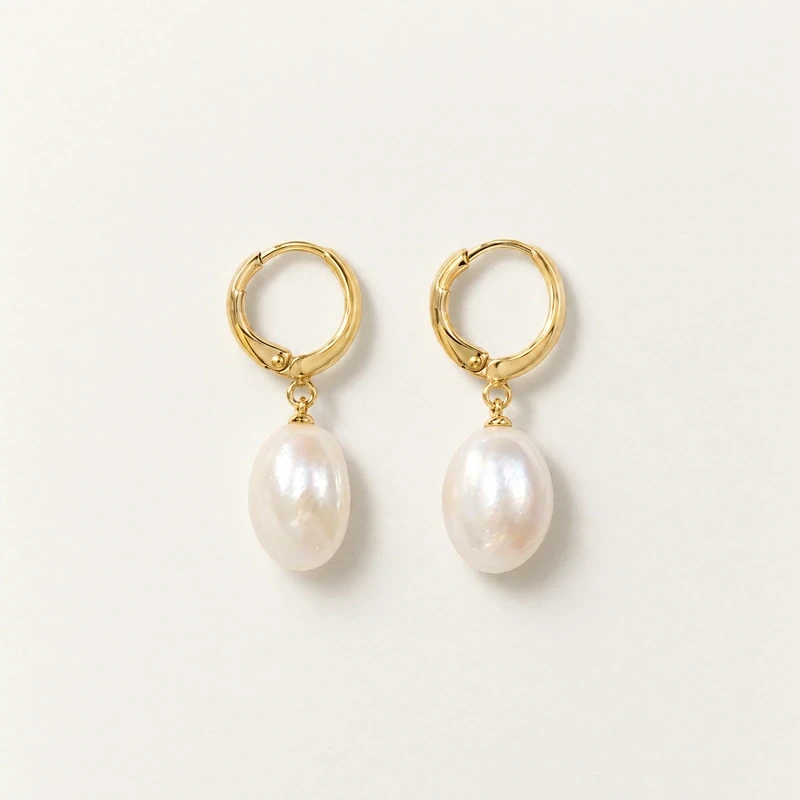
“Drop length” is useful only when you know what the measurement includes. Some product descriptions give the overall earring drop, while others clarify that the measurement includes the pearls. The Kinsly Baroque Pearl Earrings, for example, are listed at approximately 45 mm and 50 mm long, including the pearls. BESS White Baroque Pearl Drops have an approximately 2.6 cm earring drop and separately list pearl size at 10–15 mm. These are more useful comparisons than relying on labels such as short or long alone.
When comparing styles, check whether the measurement applies to the full earring or only a component. Also note whether it is approximate: small differences can occur in irregular pearl shapes, and a pair may not look perfectly uniform. If you are shopping for a specific neckline or need the earring to sit clear of a collar, compare the stated measurement with the space available on your own clothing rather than assuming a category name predicts the fit.
Choose short or long for the outfit’s visual space
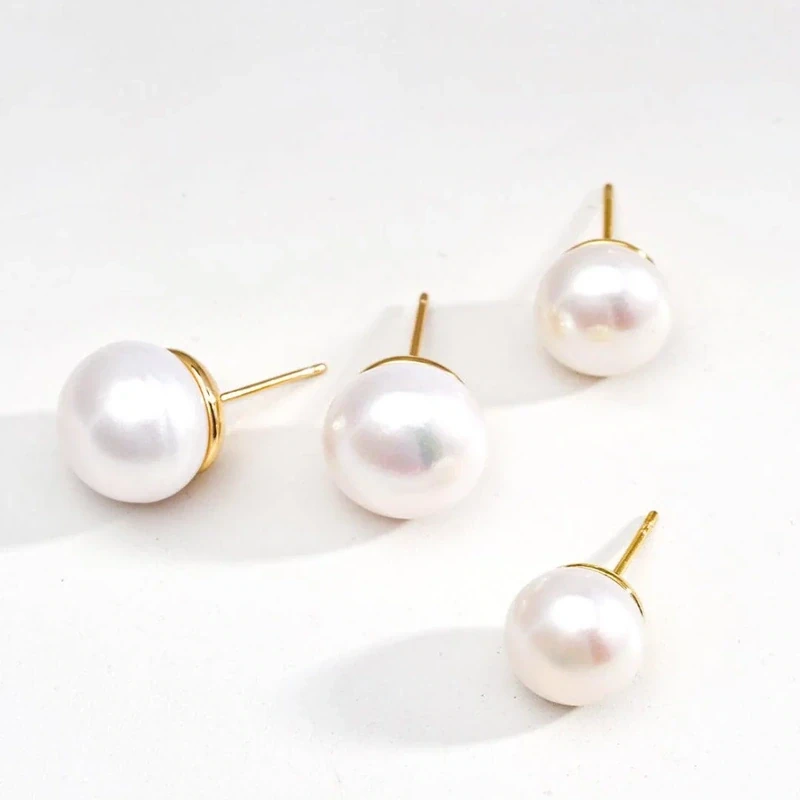
A shorter drop often makes sense when a collar, lapel, or scarf already occupies the area below the ear. It can add a pearl accent without competing as strongly with those details. For example, BESS White Baroque Pearl Drops measure approximately 2.6 cm in drop, with 10–15 mm pearls. That gives you a concrete reference point for a relatively compact dangling style; it does not mean every outfit will make it appear the same length.
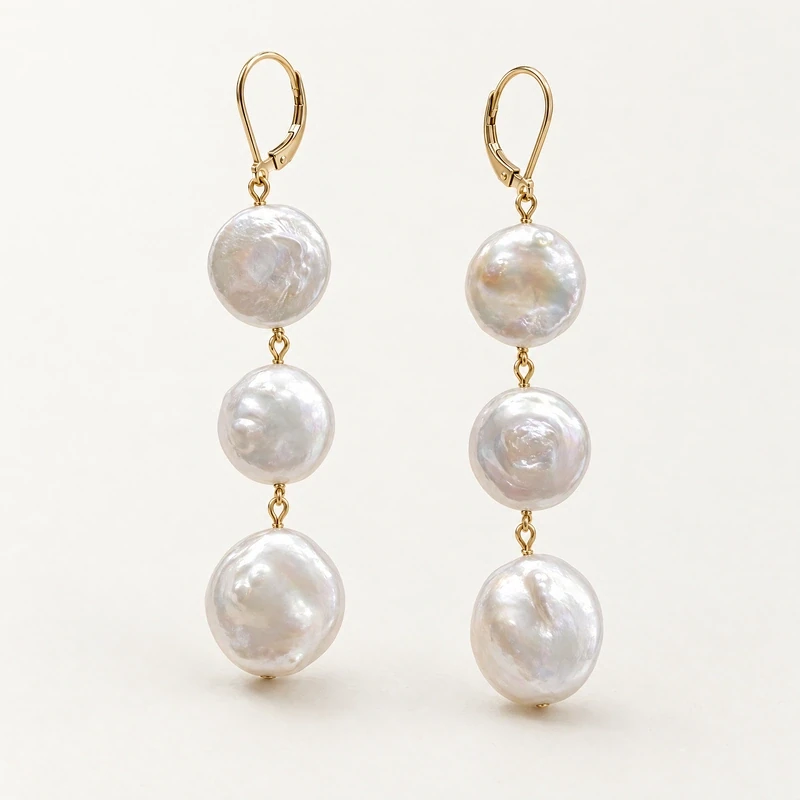
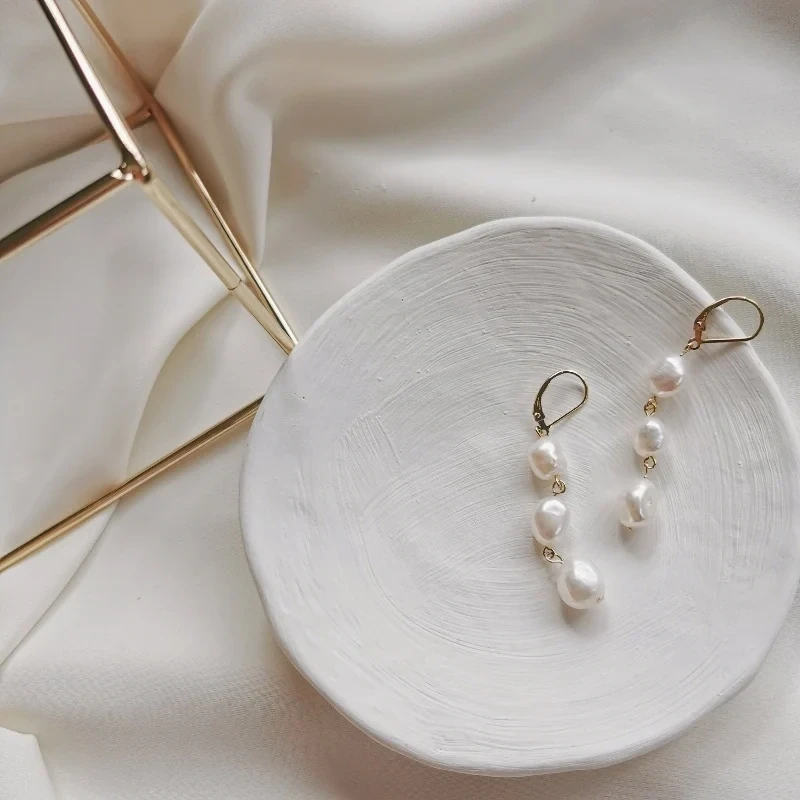
Longer drops create more visible separation between the ear and the pearl details. Irene Freshwater Pearl Earrings have three freshwater pearls on each side, and the coin-shaped option is listed at approximately 7–7.5 cm. That length may be a deliberate choice when you want the earrings to show against a simple top or uncovered shoulder. Before choosing, consider whether the drop might meet a collar, scarf, or shoulder as you move. The practical question is not simply “Will it look long?” but “Will its movement suit the clothes I plan to wear?”
Coin and baroque pearls create different movement
Shape changes how a drop reads, even when two styles have similar measurements. Irene’s coin-shaped version uses larger pearls, approximately 10–15 mm, and has a longer stated drop than its baroque version. The baroque option is approximately 5–5.5 cm, with pearls approximately 8–10 mm. The product description attributes the longer coin-style drop to its larger pearls. Compare both the pearl dimensions and full drop rather than assuming that one shape is automatically more prominent.
Baroque describes an irregular shape, not a guarantee that two pearls will match. The Irene description notes that each pair will differ from the pictured earrings and that baroque pearls may have imperfections. Kinsly likewise uses freshwater baroque pearls with individual irregularities and imperfections. That variation gives each pearl a distinct outline, which can make even a modest drop feel visually expressive. If you prefer a more consistent silhouette, pay attention to the product’s actual measurements and shape description, not an expectation that natural variation will disappear.
Understand intentionally different drop lengths
A small difference between the two sides can be a design feature rather than a mismatch. Kinsly lists one earring at approximately 45 mm and the other at approximately 50 mm, including the pearls. The difference is modest and deliberate, adding asymmetry without requiring the wearer to style two wholly different earrings. This can suit outfits with a relaxed or artful feel, particularly when the rest of the look is not already crowded with competing details.
Consider how that difference will be seen from the front and in profile. Hair worn behind one ear, a one-shoulder neckline, or a scarf arranged asymmetrically may make the contrast more apparent. If you want the earrings to read as a quiet pair, wear them with a simpler neckline or let both sides remain similarly visible. If you enjoy a more noticeable contrast, styling one side of the hair back can make the intentional variation easier to appreciate. The listed lengths help you judge the scale of the difference before choosing.
Account for shoulders, collars, and scarves
Clothing provides a useful real-world measure of how a drop may move. A long earring can visually cross the open space between the ear and shoulder, while a shorter one may sit above a collar. High necklines and structured collars can interrupt that open space; a scarf may add both color and texture beside the earring. Try the outfit with the earring length in mind, especially if the garment has a raised neckline, a wide collar, or fabric that gathers near the neck.
Think about movement as well as appearance. A drop that rests against a shoulder or brushes a scarf may be more noticeable during wear than one hanging freely. There is no need to assume that a particular length will be comfortable for everyone; the available product descriptions do not give earring weights or promise a particular feel. Instead, use measurements to screen options, then consider how much contact with clothing you are willing to have. Browse the broader earring collection with those practical details in mind.
Style with hair without relying on face-shape rules
Hair changes how easily a drop can be seen. With hair tucked behind both ears, the outline and full length are more visible. Hair worn loose may partly cover shorter styles, while a longer drop may remain visible below the hairline, depending on the hairstyle. These are styling possibilities, not fixed rules: texture, movement, and how the hair is arranged all affect the result.
For an everyday comparison, try the same pair with hair down, tucked behind one ear, and tied back. Notice whether the pearls stand out as intended or disappear into the hair. If you choose a pair with intentionally different lengths, an asymmetric hairstyle can echo that difference, while a balanced hairstyle can make it feel more subtle. The aim is to coordinate visibility and movement with your preference, not to match earrings to a prescribed face shape.
Compare three examples by their listed details
The Irene Freshwater Pearl Earrings offer a direct coin-versus-baroque comparison: three pearls on each side, with the coin option longer at approximately 7–7.5 cm and the baroque option approximately 5–5.5 cm. The listed material options are freshwater pearls with either 14k gold-filled metal or sterling silver. Keep those options distinct when comparing; the description does not call the gold-filled option solid gold.
The Kinsly Baroque Pearl Earrings pair freshwater baroque pearls with intentionally different approximate lengths of 45 mm and 50 mm, and offer 925 sterling silver or 14k gold-filled metal. The BESS White Baroque Pearl Drops provide a shorter stated drop of approximately 2.6 cm, with freshwater pearls and sterling silver plated with 18K gold. Those materials are not interchangeable descriptions. Compare each design’s actual length, pearl size, and metal listing with your outfit and preferences.
Make a practical choice before you wear them
To narrow the options, first decide whether you want a compact accent or a clearly visible drop. Next, compare full drop measurements and pearl dimensions, checking what each measurement includes. Then account for your usual necklines, scarves, and hairstyles: a long drop may show strongly against a simple top but share space with a high collar, while an irregular pearl can draw attention even at a shorter length.
Finally, decide whether you prefer a matched silhouette or intentional variation. If unsure, begin with a style whose stated length leaves room around your collar and shoulder, then consider whether its shape provides the amount of presence you want. For a longer, multi-pearl look, compare the two Irene options; for subtle asymmetry, review Kinsly’s paired lengths; for a shorter baroque drop, use BESS as a measurement reference. Choosing by these concrete details makes it easier to find pearl drops that move with your clothing and feel true to your personal style.