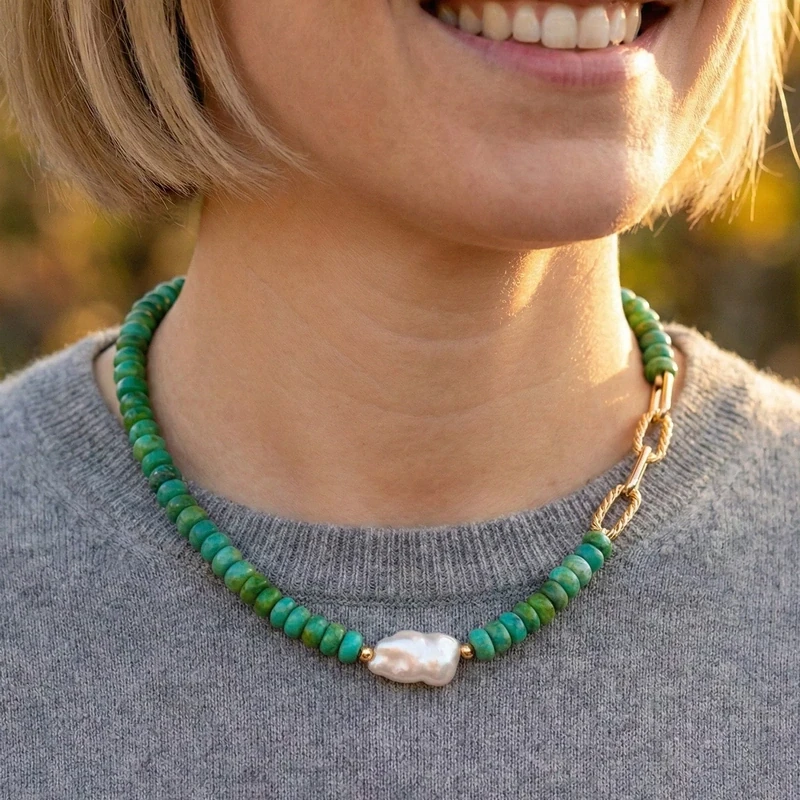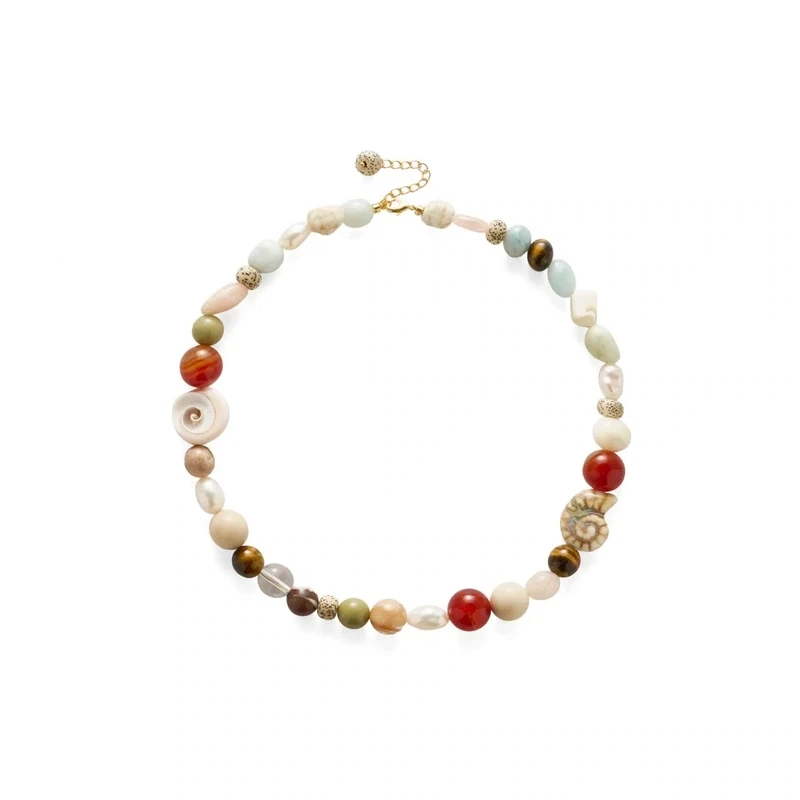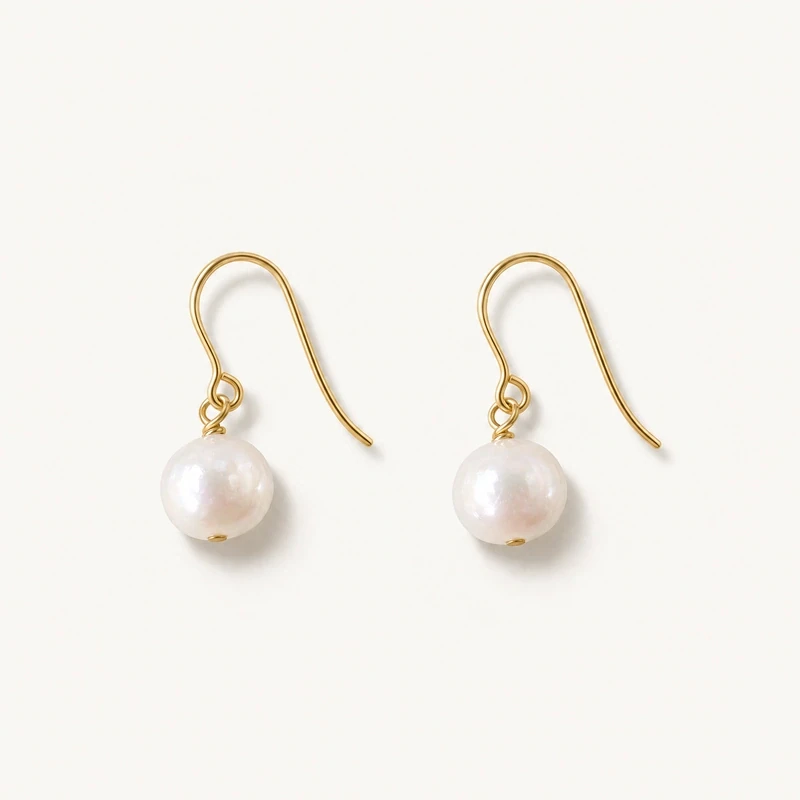
Pearl jewelry can bring a composed detail to office clothing without requiring a formal dress code or a fixed idea of what professional style should look like. The useful question is not whether pearls are sufficiently quiet for every workplace; it is whether a particular piece suits your clothing, movement, and tasks. A small pearl near a shirt collar may feel balanced one day, while a longer earring or bracelet may be more comfortable on another.
Start with the places where jewelry meets your workday: the neckline beneath a collar, the area around a headset, and the hands and wrists used at a desk. Then consider proportion and movement rather than treating every pearl as interchangeable. These practical checks help you choose what to wear, when to adjust it, and when to remove it because a task calls for jewelry-free hands or ears.
Begin with the day, not a dress-code assumption
Workplaces differ, and a subdued profile is a personal styling preference rather than a universal rule. Before choosing jewelry, think through the actual day: Will you be mostly seated, moving between rooms, speaking on calls, or doing hands-on work? A piece that feels unobtrusive at a desk may become distracting if it repeatedly catches on clothing or shifts as you move. Your own comfort and the requirements of the task are better guides than a broad claim about what everyone should wear to work.
It can help to make a quick plan for the day’s most demanding activity. If you expect to wear a headset for long stretches, prioritize earrings that do not press where its ear cups sit. If you will be typing or handling materials, consider whether a bracelet’s position will bother you. You do not need to avoid jewelry altogether; you can choose a different piece, wear it only for part of the day, or remove it before a task where it gets in the way.
Read the collar before choosing a necklace
A collared shirt changes the available space around the neck. With the collar open, a short necklace can sit inside the neckline, while a buttoned collar may leave the necklace visible above the fabric or crowded against it. Check where the collar points fall and where the necklace naturally rests. The Gabriella Pearl Choker Necklace measures approximately 38 cm, with a 7 cm extension, and has ten freshwater pearls of approximately 5 mm each. Those measurements give you a concrete starting point, but your neck, shirt, and preferred fit determine how it sits.
Try the necklace with the exact shirt or blouse you expect to wear. Move your head, look down, and open or close the collar as you normally would. Notice whether the pearls are hidden, pressed against a collar edge, or positioned where you want them. If the necklace and collar compete, changing the number of open buttons or choosing a different neckline may be simpler than adding another layer. For a higher or more structured collar, earrings alone can provide a finished detail without crowding the neckline.
Keep headset contact in the fitting check
Headset comfort depends on where the ear cups or earpieces make contact, so test earrings with the equipment you use rather than relying on a mirror alone. Put the headset on, turn your head, and wear it for a brief work-like interval. A pearl that looks modest may still press against an ear cup. Conversely, a visible earring may sit outside the contact area and feel fine. The point is to check the real interaction between the jewelry and your setup.
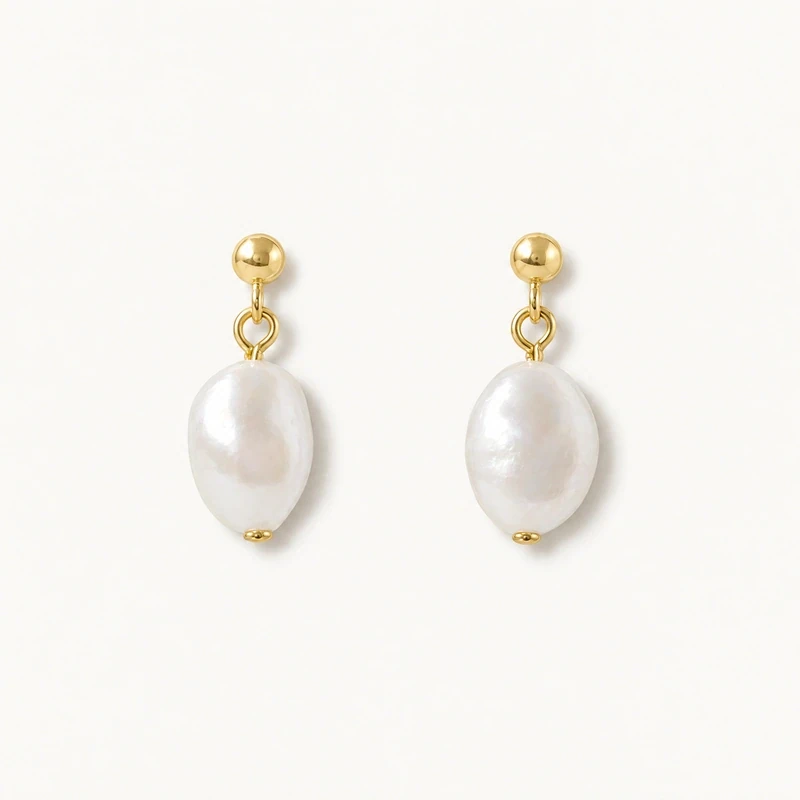
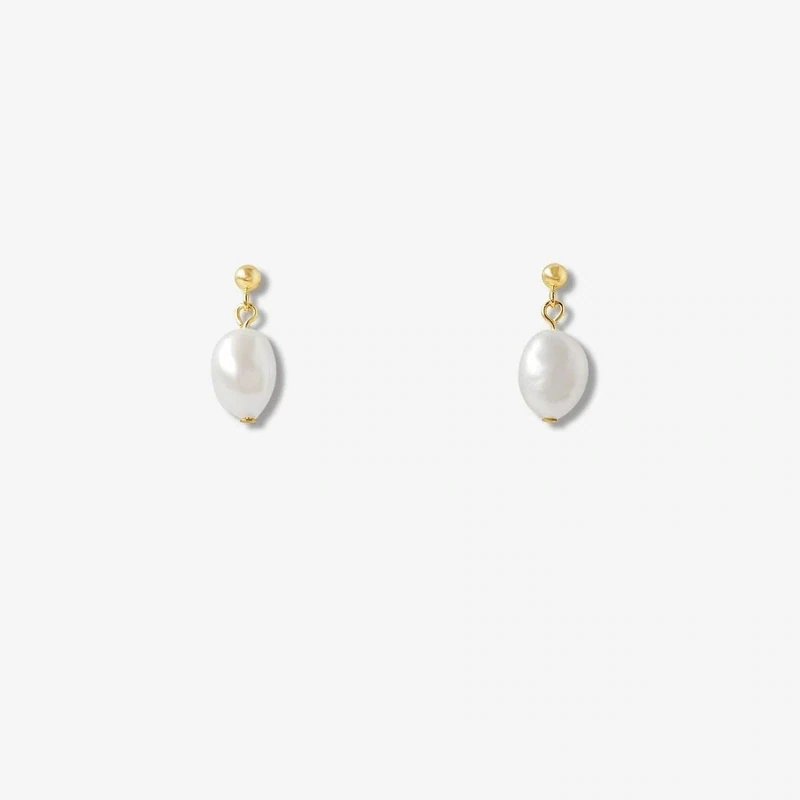
The Valeria I Baroque Pearl Studs are approximately 15–18 mm long, with pearls approximately 9–11 mm. Their pearl drops are more substantial than a tiny single-pearl stud, so consider how that length and shape meet your headset and hair. They use freshwater baroque pearls, which vary in shape and may have imperfections; each pair differs. If a headset presses, shifts, or draws attention to the earring, switch to a piece that fits your equipment or remove the earrings during headset-heavy periods.
Choose earring scale by distance and movement
Office jewelry is seen at different distances: across a meeting table, on a video call, or close up while speaking with a colleague. A pearl does not need to be tiny to feel considered. Instead, look at its outline against your hairstyle, collar, and face, then check whether its movement suits the setting. Baroque pearls have irregular shapes, so a pair may not look perfectly matched. That variation is part of their appearance, not a reason to expect identical outlines.
With the Valeria I studs, the spherical stud and attached baroque pearl make a drop profile. Secure your hair as you would for work and check whether the pearls remain visible without brushing against your collar or headset. If the shape feels prominent with a patterned shirt, a simpler neckline may create visual space. With a plain top, the same earrings can provide a clear focal point. Think in terms of balance: one noticeable element can be enough, and there is no need to match pearl scale across earrings, necklace, and bracelet.
Use wrist jewelry only when it works at the desk
A bracelet can add a small point of interest, but a desk is a practical test. Rest your forearms on the surface, type, write, and reach for the items you use regularly. Pay attention to whether the bracelet slides, taps, catches, or simply feels distracting. If it interferes, removing it is a sensible styling choice, not a failure to make the outfit work. Some tasks also call for jewelry-free hands or wrists, so follow the needs of the activity.
The Gabriella Freshwater Pearl Bracelet features six freshwater pearls of approximately 5 mm on a fine chain. Its listed length is approximately 20 cm and it can be adjusted shorter. Before wearing it through a workday, set the fit where you prefer and try ordinary desk movements. A comfortable position at rest may shift when you type or reach. For jewelry you plan to wear frequently, browse the bracelet collection with wrist movement and desk contact in mind, rather than choosing on appearance alone.
Coordinate metals and pearls without matching everything
When clothing already has buttons, a belt buckle, or other visible details, use those as context rather than a strict matching rule. Choose a metal tone that feels harmonious with the outfit, or let the pearls provide the common thread across different pieces. The Gabriella necklace and bracelet each offer a choice of 14k gold-filled yellow gold or 925 sterling silver. Sterling silver 925 means 92.5 percent silver; gold-filled and sterling silver are distinct materials, so select the listed option that suits your preference.
For the Valeria I studs, the available options are 14k gold-filled metal or 925 sterling silver. Keep each product’s options separate when building a combination: a gold-filled necklace does not make a sterling silver earring gold-filled, and neither description should be read as solid gold. A mixed-metal look can be deliberate, especially when the rest of the outfit connects the tones. If you prefer a quieter effect, repeat one metal across the pieces you wear and leave the rest of the outfit simple.
Plan for movement and task changes
Jewelry that works at the start of the day may be less suitable after your schedule changes. A meeting may give way to equipment use, a commute, or a hands-on task. Make a habit of checking for movement before you begin: turn your head, raise your arms, lean forward, and see whether anything catches or shifts. This is especially useful with a necklace near a collar and earrings near a headset. If a piece becomes distracting, take it off rather than repeatedly adjusting it.
Care also matters when you remove pearl jewelry during the day. Keep pieces away from perfume, chemicals, acids, excessive heat, and steam or ultrasonic cleaners. GIA guidance recommends wiping pearls with a soft, clean cloth after wearing; occasional warm soapy water cleaning may be appropriate, and strung jewelry should dry completely. For mixed-material pieces, use conservative care. See the jewelry care guidance for a practical reminder, and avoid leaving removed jewelry where it can be knocked or tangled with work items.
Make a simple choice before getting dressed
Use a short sequence instead of assembling jewelry by habit. First, identify the day’s main constraint: collar, headset, desk movement, or a task that requires removal. Next, choose one piece whose size and position suit that constraint. Try it with the actual clothing and equipment, then move as you will during work. Finally, decide whether it should stay on all day or be removed for a particular part of the schedule. This approach leaves room for personal style without pretending that one office look fits everyone.
For a collared shirt and headset-heavy day, you might begin with earrings only, then keep them only if the headset test feels comfortable. For a desk day with an open neckline, the 38 cm Gabriella choker may be worth trying with the collar arrangement you prefer. Add the bracelet only if typing and reaching feel natural. Choose your pearl jewelry by how it behaves in your real workday, and let comfort, proportions, and the demands of each task make the final decision.