Jewelry measurements are most useful when shoppers can quickly tell what is being measured, which option a figure applies to, and whether a stated length includes an extension. A number without that context can create more uncertainty than it resolves. Retail displays should therefore treat dimensions as product information, not as a string of figures to fit into a small space.
A reliable system works across product pages, shelf cards, and staff references. Use consistent units, label measurements in plain language, and separate selectable options rather than blending their figures together. For earrings, clarify drop length and component size; for necklaces and bracelets, distinguish the base or total length from any extension. If weight has not been measured or listed for a product, do not estimate it.
Build a consistent measurement vocabulary
Start with a short set of field names that staff can apply across categories. Useful labels include “drop length,” “necklace length,” “bracelet total length,” and “pearl diameter” or “pearl size,” depending on how the product information expresses the component. These labels tell the shopper what the number describes. Avoid using a bare “length” field when a necklace chain, an earring drop, and a bracelet can all appear in the same assortment.
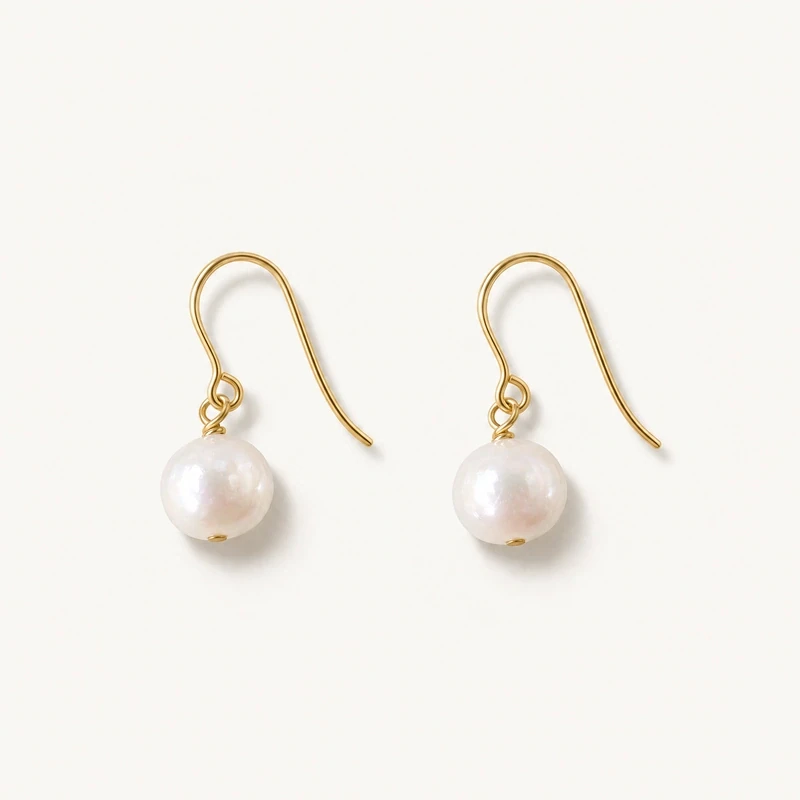
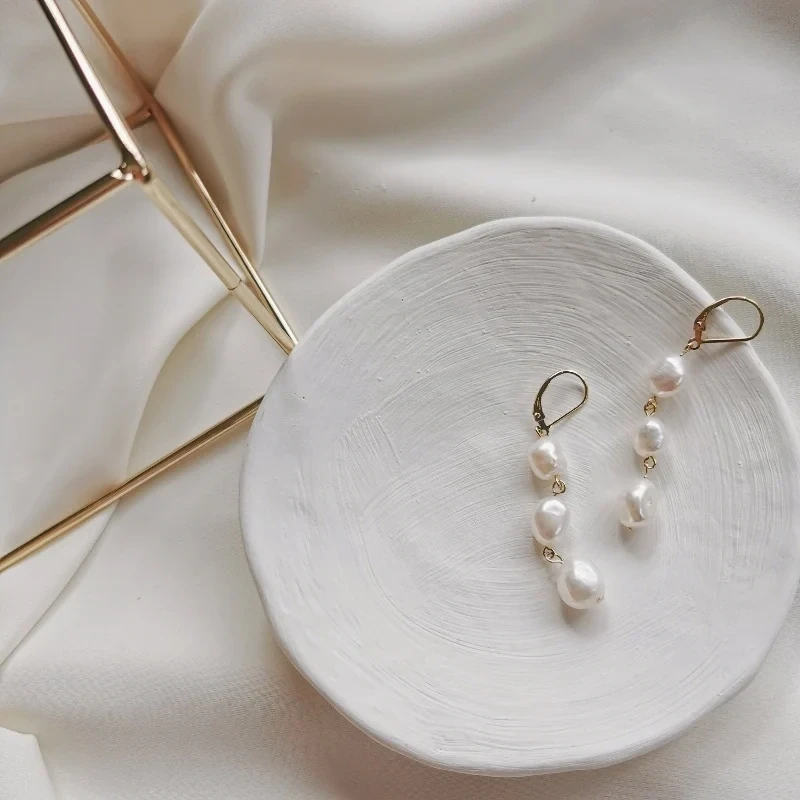
Keep the same vocabulary in online listings, printed cards, and internal product notes. Where a measurement is approximate, state that directly beside the figure rather than implying precision through formatting. For example, the Irene Freshwater Pearl Earrings listing uses approximate drop ranges and gives pearl dimensions separately. That is more informative than combining both measurements into a single size line, because shoppers can distinguish the overall hanging length from the size of the pearls.
Choose units and formatting shoppers can scan
Set a primary unit convention for the retail environment and apply it consistently within each display. If a product description provides centimeters for overall length and millimeters for a smaller component, retain those units when they make the figures readable; label each measurement so there is no ambiguity. Do not silently convert a number or round it to create a neater-looking card. Where a conversion is genuinely needed, check that the converted value is accurate and preserve the original listed measurement when appropriate.
Use a repeatable order for each product type. An earring card might show style, approximate drop, and pearl size. A necklace card might show chain length, extension, and pendant or pearl dimensions. A bracelet card might show the selected total length and the size of its focal pearl. Line breaks, punctuation, and unit abbreviations should be consistent, so shoppers can compare products without relearning the layout each time. A concise label is helpful; a compressed, unlabeled string is not.
Separate measurements for selectable options
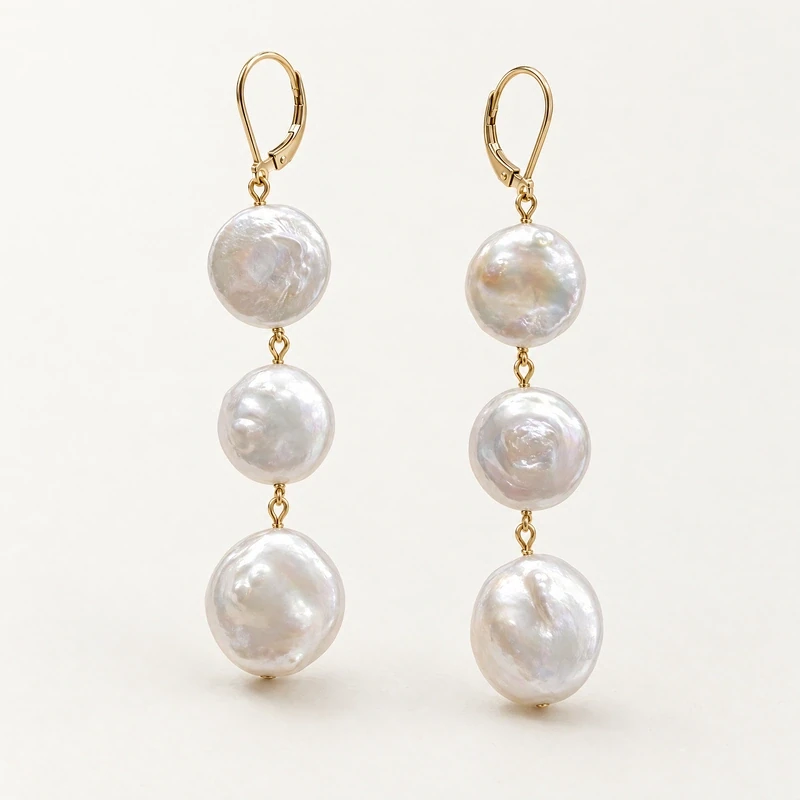
When one product has options with different dimensions, present each option as its own clearly named row or selector detail. Do not show a single range if it could be mistaken for a fit range or a measurement that applies to every version. The Irene earrings illustrate why this matters: the coin-shaped option has an approximate 7–7.5 cm drop and pearls approximately 10–15 mm, while the baroque-shaped option has an approximate 5–5.5 cm drop and pearls approximately 8–10 mm. The description also notes that the larger coin-shaped pearls create the longer drop.
Keep the option name beside its measurements wherever a shopper makes a selection. If the shelf card cannot accommodate both rows, use a concise signpost to the full specification rather than omitting one option or placing figures far from their labels. For products with letter, metal, or length choices, do not imply that every measurement changes with every selection. State the dimensions that are known for the product, and identify an option-specific difference only when that difference is established.
Distinguish total length from an extension
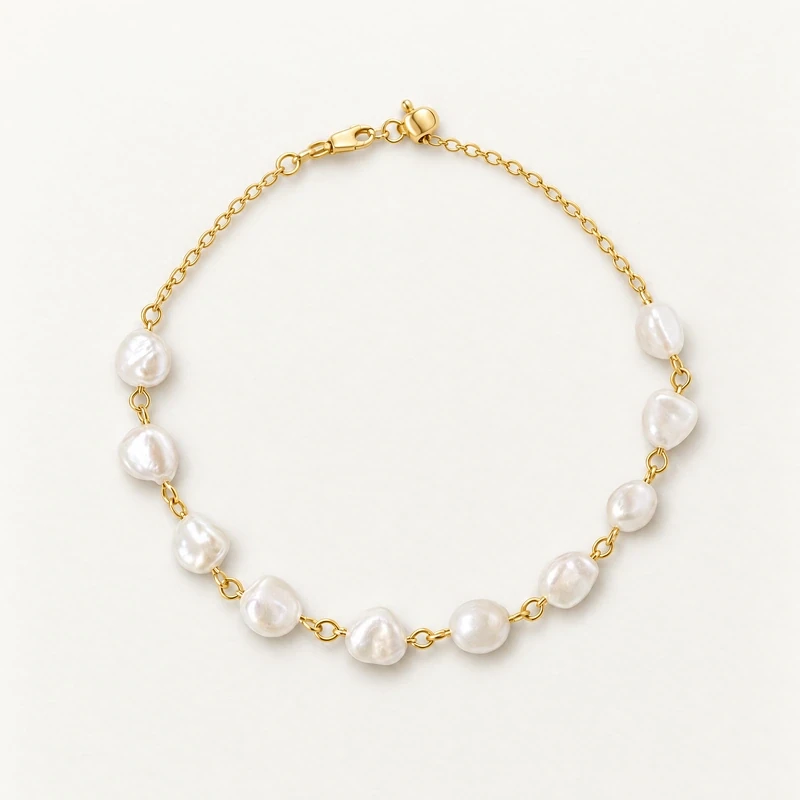
Necklace and bracelet length fields need especially clear definitions. A necklace described as a base length plus an extension should show both figures explicitly, rather than presenting only their sum or calling the combined figure simply “adjustable.” The Anna Small Pearl Letter Coin Necklace is approximately 38 cm long plus a 7 cm extension. A useful display preserves that relationship: “Necklace length: approx. 38 cm; extension: 7 cm.” This makes the extension visible without obscuring the stated base length.
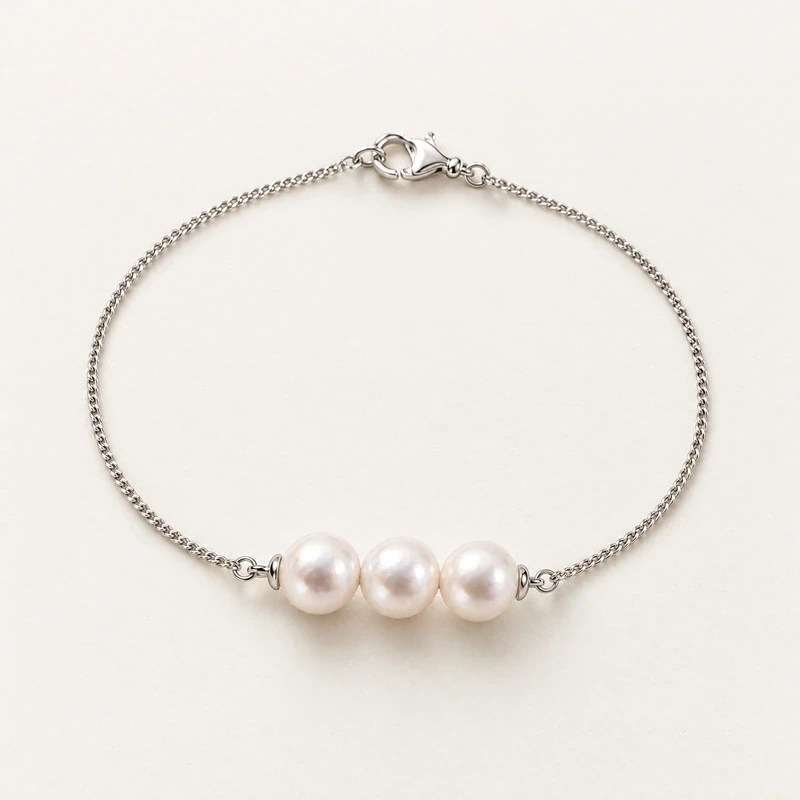
For bracelets, label a listed figure as a total length when that is what it represents. The SHAY Akoya Pearl Bracelet is available in approximate total lengths of 155 mm, 165 mm, and 175 mm, with other lengths also available. A clear option list keeps each total length distinct and avoids suggesting that an extension is present. Do not infer how a length is adjusted or how a clasp fits from the measurement alone. If a shopper needs additional fit guidance, direct them to the exact product information or a staff member rather than adding an unsupported measurement interpretation.
Give component dimensions their own fields
Overall length does not tell the whole story when a product includes a prominent pearl, charm, or other measured element. Display component dimensions in a separate field and name the component. For the Anna necklace, the freshwater pearl is approximately 5–6 mm and the letter coin is approximately 6 mm. Listing those details separately from the necklace length lets shoppers understand both the scale of the focal elements and the overall wearing length without having to guess which number refers to what.
Apply the same principle to earrings and bracelets. On the Irene earrings, a shopper may care about both the drop and pearl size; on the SHAY bracelet, the 8–8.5 mm Japanese Akoya pearl is distinct from the bracelet’s available total lengths. Keep component measurements adjacent to their names, and do not use a component size as a substitute for the product’s overall dimension. Where shape varies, such as the baroque option described for Irene, avoid presenting a millimeter range as though every pearl has an identical outline.
Include per-piece weight only when verified
Weight can help shoppers compare jewelry, but only if the figure is measured for the relevant item and clearly stated as a per-piece or per-pair value. These are not interchangeable: one earring’s weight differs in meaning from the weight of a pair, just as one component’s weight differs from the assembled product’s weight. If a listing or reliable product record does not provide weight, leave the field out. A guessed figure based on appearance or materials is not a useful substitute.
When weight is available, record its scope and unit consistently, and explain variation only when there is a documented reason to do so. Keep weight separate from dimensions; a larger-looking piece does not necessarily establish a particular weight. Retail teams can use a simple field rule: publish a weight only when the measurement method and the item being weighed are clear, then use the same label on product pages and shelf cards. That prevents a bare number from being mistaken for the weight of a pair, a single item, or an entire set.
Use a shelf-card format that answers common questions
A shelf card should lead with the product name and a short set of clearly labeled measurements. For example: “Irene Freshwater Pearl Earrings — Coin-shaped: approx. 7–7.5 cm drop; pearls approx. 10–15 mm. Baroque-shaped: approx. 5–5.5 cm drop; pearls approx. 8–10 mm.” This example keeps the option names attached to their own figures and uses the listed units without adding a conversion. A card with limited space can shorten the wording, but should preserve the labels and both sets of option-specific measurements.
Use the same hierarchy online and in store, then check that the card remains readable at its intended viewing distance. A good final review asks: Can a shopper identify the item measured? Are options separated? Is an extension distinct from a total length? Are all units shown? Is any weight explicitly per piece or per pair? For a wider assortment, align cards with relevant category navigation such as the earrings collection, so shoppers encounter the same measurement language while browsing. Before printing or publishing, compare every figure with the current product record and remove any unsupported estimate.