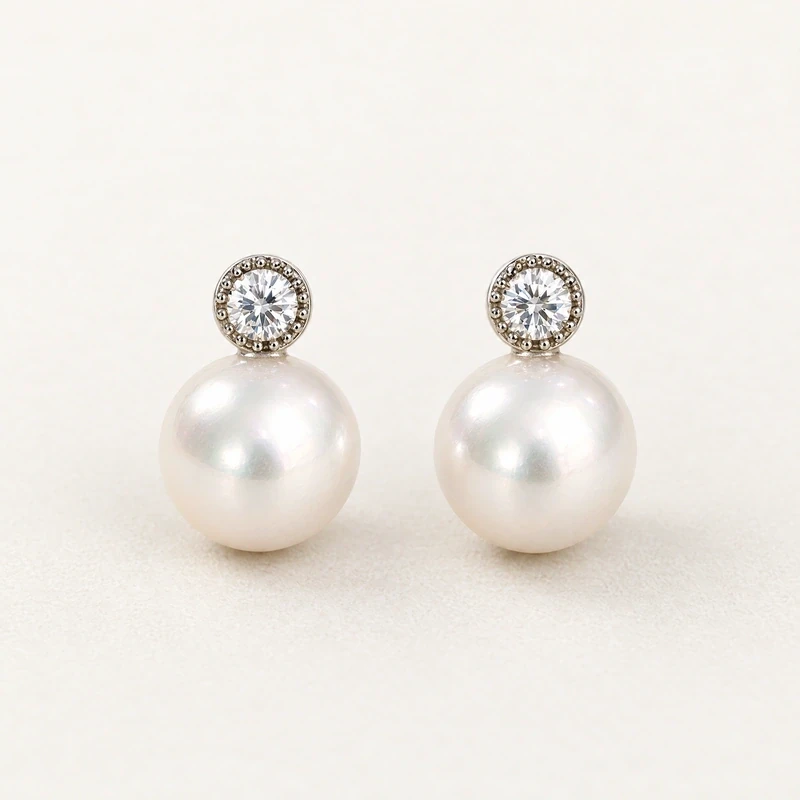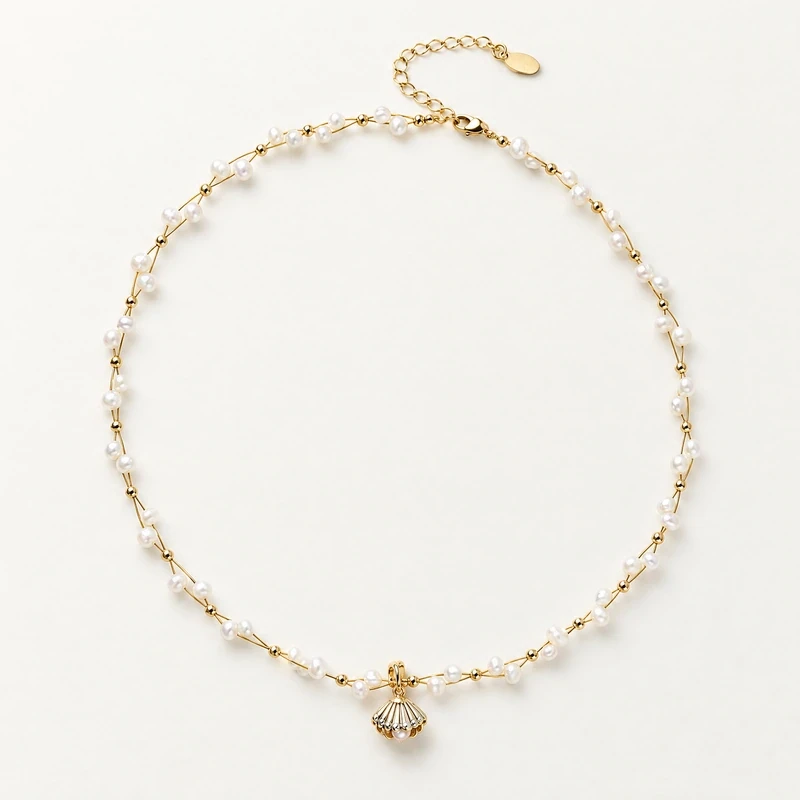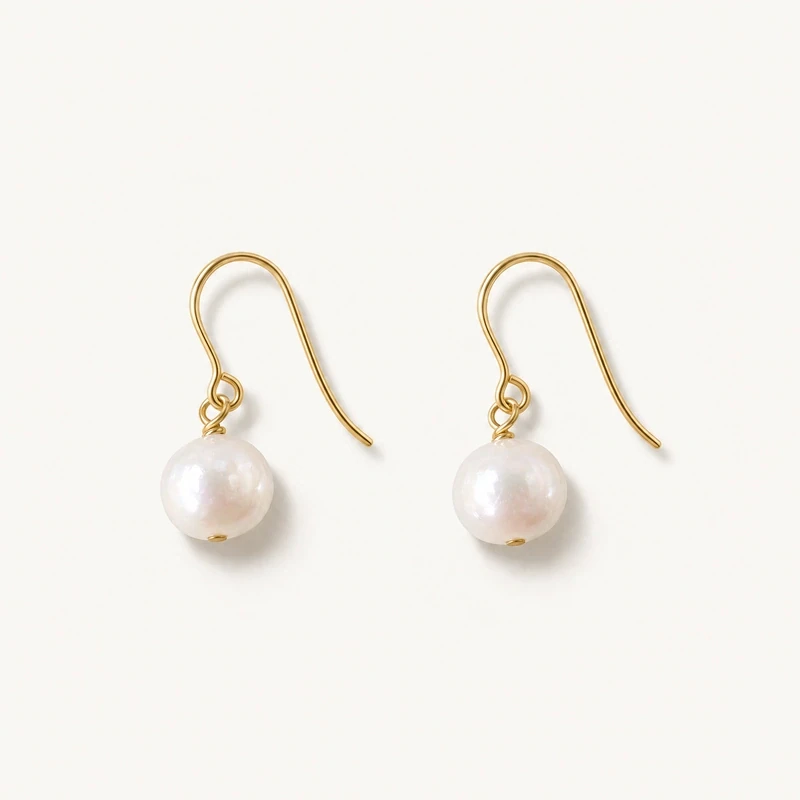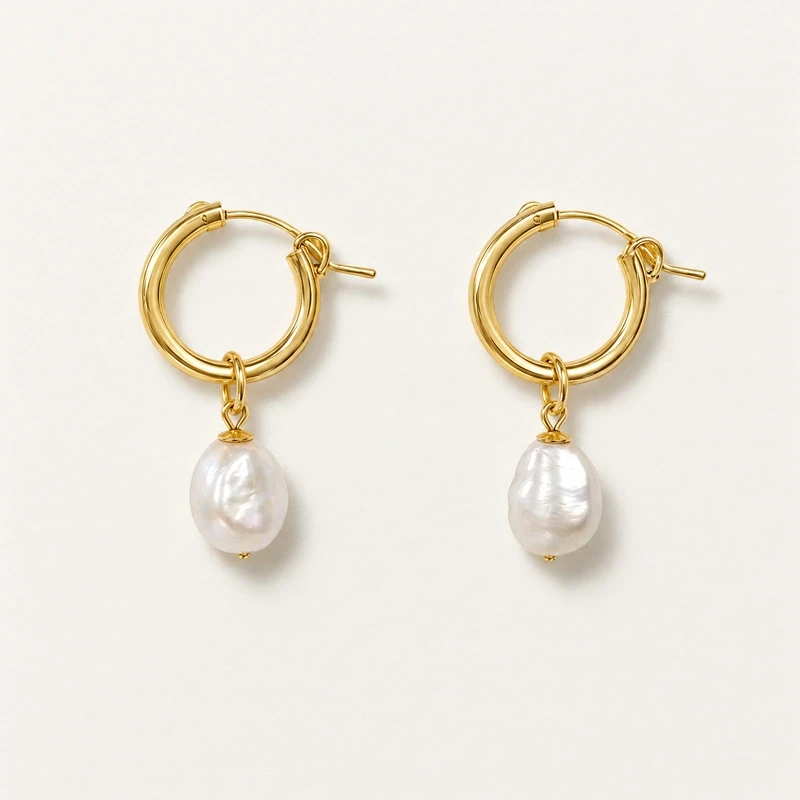
A useful pearl assortment starts with customer choices, not a predetermined number of units. Independent retailers can use a simple matrix to compare material, silhouette, and fit, then decide which options merit further consideration for their own store. This approach keeps planning exploratory: it helps reveal gaps and overlaps without implying that a particular mix or quantity will suit every business.
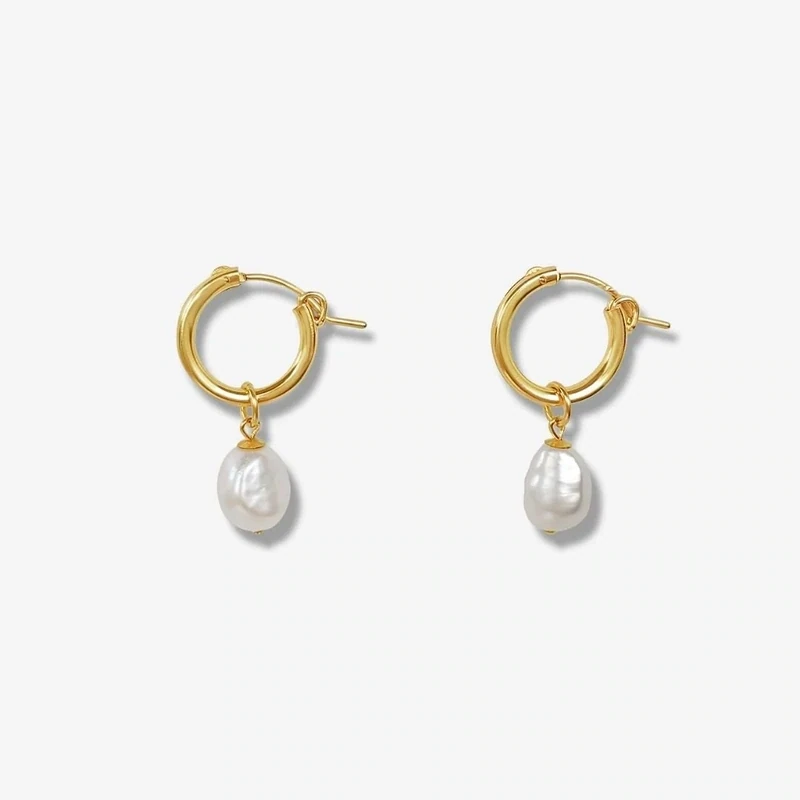
Three distinct examples make a practical starting point: a hoop earring with baroque pearl charms, a single-pearl pendant, and a delicate bracelet with a small pearl. Their different forms and measurements show how a pearl edit can offer variety without relying on a large number of product types. Before placing any order, confirm current availability, order minimums, lead times, and pricing through an order request; do not assume standard wholesale terms.
Start with customer use, not a unit target
Begin by writing down the situations your pearl selection should serve. A customer may be looking for an everyday accent, a more visible focal point, or a piece that layers with jewelry already in their collection. These are useful planning prompts, not predictions about demand. Translate each one into a product role—such as small bracelet, statement-adjacent earring, or pendant—before comparing individual styles.
Then check whether each role adds a genuinely different choice. The Anna freshwater pearl bracelet is described with an approximately 5 mm pearl, while the Jade I pendant has an approximately 10–12 mm pearl. That difference gives a concrete scale contrast to assess. Keep the exercise open-ended: a planning matrix can guide discussion, but it cannot establish sales quantities, customer preferences, or a required assortment size.
Build a matrix around material and option clarity
Record each style’s pearl category and the exact material options listed for its setting, chain, or other metal components. The Ada hoops, for example, use freshwater baroque pearls and offer 14k gold-filled metal or sterling silver, depending on the selected Colour/Metal option. The Jade I pendant offers a freshwater baroque pearl with a choice of 925 sterling silver or 14k gold-filled metal. Those choices should appear as distinct options in a buying worksheet rather than being collapsed into a generic “gold” label.
Material language matters because solid gold, gold-filled, gold-plated, and vermeil describe different things. Vermeil has a sterling silver base; sterling silver marked 925 is 92.5% silver. Do not infer a construction or performance claim from a color name. For a concise reference, consult the FTC guide to buying gold and silver jewelry. In your matrix, copy the product’s stated wording and flag any material question for confirmation.
Balance silhouettes rather than repeating one look
Silhouette helps distinguish pieces even when they share a pearl category. Hoops frame the face and create a different visual outline from a pendant, while a bracelet places the pearl at the wrist. Consider how these shapes relate to the rest of your store’s jewelry and whether each adds a distinct styling possibility. A selection with several similar outlines may offer less visible variety than one with a few clearly differentiated forms.
The Ada Baroque Pearl Hoops pair approximately 15 mm hoops with pearls around 8–9 mm. The product description says the pearl charms are removable; avoid extending that detail into assumptions about other components or styling functions. The Jade I single-pearl pendant, by contrast, puts one approximately 10–12 mm pearl on a chain. Use these specifics to compare visual scale and form, not to predict which silhouette will sell better.
Use pearl shape accurately in product planning
Baroque describes an irregular shape; it is not a pearl species and does not establish whether a pearl is cultured or natural. The listed products identify their pearls as freshwater baroque pearls. Cultured pearls are real pearls, formed with human intervention and care; natural pearls form without human intervention. Do not describe a product as naturally formed merely because a casual use of “natural” appears in product copy or because its shape is irregular.
Irregularity can be part of a style’s appeal, but it also means examples may differ from one another. The Ada hoops and Jade I pendant descriptions both note variation and imperfections. Factor this into how you discuss consistency and appearance with customers: describe the listed shape, category, and stated variation plainly rather than promising identical pairs or matching a particular image. GIA’s pearl description guide offers further background on pearl categories and shape terminology.
Compare fit and measurements before selecting options
Fit is not a single number. For earrings, note the hoop measurement and pearl size separately; for a pendant, record chain length and extender; for a bracelet, track the available lengths. This makes comparisons more useful than broad labels such as “small” or “adjustable.” It also helps staff explain what a listed measurement refers to without suggesting a fit guarantee.
The Jade I chain is offered at 40 cm plus a 5 cm extender or 45 cm plus a 5 cm extender, giving 45 cm or 50 cm total length. The Anna bracelet lists 17 cm, 18 cm, or 19 cm, and an adjustable option of 15 cm plus a 5 cm extender. Record those alternatives individually, then consider how they fit your customers’ preferences and existing product range. Confirm option details when requesting an order, rather than assuming every length is available at every time.
Keep the assortment exploratory and editable
A useful planning sheet can include category, silhouette, pearl description, metal option, measurements, and an open notes column. Add a status such as “consider,” “compare,” or “confirm” instead of assigning fixed quantities too early. This makes it easier to revisit the plan as you review your store’s assortment, budget, or customer feedback, without turning an initial idea into an unsupported forecast.
Look for functional overlap as well as gaps. Two styles may serve similar roles but offer a different scale, metal option, or wearing position. Conversely, a bracelet and pendant may complement each other without needing to be treated as a set. Review related categories, such as the bracelet collection, in the context of your own product mix. The aim is a considered range of choices, not a universal recipe or a predetermined number of pieces.
Confirm commercial details before committing
Once you have a shortlist, send an order request that identifies the specific styles and options you want to discuss. Ask directly about current availability, any applicable order minimums, lead times, and pricing. These details can affect whether a planned assortment is practical, and they should be verified rather than assumed. The presence of multiple options in a product description does not establish that every option is available for an order.
Keep the request precise: distinguish sterling silver from 14k gold-filled metal, specify the chain or bracelet length under consideration, and note that baroque pearls can vary in shape. If an answer changes your plan, update the matrix and reconsider the balance across material, silhouette, and fit. Use the wholesale information page as a point of contact, but confirm terms directly; do not presume minimums, pricing, or lead times. A clear, option-by-option request is the most actionable next step from an exploratory assortment plan.