A useful jewelry product page tells shoppers what a pearl is described as, what is known about its origin, and which components and metals are included. These details should be specific enough to support comparison without turning a shape label into an origin claim or treating every pearl-like component as the same material. Clear wording also helps customers distinguish a product’s defining feature from its setting, chain, or available metal option.
For retailers, the task is to keep each statement attached to the right product and option. “Cultured freshwater pearl,” “Swarovski pearl,” “vermeil,” and “sterling silver” communicate different things; they should not be compressed into broad or interchangeable labels. The checklist below offers a careful way to organize product-page information, flag ambiguities for confirmation, and write useful disclosures without implying a universal certification or offering legal advice.
Separate pearl origin from appearance
Start with the most precise origin description that is actually established. Natural pearls form without human intervention, while cultured pearls grow with human intervention and care. Cultured pearls are real pearls, so “cultured” should not be presented as a lesser or imitation category. Freshwater, Akoya, South Sea, and Tahitian identify different pearl categories; they are not synonyms for shape, finish, or quality.
Keep shape language in its own field. “Baroque” describes an irregular shape; it does not identify a pearl species or prove that a pearl formed without human intervention. Likewise, size, color, and shape variation do not establish origin. GIA’s guidance on pearl descriptions is a useful reference when building consistent terminology. If origin is not confirmed, do not fill the gap with an inference based on appearance or a casual use of “natural.”
Use “natural” cautiously and specifically
The word “natural” can be ambiguous on a retail page. It may be intended to describe appearance or material, but shoppers may read it as a claim that a pearl is natural rather than cultured. Where the intended meaning is not clear, avoid relying on that word alone. State a confirmed category such as “cultured freshwater pearl,” or seek clarification before making a more specific origin statement.
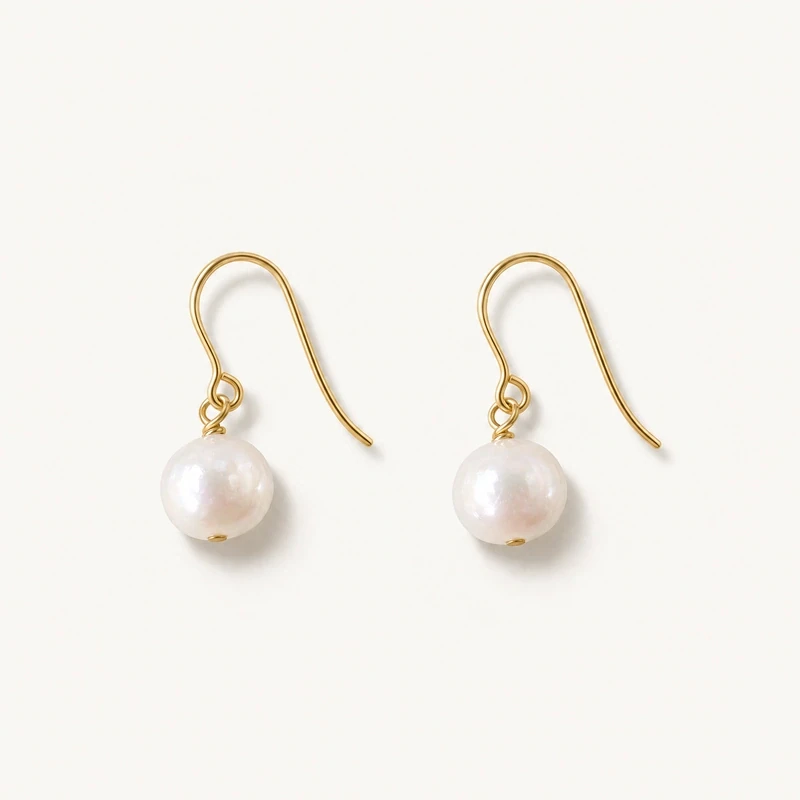
For example, the Oval Freshwater Pearl Stud Earrings description calls its 12.5 mm pearls “natural freshwater pearls,” but does not specify whether they are cultured or natural in the origin sense. A retailer should not convert that wording into a claim of uncultured origin. The practical step is to retain the confirmed freshwater category and request clarification about the intended use of “natural” before adding an origin claim. This preserves useful product detail while making the uncertainty visible to the merchandising team.

Keep measurements and shape descriptions distinct
Measurements help shoppers judge scale, but they do not substitute for material disclosure. Record the measurement exactly as listed and identify what it refers to: pearl diameter, overall earring dimension, or drop length. Avoid rounding in ways that suggest a different specification, and do not infer a component’s size from a photograph. If a page lists more than one measurement, use labels so the relationship between them is clear.
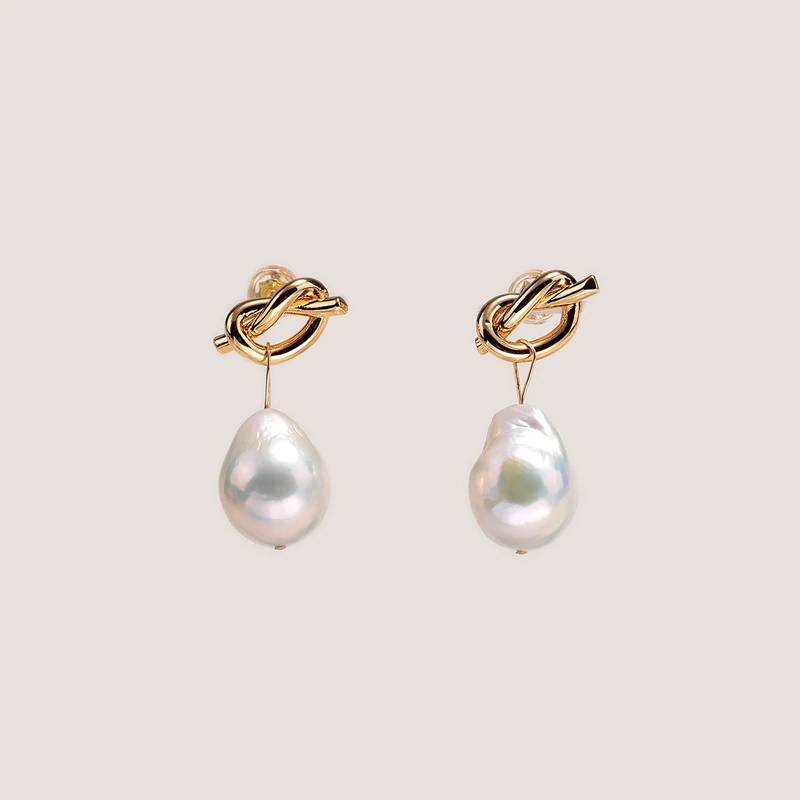
The KATRINA Teardrop Pearl Earrings are described as cultured freshwater pearls measuring 13–15 mm, with a 3.5 cm or 4 cm drop length. Those are separate facts: the first concerns the pearls and the second the earring drop. “Teardrop” communicates a design or shape description; it does not replace the cultured freshwater origin statement. Keep those labels adjacent to their relevant measurements, and do not add a claim that the pearls are baroque unless that description is established for the product.
Name branded manufactured components accurately
A branded manufactured pearl component should not be described as a freshwater or Akoya cultured pearl. When the product description identifies a Swarovski pearl, preserve that wording and make clear that it is a component in the jewelry. Do not imply that the component is a natural diamond, a cultured pearl, or an independently certified gemstone. A brand name should be used only where it is explicitly part of the product information.
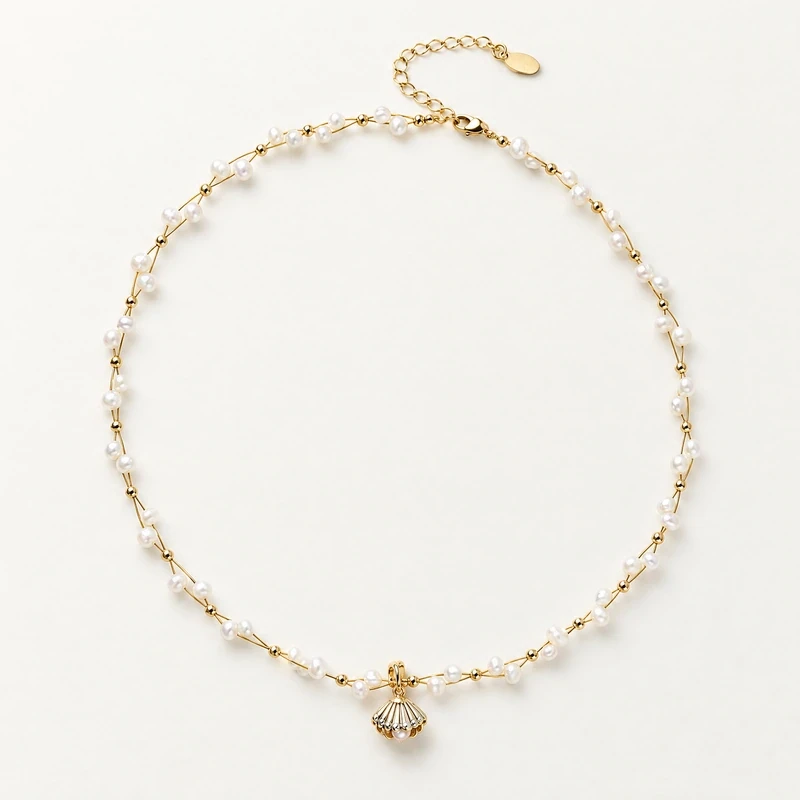
The ELLEE Swarovski Pearl Necklace is described with an 8 mm Swarovski pearl pendant, a zirconia crystal charm, and a 925 sterling silver chain. Each material serves a different role in the necklace. A concise component list can name all three without suggesting that zirconia crystal is a natural diamond or that the Swarovski pearl is a cultured pearl. Its listed necklace length is 16 inches; keep that measurement with the necklace specification rather than presenting it as a pearl measurement.
Explain metal terms without collapsing them
Metal descriptions need the same discipline as pearl labels. Solid gold, gold-filled, gold-plated, and vermeil are distinct terms and should not be substituted for one another. Vermeil has a sterling silver base. Sterling silver marked 925 is 92.5 percent silver. For a broader consumer reference, see the FTC’s guide to buying gold and silver jewelry. Do not infer a product’s construction from a gold-colored finish or from a general mention of gold.
The Oval Freshwater Pearl Stud Earrings offer a choice of 18K gold vermeil or sterling silver. Keep those as separate options: the vermeil option is described as 925 sterling silver plated with recycled gold, while the sterling silver option is not the vermeil finish. The KATRINA earrings list 14k gold-filled metal; do not relabel that as solid gold or vermeil. If a product description gives a metal term but leaves a detail unspecified, do not invent a layer thickness, wear duration, or other construction claim.
Make every option and component product-specific
Build each product page from its own materials list and selected options, rather than copying a disclosure from a similar style. A pearl size or metal choice for one design does not establish the details of another. When shoppers can choose among listed finishes, name each choice beside the product or selection control so the material statement follows the option being considered. Do not imply that every version includes every listed material.
Use a quick verification sequence before publishing: check the product name and pearl category; match each measurement to the part it describes; list the chain, fitting, charm, or other named component only as specified; then confirm that option labels remain distinct. For instance, the 14k gold-filled metal listed for KATRINA should remain attached to that product. The 925 sterling silver chain belongs to ELLEE. Avoid transferring a post or chain material to another fitting when the fitting’s material is not stated.
Flag missing details instead of filling gaps
A strong checklist includes a place to record what is confirmed and what still needs clarification. If a description names freshwater pearls but does not establish cultured or natural origin, do not guess. If it says “natural” without making the meaning clear, ask for precise wording. If a metal label identifies an option but not its construction, repeat only the supported term. This creates a practical boundary between useful editing and unsupported embellishment.
Before a page goes live, compare its headline, short description, materials, options, and measurements for consistency. Remove any line that turns baroque shape into an origin claim, treats a branded manufactured pearl as cultured, or presents vermeil as solid gold. For category-level browsing, the earrings collection can use consistent terminology, while individual product pages retain their own specifications. Publish the clearest verified description available, and leave unresolved details out until they can be confirmed.